
New Homeowner Electrical Inspection Checklist for Minnesota
Key Takeaways
- Minnesota adopted the 2026 NEC effective August 17, 2026. Permits filed on or after that date follow the new code.
- Panel labels must be “clear, evident, and specific” under NEC 408.4(A). Labels like “Bedroom” and “Lights” are code violations.
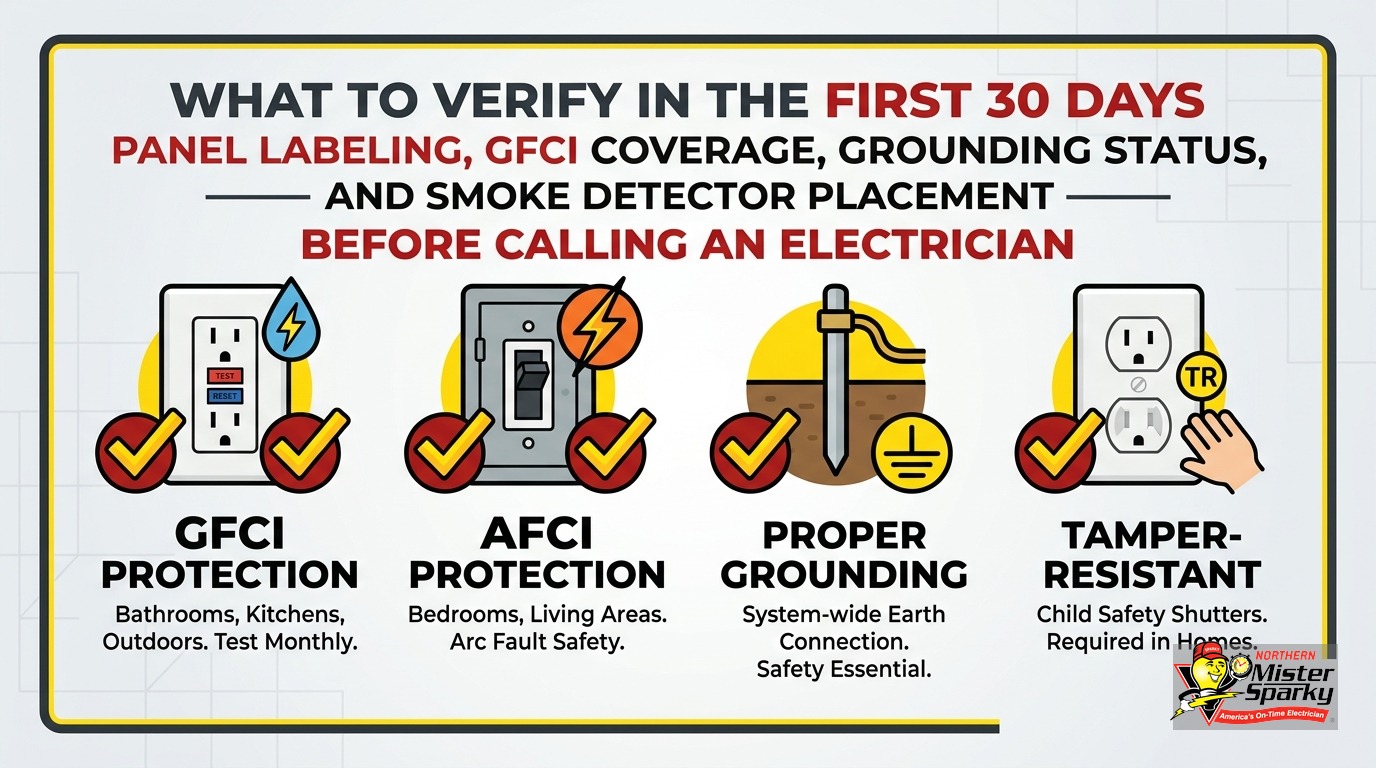
- GFCI protection now covers every finished basement receptacle, refrigerator circuits, and all kitchen outlets under the 2026 NEC.
- Pre-1970 ungrounded outlets can stay if untouched, but replacing one triggers NEC 406.4(D) compliance.
- Smoke alarms must be placed inside every bedroom. The older “outside the sleeping area” rule is outdated under current NFPA 72 standards.
- A general home inspector is not a licensed electrician. If anything on this list turns up, call a licensed electrician before it becomes a hazard.
What Should a New Homeowner Electrical Inspection Checklist Include?
Four areas cover the most common failures in Twin Cities homes: the electrical panel (labeling and physical condition), GFCI outlet coverage in wet and damp locations, grounding status at outlets, and smoke alarm placement. Check these four before you schedule any other work. They are the items most likely to surface a code violation or hidden hazard in an older home.
Minneapolis and much of the metro has some of the oldest housing stock in the country. Pre-1970 construction is common. That means two-prong ungrounded outlets, panel directories written by multiple owners over 50 years, and smoke alarms that may predate the current placement standard by a decade or more.
A standard home inspection covers structure, roof, plumbing, and HVAC alongside electrical. That scope means electrical gets a brief visual review. This checklist covers the items a general inspector will miss or is not qualified to interpret.
This checklist gives you a real pass/fail test for each area and the code that backs it up, so you know what you found and what it means when you call an electrician.
Beyond the four core areas, also watch for: cloth-wrapped wiring (knob-and-tube or early aluminum), double-tapped breakers, and flagged panel brands from the 1950s through the 1990s. Each is a separate flag that warrants a call.
How Do You Read Electrical Panel Labels?
Every circuit must be labeled with its “clear, evident, and specific purpose or use” under NEC 408.4(A). “Bedroom” and “Lights” do not meet that standard. Every spare breaker slot must say “spare.” A blank line next to a breaker position is a code violation.
Open the panel door and look at the directory card. Here is what passes and what fails.
Fails the code standard:
- “Bedroom” - which bedroom?
- “Lights” - which lights, which room?
- “Outlets” - where?
- A blank line next to any spare breaker position. The NEC requires the word “spare”.
- A previous tenant’s name on a circuit entry.
Passes the code standard:
- “Master bedroom outlets”
- “Kitchen refrigerator”
- “Garage lights and outlets”
- “Spare” next to every empty breaker slot.
If your directory was filled in by multiple people across multiple decades, the circuit map is probably wrong, which matters most when you need to shut something off in a hurry. Our post on how to label a circuit breaker panel correctly explains what each entry needs to say and what a re-labeling visit looks like in practice.
While the panel door is open, scan for double-tapped breakers: two wires connected to a single breaker terminal. Most residential breakers are rated for one wire only. Double-tapping is a code violation and a very common finding in homes that have had work done without proper permits over the years.
Check the panel brand while you are there. Federal Pacific, Zinsco, and Pushmatic panels manufactured between the 1950s and 1990s have documented failure histories. If yours is one of these, flag it for an electrician before scheduling any other work.
What Will Fail an Electrical Inspection?
The most common electrical inspection failures in older Twin Cities homes are vague or missing panel labels, absent GFCI protection in wet areas, three-prong outlets on ungrounded circuits without proper labeling, smoke alarms placed only in hallways instead of inside bedrooms, and double-tapped breakers. Any of these can surface on a municipal or insurance inspection.
A general home inspector works visually. They may note an obviously burned outlet or a panel that shows scorch marks. What they will not do is run circuit-level tests, confirm GFCI protection maps correctly to the 2026 code, check grounding status outlet by outlet, or open the panel and inspect connections. That requires a licensed electrician.
If you are buying and have not yet closed, our guide to what an electrical inspection covers when purchasing a home explains what to request before signing and how findings typically factor into negotiation.
Which Outlets Need GFCI Protection Under the 2026 Code?
GFCI outlets protect against shock near water by cutting power in milliseconds when a ground fault is detected. Under the 2026 NEC, which Minnesota adopted effective August 17, 2026, the required locations for GFCI protection in a dwelling expanded significantly from the prior code cycle.
Under NEC 210.8(A), 2026 edition, GFCI protection is required at:
- All bathrooms
- Garages (now listed separately from accessory buildings in the 2026 code)
- All outdoor receptacles
- Crawl spaces at or below grade
- Every basement receptacle, finished or unfinished
- All kitchen countertop and work-surface receptacles
- Refrigerator circuits - this is new in 2026; the 2023 NEC did not require it
- Within 6 feet of any sink, not just kitchen sinks
- Laundry areas
- Within 6 feet of bathtubs or shower stalls
- Boathouses
Walk through each location on this list. Find the GFCI outlet (it has TEST and RESET buttons on the face) and press TEST. The outlet should go dead. Press RESET and power should restore. If pressing TEST does nothing, the device has failed or is wired incorrectly.
One thing homeowners often miss: a single GFCI outlet can protect all outlets downstream on the same circuit. A bedroom or hallway outlet may be GFCI-protected without TEST/RESET buttons on its face. A basic outlet tester will confirm whether any given outlet is protected from an upstream device.
For a broader look at the outlet types you may find in your home and what each one does, our post on the electrical outlets every Twin Cities home needs covers the full range.
If your home was permitted under 2023 NEC (any permit filed before August 17, 2026), the refrigerator circuit and finished basement outlets installed at that time may not have GFCI protection. That work complied with the code in effect when it was done. When those outlets are next replaced or the circuit is modified, 2026 NEC requirements apply.
How Do You Check If Your Outlets Are Properly Grounded?
A basic outlet tester costs under $15 at any hardware store and will display an “open ground” reading on any three-prong outlet that has no ground wire connected. Two-prong outlets tell you directly: no ground conductor was run to that circuit. That was standard wiring practice before the 1970s in Minnesota, and it is common throughout the Twin Cities.
Under the NEC, older two-prong ungrounded outlets are legal to leave in place as long as they are not modified. The moment you replace one, four code-compliant options apply:
- Replace with a two-prong outlet (NEC 406.4(D)(1)).
- Install a GFCI outlet labeled “No Equipment Ground” - that label is required, not optional (NEC 406.4(D)(2)(b)).
- Run new grounded wiring from the panel to the box (NEC 250.130(C)).
- Install an AFCI breaker protecting the full circuit upstream.
Three-prong outlets in an older home are not automatically grounded. A previous owner may have swapped two-prong outlets for three-prong versions without running the correct wiring. Your outlet tester will catch this: an “open ground” reading on a three-prong outlet means no ground conductor reaches that box.
Something most homeowners do not know: a GFCI outlet without a ground wire protects people from shock but does not protect electronics from voltage spikes. The metal oxide varistors inside surge protectors need a ground wire to divert energy. Without one, your surge protector is providing false confidence.
Also watch for a “bootleg ground”: a wire jumpered between the neutral and ground terminals inside the outlet box. A standard outlet tester reads this as correctly wired. Under certain fault conditions, a bootleg ground can energize an appliance frame to 120 volts. Homes with a history of DIY electrical work are the most likely candidates.
Twin Cities homes built before 1940 may also have knob-and-tube wiring or early cloth-wrapped wiring. These are separate issues from grounding status, though they often appear in the same home. Knob-and-tube has no ground conductor by design. Cloth-wrapped wiring can become brittle over time and create a fire risk at connections and splices. If you spot either while tracing outlets, add it to your list for the electrician.
Our page on ungrounded outlets in older homes covers the cost and practical tradeoffs for each of the four NEC 406.4(D) fixes.
Do I Need an Electrical Inspection When Buying a Home?
Minnesota does not legally require buyers to obtain an electrical inspection before closing. But a standard home inspection does not test outlets, safely open the panel, or identify code violations. Getting a licensed electrician in before or shortly after closing is the most reliable way to know what you actually own.
A general home inspector works from visual observation. They may note an obviously damaged outlet or a panel showing burn marks. What they will not do is run circuit-level tests, verify that GFCI coverage maps correctly to the 2026 code, or check outlet grounding status systematically.
An electrical inspection of a Twin Cities pre-1970 home routinely surfaces at least one item from this checklist. The cost of the inspection is much lower than discovering a hazard after a renovation is already underway or after you have moved in fully.
If you are past closing and already in the home, the same inspection still makes sense. Most of the items on this list are not visible without testing.
Where Do Smoke Alarms Need to Go in a Minnesota Home?
Smoke alarms must be installed inside every bedroom, outside each sleeping area in the hallway, and on every level of the home including the basement. The older guidance placing alarms only outside bedroom doors no longer meets the current NFPA 72 standard.
Most homeowners learned the older placement rule, which said one alarm outside the bedroom door was sufficient. NFPA 72 now requires three placement zones per floor:
- Inside every bedroom.
- Outside each sleeping area (in the hallway immediately adjacent to bedroom doors).
- On every level of the home, including the basement.
Minnesota Statute 299F.362 requires smoke alarms in every dwelling unit. In new construction, alarms must be hardwired with battery backup and interconnected: when one sounds, they all sound.
Placement requirements:
- Ceiling mount: at least 4 inches from any wall.
- Wall mount: within 4 to 12 inches of the ceiling.
- Not within 10 feet of a cooking appliance.
- At least 36 inches from any ceiling fan.
When to replace: The manufacture date is stamped on the back of the unit. Replace every 10 years from that date, not from the date you moved in or the date someone installed it. If the stamp is missing or illegible, replace the unit now.
A home that has passed through multiple owners over 30 years may have alarms from several different eras on the same floor. Pull each one off the ceiling, read the stamp on the back, and replace any unit that is more than 10 years old from manufacture.
Does a Homeowner Need a Permit to Do Electrical Work?
In Minnesota, homeowners can pull their own electrical permits for work on their primary residence. The work must still pass a MN DLI inspection. Most projects beyond basic fixture swaps require a permit, including running new circuits, upgrading grounding, and any panel work.
Minnesota’s homeowner permit exemption lets you do electrical work on a home you own and occupy. You file the permit with MN DLI, complete the work, and schedule a state inspector to review it. Skipping the permit means the work is uninspected, which can cause problems during a future sale or an insurance claim after an incident.
For the items this checklist is most likely to surface:
- Re-labeling the panel directory: no permit required.
- Replacing a GFCI outlet in kind: typically no permit required in Minnesota.
- Running new grounded wiring to fix open-ground outlets: permit required.
- Panel upgrade: permit required, and you will need to coordinate with Xcel Energy for a meter pull.
Minnesota Panel Upgrade Grant: What to Know Now
If your inspection turns up a panel that needs replacing, one upcoming state incentive is worth tracking before you schedule the job.
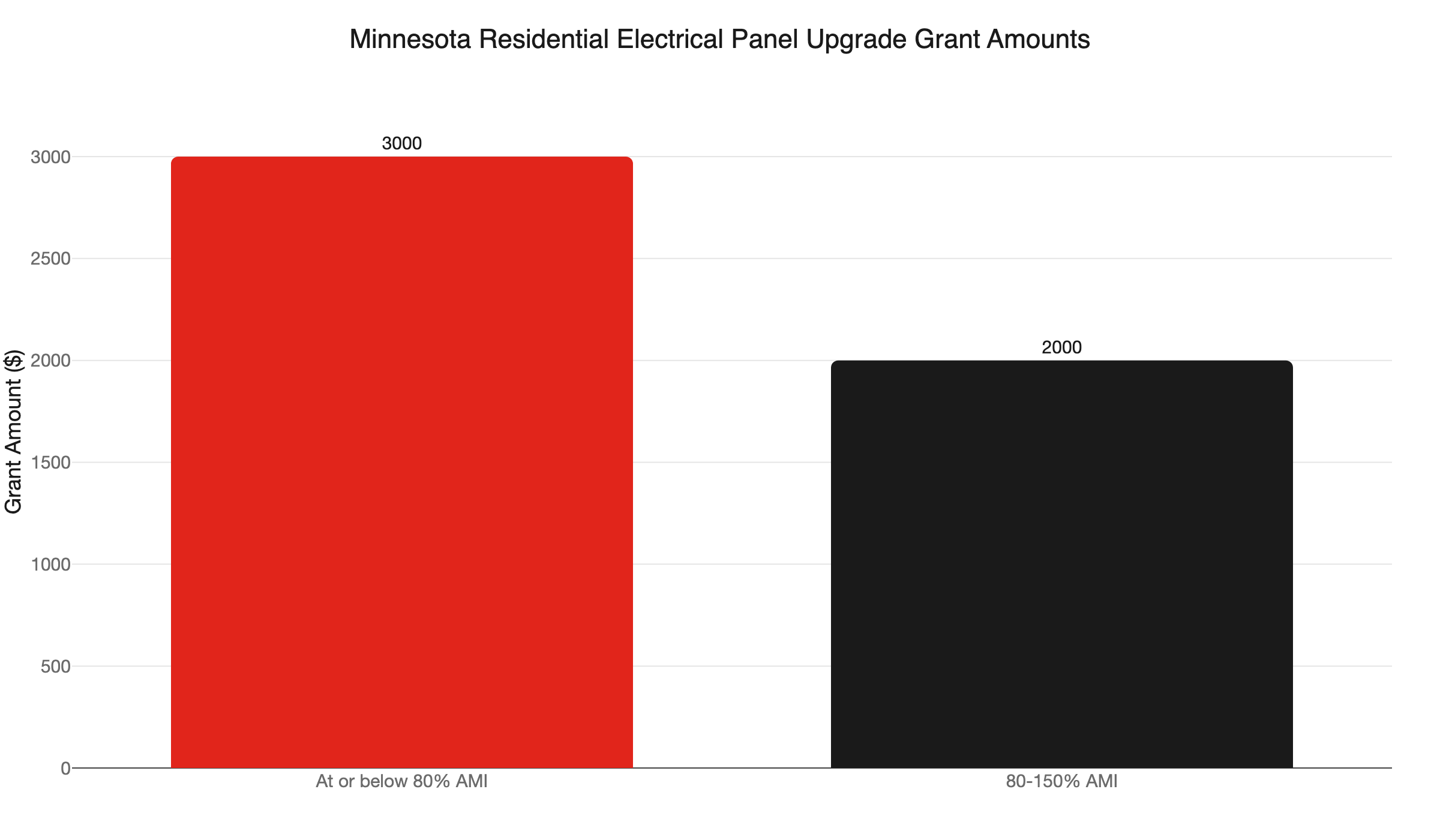
The Minnesota Residential Electrical Panel Upgrade Grant will offer up to $3,000 for households at or below 80% of area median income, and up to $2,000 for households at 80 to 150% AMI. The upgrade must bring the service to at least 200 amps to qualify.
As of October 2026, the program is pending U.S. Department of Energy approval and has not launched. Work completed before launch does not qualify retroactively. If you are income-eligible and your panel needs replacing, ask us whether it makes sense to wait before scheduling that specific job.
The federal 25C tax credit for electrical panel upgrades expired December 31, 2025. There is no active federal panel credit in 2026.
Schedule an Inspection
Run through this checklist. Write down what you find. Then call us.
We are locally owned and operated in the Twin Cities. Our team will walk through your findings with you, tell you what needs immediate attention versus what can wait, and give you a straight quote. No malarky, no work you do not need.
We are America’s On-Time Electrician(R), and every job is backed by the UWIN(R) 100% satisfaction guarantee.
Call 763-200-5956 or book online to get on the schedule.
Frequently Asked Questions
How long does a professional electrical inspection take for a Twin Cities home? +
Will my home inspector catch electrical code violations? +
Need an electrician now?