
Key Takeaways
- Battery backup sump pump electrical involves two separate loads: the float charger running 24/7 at low current, and the backup pump firing at high startup surge during outages. Treating both as “just plug it in” is where most installs fail inspection.
- NEC 422.5(A) requires GFCI protection on all sump pumps rated 150V or less to ground. This rule has been in the NEC since 2020. Minnesota enforces it now under the 2026 NEC, adopted August 17, 2026.
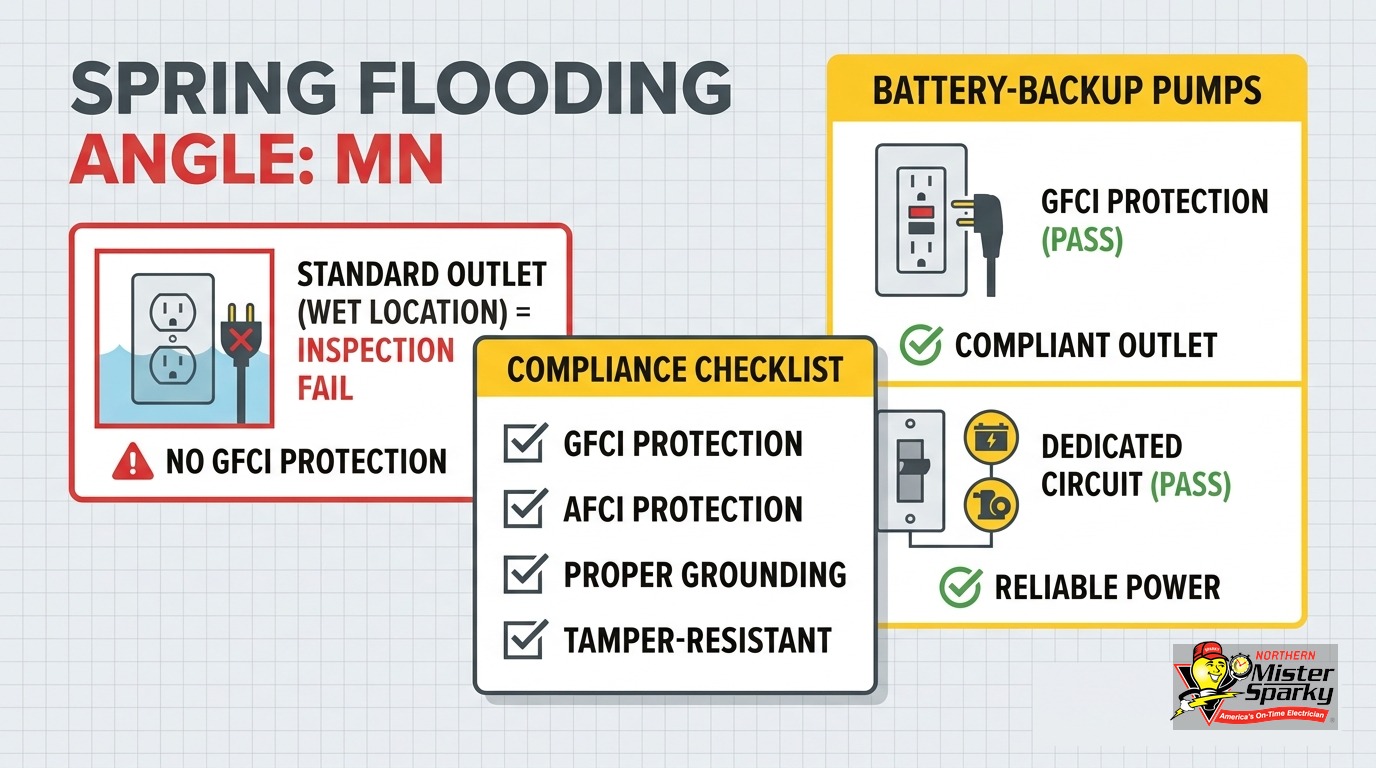
- A standard outlet in a wet basement location fails inspection on three counts: no GFCI protection, wrong enclosure, and no in-use cover.
- Minnesota DLI requires every submerged receptacle outlet to be replaced after a flood. GFCI protection is mandatory on replacement. No grandfather exceptions, regardless of home age or prior permit status.
- A GFCI breaker at the panel is more reliable than a GFCI outlet at the pump. Startup surge is less likely to nuisance-trip it, and the breaker stays out of the flood zone.
- Any sump pump circuit work requires an electrical permit in Minnesota. An unpermitted install is a documented insurance exposure if a water damage claim follows.
Why Spring Flooding Puts Your Sump Pump Electrical to the Test
Minnesota winters drive frost several feet into the ground. Frozen soil absorbs nothing. When March arrives, snowmelt saturates metro clay soils weeks before the first spring rain. Twin Cities basements can sit under sustained hydrostatic pressure for a month or more. The primary pump runs continuously. If power goes out during a spring storm, the battery backup is all that stands between your finished basement and a flood.
Most homeowners think about the pump. Few think about the wiring behind it.
That changes fast when a restoration company arrives after a flood. Minnesota DLI guidance is unambiguous: every receptacle outlet submerged in floodwater must be replaced. On replacement, any outlet the NEC requires to have GFCI protection must receive it. No exceptions for home age. No exceptions for prior permits. No grandfather clause.
That is the moment many Twin Cities homeowners discover their 15-year-old sump setup was never code-compliant. The flood forces an inspection. The inspection reveals the non-compliance. Now they owe a fully code-compliant install just to put the outlet back.
Understanding what battery backup sump pump electrical actually requires lets you get ahead of that moment. Getting the wiring right before spring is far less expensive than getting it right after the water arrives.
What Does a Battery Backup Sump Pump Electrical Setup Actually Need?
A battery backup system has two separate electrical demands. The float charger keeps the battery topped off around the clock at low, steady draw. The backup pump fires during outages at high startup current. Each load has different requirements. Treating both as “just plug it into the sump outlet” is where most DIY installs fail inspection.
The charger draws a small, consistent trickle load every day the pump is not needed. The backup pump only runs when the primary pump fails or power cuts out. When it does run, it pulls significant startup current. That surge is what causes most of the electrical problems in a battery backup install.
A setup that plugs both the charger and the backup pump into the same outlet, on the same circuit, is asking for trouble. The charger stays live and steady. The pump starts hard. The combined load can exceed what a shared circuit handles. Or the startup surge trips a GFCI outlet, cutting power to the backup during the exact event it was installed to address.
The right battery backup sump pump electrical setup separates the two loads. The charger gets a reliable, always-on supply. The backup pump gets a circuit sized for its startup current with protection that does not nuisance-trip under motor surge.
Does a Sump Pump Need a Dedicated Circuit?
The NEC and IRC do not require a dedicated circuit for sump pumps. However, most manufacturer warranty language does require one. A dedicated 20A, 120V circuit on 12 AWG copper wire is strong best practice. For a battery backup system, two dedicated circuits - one for the charger, one for the backup pump - is the cleanest and most reliable install.
A dedicated circuit means the sump pump is the only load on that breaker. No shared lights, no shared outlet strip, no chest freezer pulling from the same circuit. If something trips the breaker, it only affects the pump. Nothing else goes down with it.
For battery backup sump pump electrical, the case for dedicated circuits is even stronger. The charger wants a consistent, always-on supply. The backup pump wants high amperage available at startup without nuisance tripping. Those two requirements are much easier to meet on separate circuits than on one shared line.
Some installers run a single 20A circuit with two outlets and call it done. That can work if the combined load stays well within the circuit’s rating. But if the backup pump fires while the charger is drawing, the startup surge can trip the breaker at the worst possible moment. A two-circuit install removes that risk.
If your panel is already full, the dedicated circuit question connects to a larger one about panel capacity. Our post on what to do when your electrical panel runs out of breaker slots covers the options, including tandem breakers, subpanels, and full service upgrades.
Why Does a Standard Outlet in a Wet Location Fail Inspection?
A standard duplex outlet fails inspection in a wet basement location on at least three counts: no GFCI protection, wrong enclosure, and no in-use cover. Under the 2026 NEC, all three are required. Many older sump installs miss all three.
Most sump pits sit in a corner of the basement floor. The outlet is typically on the nearby wall, knee height or lower. Here is what the 2026 NEC requires at that location.
GFCI protection. NEC 422.5(A), first added in the 2020 NEC, requires GFCI protection on all sump pumps rated 150V or less to ground. Cord-and-plug connected or hardwired - both are covered. The prior exemption for sump pumps on dedicated circuits was eliminated in 2020. Minnesota adopted the 2026 NEC on August 17, 2026. Inspectors in Hennepin and Ramsey counties are already applying it.
Wet-location enclosure. A standard outlet box and cover plate are not rated for areas where water can contact them. A sump corner is a wet location by definition. The outlet needs a listed wet-location box and cover rated for that environment. A standard box does not qualify.
In-use cover. If the pump cord stays plugged in while the cover is exposed to moisture, a while-in-use cover is required. A standard flip cover does not qualify. The while-in-use cover keeps the connection protected with a cord plugged into it.
Outlet height. Manufacturer installation guides, and sound electrical practice, call for the receptacle to be at least 4 feet above finished basement floor level. That keeps the outlet out of standing water during a flood event. An outlet installed near floor level that gets submerged is an outlet that must be replaced before power is safely restored.
A standard outlet that has been sitting in a basement sump corner for 15 years commonly fails on all four counts. We see it regularly in Twin Cities homes built before the 2020 NEC requirements took effect.
GFCI Breaker at the Panel vs. GFCI Outlet at the Pump: Which Is Better?
For sump pump applications, a GFCI breaker at the panel is the better choice. Startup surge from an aging pump motor is less likely to nuisance-trip a panel-level breaker. And the breaker stays outside the wet zone entirely, which matters when the basement is flooding.
A GFCI outlet at the pump location is cheaper to install. It provides the required GFCI protection. Many homeowners and handymen go this route. So why does a licensed electrician usually recommend the panel-level breaker?
Two reasons.
First, sump pump startup current can cause GFCI nuisance trips. As motors age, they develop small current leaks to ground. That leakage is normal and does not mean the motor is dangerous. But a GFCI outlet at the pump reads that leakage and trips. The pump shuts off. The water keeps rising. You find out when you walk downstairs and the floor is wet.
A GFCI breaker at the panel handles motor loads more stably. The trip characteristics are better suited for devices that draw high startup current and develop minor ground leakage over time.
Second, the outlet itself sits in the wet zone. If the basement floods, the outlet is in the flood. A panel-level breaker is in the panel - well above any reasonable flood level - and stays dry even when the sump corner does not.
Both methods satisfy the NEC. For battery backup sump pump electrical specifically, the panel-level GFCI breaker is the more reliable long-term solution.
If your panel does not have room for a new GFCI breaker, you may need to look at a panel upgrade at the same time. Our team can assess both in a single visit and give you a clear picture of what the work costs before anything starts.
What Happens to Your Electrical After a Flood?
Minnesota DLI requires that every submerged receptacle be replaced. On replacement, GFCI protection is mandatory. All submerged wiring must also be replaced unless it is rated for direct burial or wet locations and the terminations were not submerged.
This is not a suggestion. It is the compliance standard DLI and inspectors apply when reviewing post-flood electrical work. Here is what it covers in a flooded basement:
Receptacle outlets. Every outlet that was submerged comes out. On replacement, any outlet the NEC requires to have GFCI protection must receive it. This applies regardless of home age or whether a prior permit covered the original outlet. A 1985 home with an uninspected sump outlet now needs a GFCI-protected replacement - no exceptions.
Wiring. All submerged branch circuit cables must be replaced. That includes the wire feeding the sump circuit, the wire feeding the water heater, and any wire running through the portion of the basement that flooded. The exception is wiring rated for wet locations where the terminations - the wire connections at boxes and devices - were not submerged.
Motors and appliances. Any motor, switch, or electrical device that was submerged needs replacement or a written clearance from the manufacturer. A pump motor that sat under two inches of water for 24 hours is not a pump you trust to protect the next flood season.
A licensed post-flood electrical assessment pays for itself. An electrician documents what was submerged, pulls the permit for replacement work, and schedules the inspection. That inspection record is what your insurance carrier and the next buyer’s inspector will want to see.
Our post on flooded basement electrical safety in Minnesota covers the immediate steps after water gets in, including when it is safe to restore power.
What Minnesota’s 2026 NEC Means for Your Sump Pump Permit
Minnesota adopted the 2026 NEC with an effective date of August 17, 2026. Permits filed on or after that date must comply with the 2026 NEC. Permits filed before August 17 used the 2023 NEC.
For sump pump GFCI requirements, the transition matters less than many homeowners expect. The GFCI requirement for sump pumps has been in the NEC since the 2020 edition. If your sump circuit was properly permitted and inspected after that date, you likely already have the required protection. If it was installed before 2020 and never upgraded, it does not comply with any NEC edition currently in force.
Where the 2026 NEC creates new compliance obligations is in the specific outlet, enclosure, and in-use cover requirements for wet locations. Those requirements have tightened across the 2020, 2023, and 2026 editions. An outlet that passed a 2018 inspection may not pass a 2026 inspection on the same items.
Any electrical work on a sump pump circuit requires a permit. That is true whether you are adding a battery backup, replacing a flooded outlet, or upgrading to a dedicated circuit. DIY battery backup sump pump electrical without a permit is a documented insurance exposure. An adjuster investigating a water damage claim will ask whether the electrical was permitted and inspected. An unpermitted install hands the carrier a reason to challenge coverage.
Our electrical permit guide for Minnesota homeowners explains what requires a permit, what the inspection process looks like, and how a licensed contractor handles the permit on your behalf.
Should You Upgrade Your Sump Pump Electrical Before the Next Flood Season?
Yes - if your sump outlet lacks GFCI protection, shares a circuit with other loads, sits near floor level, or you are installing a battery backup where only a primary pump existed before, your setup does not meet Minnesota’s current electrical code. Address it now, before spring arrives.
Here are the specific conditions that mean action is warranted:
- Your sump pump plugs into a standard outlet shared with other basement loads
- Your battery backup charger and backup pump share the same outlet
- Your sump outlet is mounted near floor level, not at least 4 feet up the wall
- There is no GFCI outlet or GFCI breaker protecting the sump circuit
- Your basement has had water intrusion in the last three years
- You are adding a battery backup unit where only a primary pump was installed before
The work is straightforward for a licensed electrician. A dedicated circuit, a GFCI breaker at the panel, a wet-location outlet and while-in-use cover at the right height - this is typically a half-day job in most Twin Cities homes. The cost is far less than a single water damage remediation call. And it holds up to inspection and insurance scrutiny.
We are locally owned and operated, serving Minneapolis, St. Paul, Bloomington, Brooklyn Park, Woodbury, Blaine, Maple Grove, Plymouth, and the surrounding metro. As America’s On-Time Electrician(R), we show up when we say we will, and we give you a clear cost before anything starts. The UWIN(R) 100% satisfaction guarantee backs every job. No malarky - if it is not right, we make it right.
Call 763-200-5956 or book online to schedule your sump pump electrical assessment. Financing is available for larger circuit and panel work.
Questions to Have Ready Before the Electrician Arrives
A little preparation speeds the site visit and sharpens the quote. Have answers to these ready:
- How old is the primary sump pump, and is there a battery backup unit installed?
- Do you know what circuit the pump is on, and does it share that circuit with other loads?
- Is there a GFCI outlet or GFCI breaker on the sump circuit now?
- Where is the outlet located, and how high is it off the basement floor?
- Has the basement had any water intrusion or flooding in the past five years?
- Was any portion of the basement electrically submerged during past flooding?
A licensed electrician handles the assessment from there. Walking in with this information makes the visit faster and the quote more accurate.
Frequently Asked Questions
Does a battery backup sump pump need its own dedicated circuit? +
Does a sump pump require GFCI protection in Minnesota? +
What happens to outlets that were submerged in a flood? +
Why is a GFCI breaker better than a GFCI outlet for a sump pump? +
Need an electrician now?