
Electrical Inspection Buying a House: A Twin Cities Guide
Key Takeaways
- A home inspector’s visual pass and a licensed electrician’s full inspection are two different things. Get both on any home older than 30 years.
- Twin Cities homes built before 1950 likely have knob-and-tube wiring. Homes from 1965 to 1975 commonly have aluminum branch wiring. Both affect insurance eligibility and fire safety.
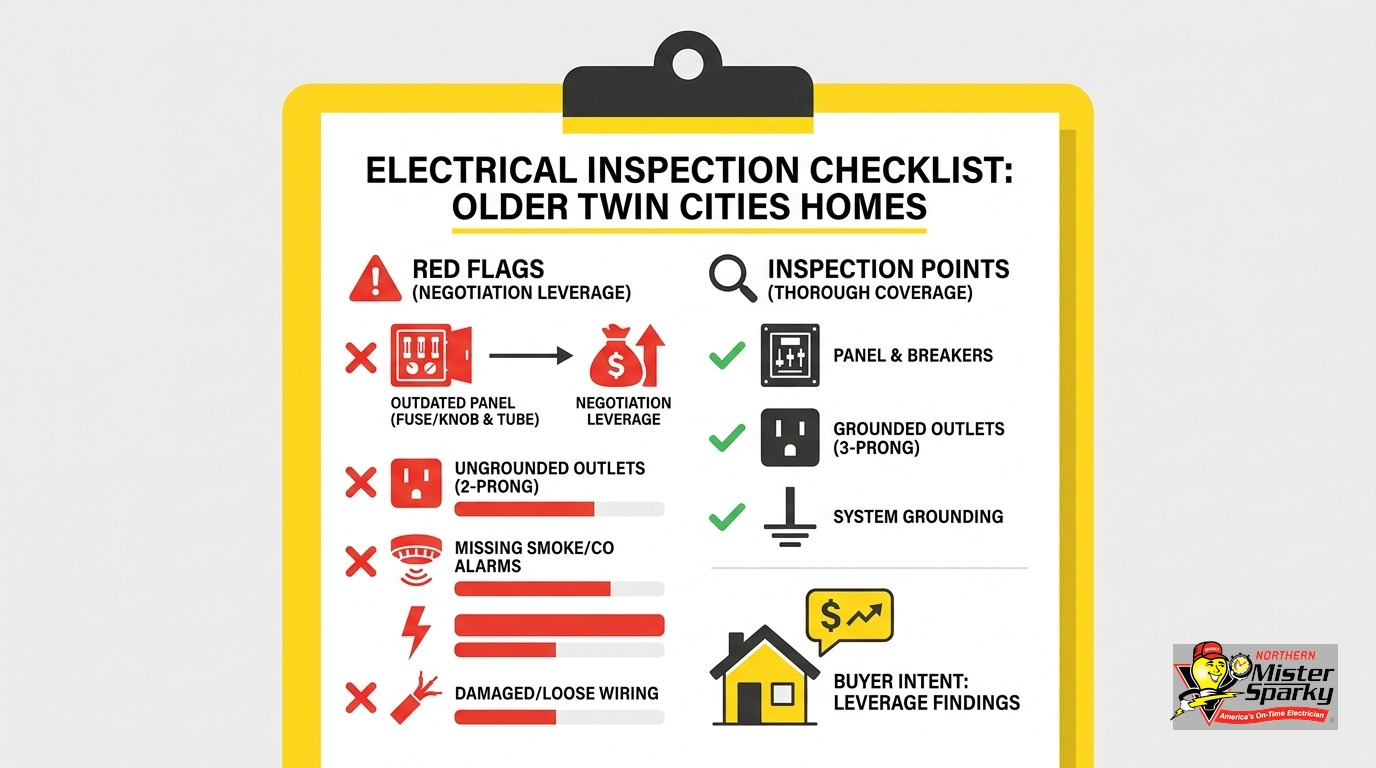
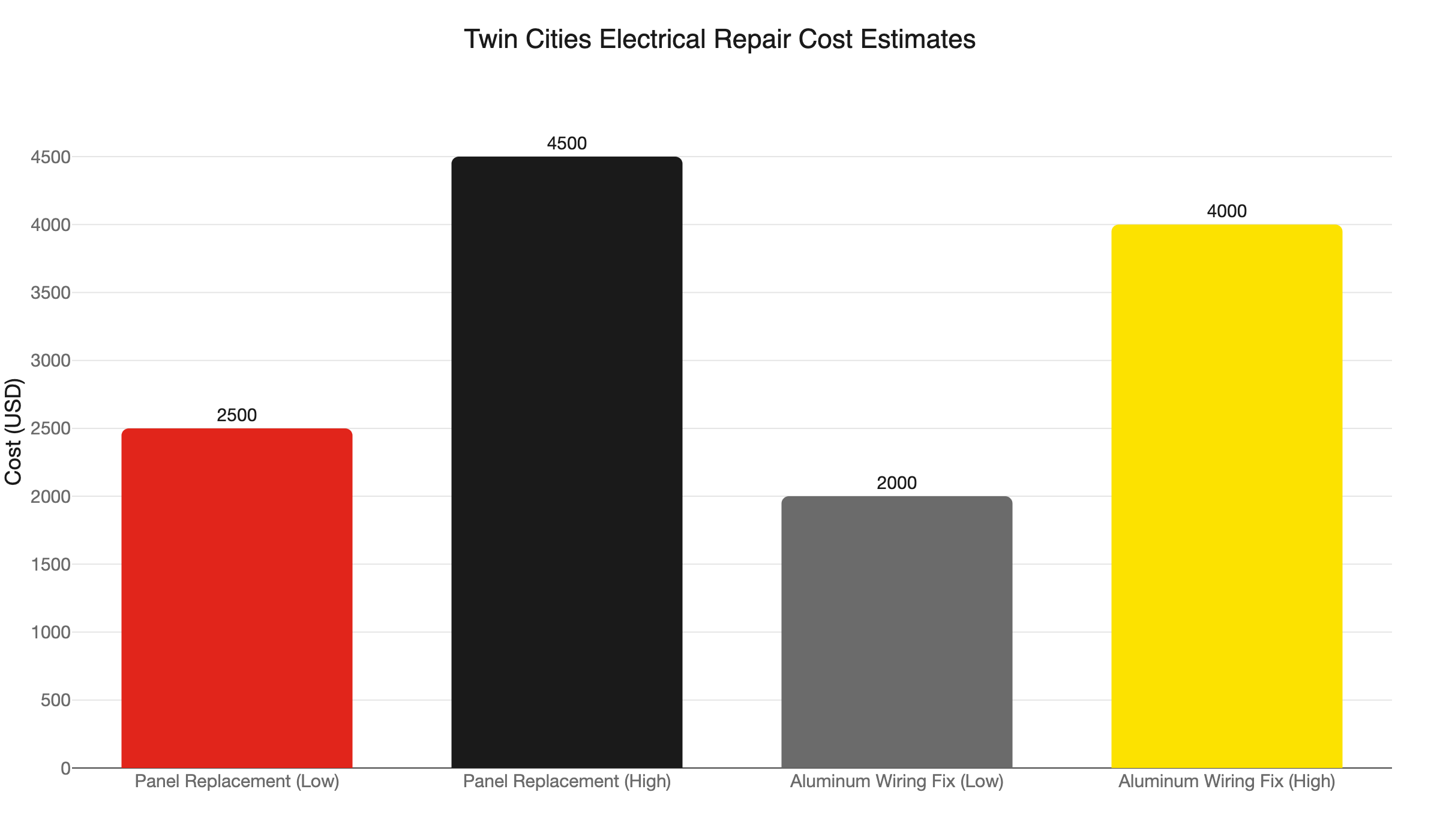
- Federal Pacific, Zinsco, and Pushmatic panels are deal-killers. Many Minnesota lenders will not fund a mortgage until the panel is replaced. Replacement cost in MN runs $2,500 to $4,500.
- All Minnesota electrical permits are filed with the state DLI, not city hall. Verify permit history directly with the DLI before closing.
- Minneapolis and some other Minnesota cities require a Truth-in-Housing evaluation before a sale. Buyers in those markets have a formal disclosure layer that suburban buyers do not.
- Request a seller credit, not a seller repair. A credit lets you choose the licensed electrician and verify the permit sign-off.
- Northern Mister Sparky can walk through a home before or after closing and give you a written scope. Call 763-200-5956 or book online.
What Does an Electrical Inspection Cover When You’re Buying a House?
A licensed electrician reviews the panel, wiring type, grounding, GFCI protection, load capacity, and permit history through the state DLI. The result is a written report with specific deficiencies and repair cost estimates you can take directly into negotiation.
Your purchase contract likely gives you 10 to 14 days for inspections. That window closes fast. Schedule the general home inspection immediately after your offer is accepted. Then call a licensed electrician for a separate electrical walkthrough within that same window.
Do not wait for the home inspector’s report before deciding whether to hire an electrician. If the home was built before 1990, assume you need one.
A home inspector is a generalist. Their electrical section flags visible hazards: a melted wire, a panel with visible corrosion, an uncovered junction box. That is the surface layer.
An electrical inspection when buying a house is specialist work. A licensed electrician opens the panel and identifies the wiring type: copper, aluminum, or knob-and-tube. They check grounding and bonding and test GFCI and AFCI protection. They also pull permit history through the Minnesota Department of Labor and Industry. You receive a written report with specific deficiencies and, from a good electrician, repair cost estimates beside each one.
That report is your negotiation document. Every line item is leverage.
How Does the Age of a Twin Cities Home Shape What an Inspector Finds?
Pre-1950 homes likely have knob-and-tube wiring. Homes from 1965 to 1975 commonly have aluminum branch wiring. Homes from 1975 to 1990 often have 100-amp service and ungrounded outlets. The build year tells you which electrical conversation you are walking into.
Twin Cities housing stock is older than the national average. Buying in a Minneapolis bungalow neighborhood or a first-ring suburb means buying into a specific era of electrical systems. Understanding the era before the inspection shapes what you ask about and what you prioritize in negotiation.
Pre-1950 homes (Minneapolis, St. Paul, and inner-ring neighborhoods)
Knob-and-tube wiring was standard when these homes were built. It uses separate hot and neutral conductors, has no ground wire, and was not designed for the electrical loads a modern household places on a system. The critical distinction is whether the wiring is active, meaning it is carrying current, or dormant and capped in the walls.
Active knob-and-tube creates two immediate problems: insurance eligibility and safety. Both are covered in detail in the next section.
Before your inspection, ask the seller whether any electrical work has been done since the home was built. If they cannot answer the wiring question, treat that as a reason to look carefully, not a reason to skip the electrician.
1965-1975 homes (early suburbs: Brooklyn Park, Bloomington, Fridley, and first-ring communities)
A copper shortage during this era drove builders to use aluminum branch wiring. Aluminum expands and contracts more than copper does. That movement loosens connections at outlets, switches, and the panel over decades of thermal cycling. Loose aluminum connections are a fire risk. Aluminum wiring causes connection fires at 55 times the rate of copper.
The fix does not require a full rewire. AlumiConn connectors are code-compliant in Minnesota. Whole-house remediation runs approximately $2,000 to $4,000. That is a precise figure you can put directly into a credit request. Our guide on aluminum wiring dangers and what to do about them explains how the connectors work and what the permitting process looks like in Minnesota.
1975-1990 homes (Woodbury, Eagan, Plymouth, Maple Grove, and newer first-ring communities)
These homes often have 100-amp service, which was adequate for the era. An EV charger alone can push against that ceiling today. Ungrounded two-prong outlets are also common in homes from this period. Neither is an immediate fire hazard, but both affect what you can add later and what it will cost to bring the home up to current code. Our post on ungrounded outlets in older homes covers your remediation options.
Minnesota adopted the 2023 NEC effective July 1, 2023. Permits filed on or after that date must comply with 2023 requirements. Any electrical work done without a permit, or to an older standard, shows up as a liability when you sell.
What Electrical Problems Can Actually Kill a Home Sale in Minnesota?
Three issues regularly block closings in Minnesota: hazardous panels (FPE, Zinsco, Pushmatic), active knob-and-tube wiring that triggers insurer refusal, and unpermitted electrical work. The first two often become lender requirements, not just inspector recommendations.
Hazardous panels
Federal Pacific Electric (Stab-Lok), Zinsco, and Pushmatic panels are flagged immediately in Minnesota. The problem is not just age. These panels have documented failure modes: breakers that do not trip under overload conditions. That is a fire risk, and lenders know it.
Many buyers’ lenders will not approve a mortgage until the panel is replaced. Replacement cost in Minnesota runs $2,500 to $4,500. Get a written estimate from a licensed electrician and use that number in your credit request. Our panel upgrade service covers what the replacement process looks like and what to expect at permit sign-off day.
Knob-and-tube wiring and your insurance policy
Active knob-and-tube wiring is an insurance eligibility issue in Minnesota before it is a code concern. Major Minnesota carriers including State Farm, American Family, Redwood County Mutual, Western Mutual, and Mid-Minnesota Mutual commonly decline or non-renew policies on homes with active knob-and-tube wiring. Without a homeowner’s insurance policy, you cannot close.
If a standard carrier refuses, the Minnesota FAIR Plan can provide temporary coverage. But it requires a permit to be filed and remediation to be in progress. That means having a signed contract with a licensed electrician before closing, and the seller needs to understand what that means for the timeline.
This is not a “we will deal with it eventually” item. It is a transaction requirement that must be resolved before the closing date. Our detailed guide on knob-and-tube wiring replacement covers what the remediation process looks like from permit to sign-off.
Unpermitted electrical work
All electrical work in Minnesota requires a permit filed with the state DLI. Not your city. Not your county. The state.
A panel replacement done by a previous owner five years ago may look clean and professional. If there is no DLI permit record for it, it does not exist in the state’s system. You inherit the liability. If something goes wrong, the insurance claim may be denied on the grounds that the work was never inspected. Verify permit history through the DLI before you close, not by asking the seller.
Does Minneapolis Require Extra Electrical Disclosures Before a Sale?
Yes. Minneapolis, and some other Minnesota cities, require a Truth-in-Housing evaluation before a home can be sold. This formal evaluation covers electrical systems and gives buyers a disclosure layer on top of their private inspection.
Most Twin Cities buyers in the suburbs rely on the seller’s voluntary disclosure form and their own private inspection. Minneapolis is different.
Minneapolis municipal code Title 5, Chapter 99 requires a Truth-in-Housing evaluation before a home changes hands. Electrical systems are a primary component of that evaluation. The seller must provide this document, and the buyer should read it before waiving any contingencies.
The evaluation is not a substitute for your own inspection. It is a floor, not a ceiling. A Truth-in-Housing evaluator may note that knob-and-tube wiring is present without determining whether that wiring is still active. Your licensed electrician answers that question.
Buyers in suburbs like Edina, Plymouth, or Blaine do not have this requirement. In those markets, the private inspection carries even more weight because it is the only formal electrical review in the transaction.
Why Does Minnesota Winter Make Electrical Problems Worse?
Extreme cold causes wiring to contract, loosening connections at outlets, panels, and junction boxes over decades of thermal cycling. A light that only flickers in January is a diagnostic signal. It has a physical cause specific to this climate.
This is a fact that an electrician writing a generic national article from Virginia or Texas will not flag for you. Minnesota winters cycle through temperature swings that stress electrical connections in ways that moderate climates simply do not.
Every deep-cold contraction and every spring expansion is a small mechanical stress on wire terminations. In older homes, where connections may already be loose from age or from aluminum wiring movement, this stress is cumulative. A light that only flickers in deep winter is not a coincidence. It is a loose connection being pulled further apart by thermal contraction.
No malarky: when buyers describe this symptom during a walkthrough, “it only does it when it’s cold” is the most diagnostic thing they can say. It points directly to a connection that needs to be found and secured. Our electricians treat it as a finding, not a reassurance.
If you toured a home in warmer months and remember a symptom like this, mention it to the electrician before the inspection. It is exactly the kind of detail that shapes where they look first.
How Do You Turn Electrical Inspection Findings Into Negotiation Leverage?
Get repair estimates before you submit any request. Every flagged item in the inspection report has a dollar value. Use actual written estimates, not guesses. Request a credit or require permit verification on any seller repair. Do not accept vague promises.
This is where most buyers leave money on the table. They list the issues from the inspection report and ask the seller to address them without knowing what the repairs actually cost. The seller hires whoever is cheapest. The work may or may not receive a DLI permit. The buyer closes and inherits the problem.
A more effective approach:
- Within 48 hours of receiving the inspection report, get written estimates from a licensed electrician for each flagged item.
- Submit a credit request based on those estimates, not on guesswork. Hazardous panel replacement: $2,500 to $4,500. Aluminum wiring remediation: $2,000 to $4,000.
- For issues that block insurance or lender approval, negotiate a pre-closing repair by your chosen electrician with a matching price reduction.
- For everything else, take the credit.
The Minnesota DLI residential inspection checklist is a public document. Download it before you enter negotiation. It tells you exactly what a licensed state inspector expects and sets the standard any seller repair will be held to. Knowing that standard gives you language the seller cannot dismiss.
Should You Ask for a Repair or a Credit on Electrical Work?
Request a credit. When the seller controls the repair, they choose the contractor and you have no say in quality. A credit lets you select the electrician, pull your own permit, and verify the work before you pay.
Requesting a credit rather than a seller repair is consistent advice from licensed electricians across the industry. It is especially relevant in Minnesota, where all permits run through the state DLI and that permit record follows the home at resale.
When you take a credit and manage the work yourself:
- You select the electrician based on licensing, experience, and reviews, not lowest bid.
- The permit is pulled by your contractor, not the seller’s contractor.
- You receive the DLI inspection sign-off before you make the final payment.
- You are not chasing the seller after closing to fix something that failed reinspection.
One exception: if active knob-and-tube wiring or a hazardous panel is blocking your insurance approval, the work must happen before closing. In that case, negotiate a pre-closing repair with your chosen electrician, funded by a purchase price reduction. Require that you select the contractor and that you receive a copy of the DLI permit and sign-off documentation before the closing date.
What Is the Right Order to Fix Electrical Issues After You Close?
Fix hazardous panels first, then GFCI protection, then aluminum wiring connections, then knob-and-tube, then service capacity, then AFCI, then outlet additions. Address what can start a fire or block your next sale before addressing convenience items.
If you closed on a home with a credit in hand and a list of electrical issues, use this priority sequence to work through it:
- Replace any hazardous panels. FPE, Zinsco, Pushmatic. Highest fire risk, most likely lender or insurer requirement. This goes first, full stop.
- Add GFCI protection in wet areas. Kitchens, bathrooms, laundry rooms, and garages. Code in new construction and relatively inexpensive to add. It prevents electrocution in the areas of the home where that risk is highest.
- Address aluminum wiring connections. AlumiConn remediation is targeted and code-compliant. Do it with a DLI permit so the record is clean for your next sale.
- Replace active knob-and-tube wiring. This is the largest job on the list. Budget time and permit lead time accordingly. The permit process through the DLI takes planning.
- Upgrade service capacity if needed. Many Twin Cities homes built before 1985 have 100-amp service. Add an EV charger, a major renovation, or a home addition and you may need 200 amps to keep up.
- Add AFCI protection to bedrooms. Required in new construction in Minnesota. Worth adding in older bedrooms where wiring has not been touched in decades.
- Add outlets where you need them. Extension cords running across rooms are a sign the original outlet count was designed for a different era. Fix the underlying problem, not the symptom.
Our team can walk through your home after closing, give you a written prioritized scope, and schedule the work so each permit is clean and sequential. Nothing stacked on unpermitted work from the previous owner. Nothing that creates a disclosure problem when you sell.
Ready to Know What You’re Actually Buying?
An electrical inspection when buying a house is not just a safety check. It is a negotiation tool, a permit-history audit, and a roadmap for what the house will actually cost to make right.
Northern Mister Sparky is locally owned and operated in the Twin Cities. As America’s On-Time Electrician(R), we show up when we say we will. Every job is backed by the UWIN(R) 100% satisfaction guarantee. We know Minnesota housing stock, we know what the DLI wants to see on a permit, and we give you straight answers before you sign anything.
Call 763-200-5956 or book online to schedule a pre-purchase or post-purchase electrical walkthrough. We will tell you exactly what you are buying.
Frequently Asked Questions
Does a home inspection cover electrical systems? +
What electrical problems do inspectors flag in Minnesota homes? +
Can you get a mortgage with knob-and-tube wiring in Minnesota? +
Is a Federal Pacific or Zinsco panel a deal-breaker when buying a home? +
Need an electrician now?