
Knob and Tube Wiring Replacement in Twin Cities Homes
Key Takeaways
- Knob and tube wiring is common in pre-1950 Twin Cities homes, and it is ungrounded by design.
- Original, unmodified knob and tube is not automatically dangerous. Most risk comes from age, poor alterations, and buried insulation.
- Many national insurers decline homes with active knob and tube. A permitted replacement usually restores standard coverage.
- You cannot legally insulate over active knob and tube under NEC Article 394. Attic projects often trigger a rewire.
- A proper replacement follows the 2023 NEC, runs under a DLI permit, and gets a rough-in inspection before walls close.
- A typical 1,500 to 2,500 square foot Twin Cities home often lands between $8,000 and $20,000, plus.
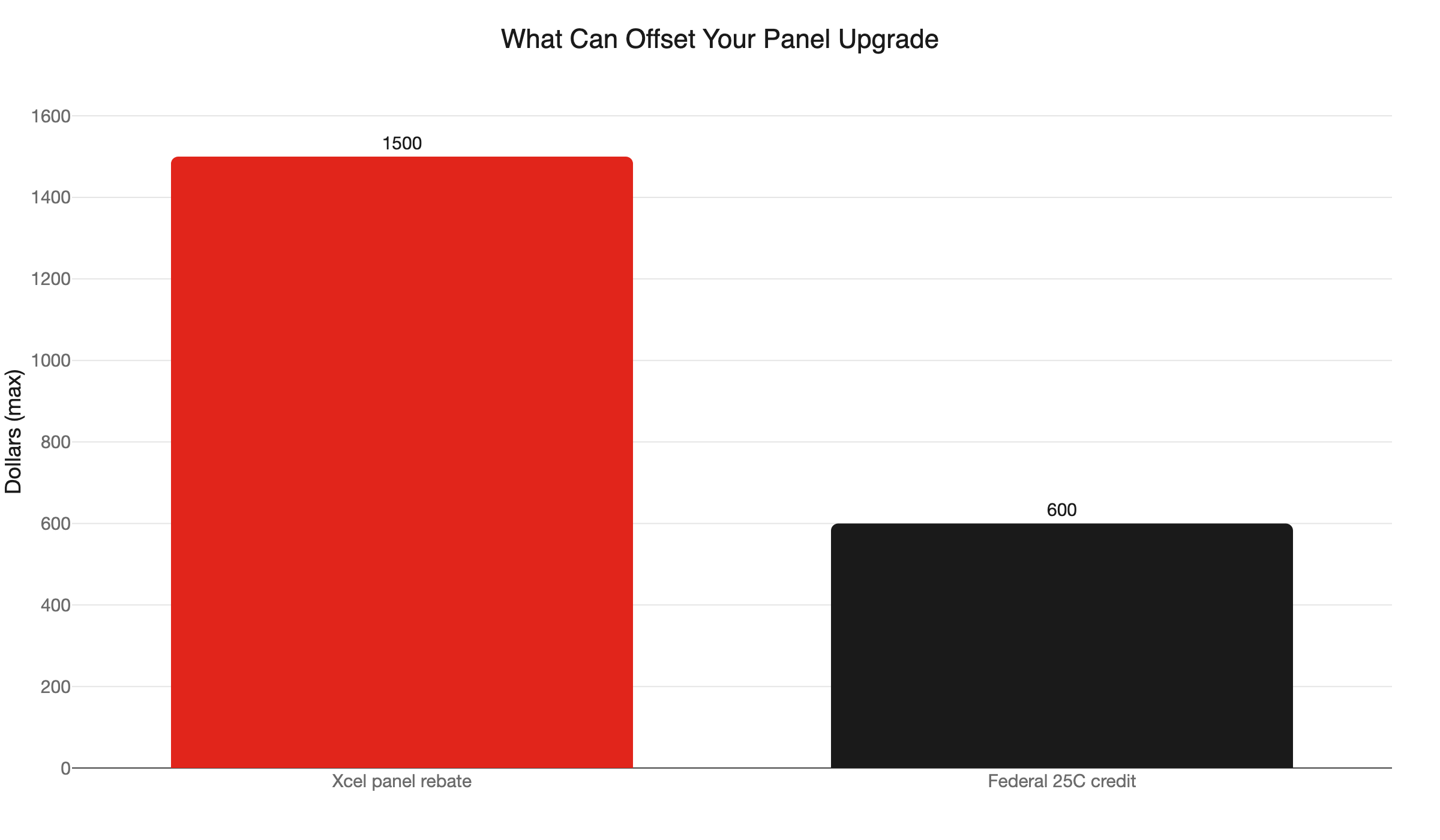
- The Xcel panel rebate and the federal 25C credit can offset the panel upgrade that comes with a rewire.
Why Do So Many Twin Cities Homes Still Have Knob and Tube Wiring?
Minneapolis and St. Paul grew fast between 1900 and 1950. Knob and tube was the standard residential wiring of that era. If your home was built before 1950, original knob and tube may still be hiding in the walls or attic.
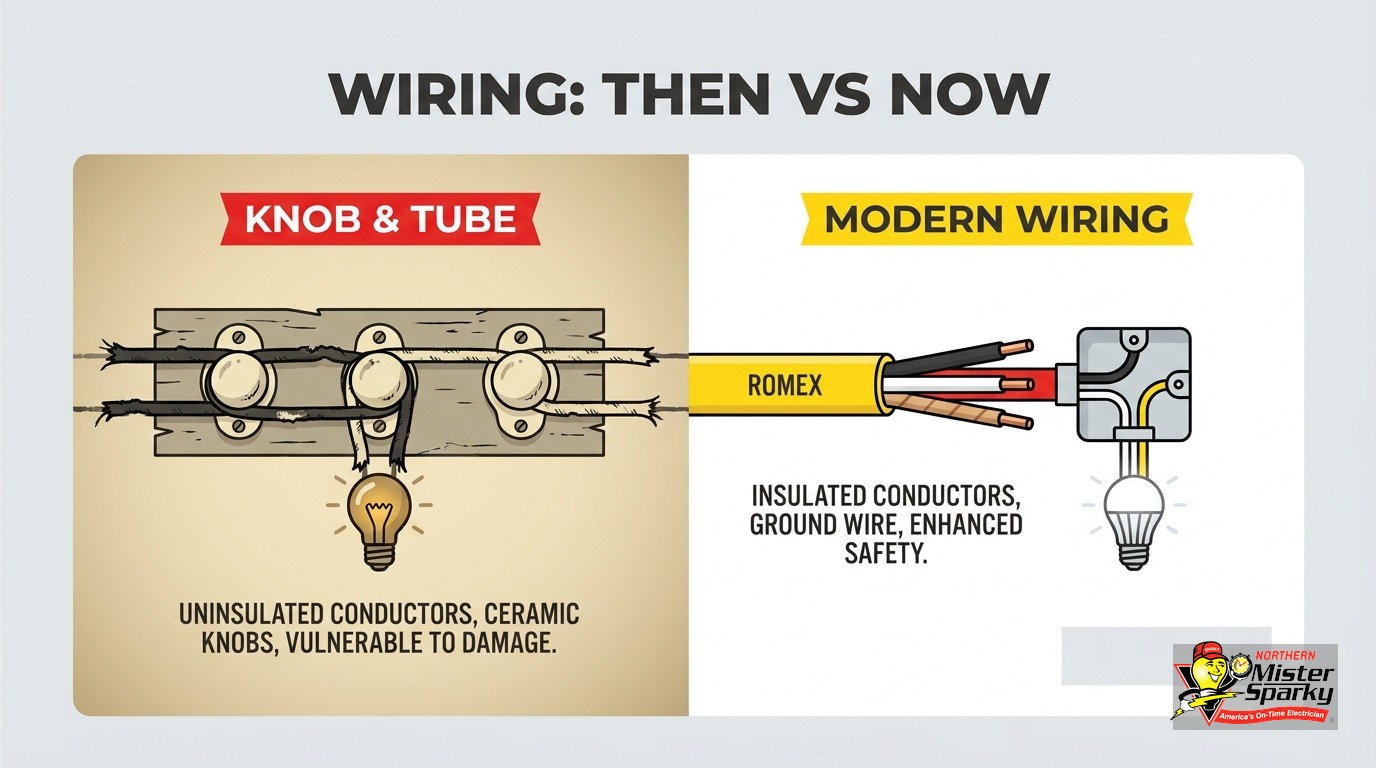
The system is easy to recognize once you know what to look for. Knob and tube runs single wires along ceramic knobs nailed to the wood framing. It passes through ceramic tubes wherever it crosses joists or studs. There is a hot wire and a neutral wire. There is no ground wire. The wires sit in open air, and that open air was meant to let heat dissipate safely.
Owners often keep it because it is hidden, it still carries power, and a full rewire is a real project. The wiring survives because it was overbuilt for the small electrical loads of its time. A 1920s home ran a few lights, a radio, and maybe an iron. Modern life asks far more of these old wires than they were built to deliver.
Is Knob and Tube Wiring Legal in Minnesota?
Yes, existing knob and tube is legal to keep in place. But any new or replacement work must meet the 2023 NEC, which Minnesota adopted on July 1, 2023. A proper replacement runs under a DLI permit and a rough-in inspection.
Minnesota adopts the National Electrical Code through Chapter 1315 of the State Building Code. The Board of Electricity adopted the 2023 NEC effective July 1, 2023. Permits filed on or after that date must follow it.
A proper replacement runs under an electrical permit from Minnesota DLI. The rough-in wiring must be inspected before any insulation, drywall, or backfill conceals it. DLI even offers virtual electrical inspections. A licensed electrician on site can sometimes schedule one with as little as 15 minutes of notice.
That paper trail matters more than most owners expect. “Permitted, inspected, and brought to current code” is what an underwriter and a future buyer want to see on a disclosure form. It turns a liability into a documented asset.
Is Knob and Tube Wiring Safe?
Original, unaltered knob and tube is not inherently unsafe. But Twin Cities inspectors find unsafe alterations in nearly every home they check. Most danger comes from bad splices, buried insulation, and modern fixtures overheating old wires.
The local authority on this point is Structure Tech, the dominant Twin Cities home inspection voice. Their finding is blunt. They write that “in nearly every home that we inspect with knob and tube wiring, we find unsafe alterations” (HomesMSP).
The defects they report most often include:
- Rubber insulation baked brittle in hot attics, leaving bare conductors behind.
- 60-degree-Celsius wiring overheated by modern 90-degree light fixtures.
- Improper open-air splices that were wire-nutted instead of soldered and taped.
- Three-prong receptacles with no real ground behind them.
- Wiring buried inside insulation, which we cover next.
The fixture problem deserves a closer look. Old knob and tube is rated for 60-degree wiring. Modern light fixtures run 90-degree wire. The fix is a junction-box transition to modern wire at each old fixture.
Because the system has no equipment ground, some homes show “grounded” receptacles back-fed from a water pipe. Structure Tech flags that as unreliable, because a single plumbing change can kill the ground (HomesMSP). For more on why a real ground matters, see our guide to electrical grounding.
We treat knob and tube as a risk to assess, not a reason to panic. The right question is not whether old wire exists in your walls. The right question is what has been done to it over the last 70 to 100 years.
Will Insurance Cover a House With Knob and Tube Wiring?
Many national carriers decline homes with active knob and tube. A few regional carriers write coverage at a higher premium. A full, permitted replacement usually unlocks standard coverage and can lower your premium.
Insurance is often the first place knob and tube turns from a quiet concern into a real problem. A 2019 insurer survey by Structure Tech found a clear pattern. Roughly 20 carriers would not write a policy on a home with active knob and tube. That list included State Farm, American Family, Amica, Travelers, Farmers, Nationwide, Safeco, Progressive, North Star Mutual, and Integrity (HomesMSP).
A smaller group said they would cover it at a higher premium. Those included Auto-Owners, Farm Bureau, American Modern, Foremost, and Encompass. Allstate typically said yes with a 5 percent surcharge. Where coverage was offered, a minimum 100-amp service was usually required as well.
Carrier lists move over time, so treat those names as a pattern, not a quote. Many national carriers decline, a few regional carriers write at a surcharge, and a full replacement usually unblocks standard coverage. It often lowers the premium, too.
If you are buying, selling, or refinancing an older home, loop your insurance agent in early. A pre-listing or pre-purchase electrical assessment gives you real options instead of a last-minute denial at closing.
Why Can’t You Insulate Over Knob and Tube Wiring?
Knob and tube dissipates heat in open air, and burying it traps that heat. NEC Article 394 prohibits concealed knob and tube anywhere insulation is present. Most attic projects force a rewire before insulation can go in.
This is the single most common reason a rewire gets forced mid-project. Knob and tube was designed to shed heat into open air. When you bury it in fiberglass, cellulose, or foam, that heat has nowhere to go. The wire then runs hotter than it should.
That is not a contractor preference. It is code. NEC Article 394 prohibits concealed knob and tube where loose, rolled, or foam insulation is present. Foam insulation is explicitly disallowed with knob and tube.
This is why many Twin Cities owners first find active knob and tube during an attic insulation or air-sealing job. That work is often tied to an Xcel Energy or CenterPoint rebate. The federal DOE attic air-sealing guide tells inspectors to check for knob and tube before any sealing work starts (DOE). ENERGY STAR lists pre-1930 knob and tube as a fire hazard in contact with insulation (ENERGY STAR).
The practical result is simple. Your attic insulation upgrade cannot proceed legally until the knob and tube is gone. Framing the rewire as the gate that unlocks the insulation rebate is one of the strongest reasons to do the work now.
What Does Knob and Tube Wiring Replacement Involve?
A replacement runs new grounded wiring through the affected areas, usually with a new or upgraded service panel. The work happens under a DLI permit, with a rough-in inspection before any insulation, drywall, or plaster goes back.
A knob and tube replacement is a whole-home rewiring project, not a single-room fix. We plan it in clear phases so you always know what happens next. The goal is work that passes inspection the first time.
First, we map the existing wiring and decide between a phased approach and a full rewire. A full rewire is cleaner, and it is usually what insurers and buyers want to see. We pull a DLI electrical permit before any wire moves, and we never skip this step.
Then we run new, grounded cable to every device and fixture on the affected circuits. In most cases the service panel also needs attention. A modern, grounded system needs panel capacity to match the new loads. You can read more about our whole-home rewiring process before we start.
We keep temporary power live so your household is not frozen in the dark. We schedule the rough-in inspection before any insulation, drywall, or plaster goes back. After the walls close and devices go in, we finish with device installation, full testing, and wall repair.
This is skilled, licensed work, and it is exactly where shortcuts turn dangerous. For more on why, read our breakdown of the most common DIY electrical dangers we see in the field.
How Much Does Knob and Tube Wiring Replacement Cost in the Twin Cities?
A typical 1,500 to 2,500 square foot Twin Cities home often lands between $8,000 and $20,000, plus. Larger or plaster-wall homes sit at the top end. Variables include home size, access, panel work, and wall repair.
We give fixed-scope quotes, not vague “call for pricing” answers. Real cost always depends on the home, but here are honest anchors to plan around.
National data puts a full knob and tube rewire between $2,000 and $36,600. It is often quoted near $10 to $20 per square foot (r/AskElectricians). In the Twin Cities, a typical 1,500 to 2,500 square foot home commonly lands between $8,000 and $20,000, plus. Local discussion tracks the same range (r/Minneapolis).
Several variables move the number up or down:
- Home size and the total number of circuits.
- Plaster walls versus drywall, since plaster access and repair cost more.
- Attic and crawlspace access, or the lack of it.
- Whether the service panel needs an upgrade at the same time.
- How much drywall, plaster, and paint repair you want in the scope.
Treat these as planning anchors, not a quote. The only honest dollar figure comes from a walk-through of your actual home, room by room. That is the difference between a guess and a fixed-scope plan you can budget against.
What Rebates and Credits Help Pay for a Knob and Tube Rewire?
The Xcel Energy panel rebate up to $1,500 and the federal 25C credit up to $600 can offset the panel upgrade that comes with a rewire. The Minnesota state panel grant is not available yet and is not retroactive.
Two real programs can offset the panel upgrade that usually comes with a rewire. Neither pays for the whole job, but both reduce the bill.
Xcel Energy offers an Electrical Panel Upgrade Rebate of up to $1,500 for qualifying panel upgrades. Its broader home rebates hub also lists insulation and air-sealing incentives. Those become available once the knob and tube is gone (Xcel).
The federal 25C Energy Efficient Home Improvement Credit covers 30 percent of cost, up to $600. It applies to a qualifying load center or panelboard of at least 200 amps. You claim it on IRS Form 5695 (ENERGY STAR). The statute requires a panel installed to the NEC with capacity of at least 200 amps (26 U.S.C. 25C).
One honest caveat matters here. The 25C credit covers the panel and the enabling property, not the branch-circuit rewiring itself. Frame it as help on the panel upgrade, not help on the full rewire.
Now, the warning we give every client. The Minnesota Residential Electrical Panel Upgrade Grant could offer up to $3,000 or $2,000 toward a 200-amp panel. But as of its February 2026 update, the program had not launched. Grants will not be issued retroactively. Do not count on this grant for a rewire you do today.
Aluminum Branch Wiring Is Not Knob and Tube
One more distinction, because it trips up a lot of homeowners and more than a few web pages. Knob and tube wiring and aluminum branch wiring are different systems from different eras. They have different fixes.
Knob and tube is pre-1950s, two-conductor, ungrounded, and strung on ceramic knobs and tubes. Aluminum branch wiring dates roughly from 1965 to 1974. It is single-strand, and its main fire risk sits at the termination points. That is where the aluminum wire meets switches and receptacles.
If your home was built in the mid-1960s to mid-1970s, you may have aluminum branch wiring, not knob and tube. The repair is different, and the insurance conversation is different too. A proper assessment tells you which one you have before anyone starts cutting into walls.
Get a Clear, Fixed-Scope Rewire Quote
Knob and tube wiring is not a reason to panic, but it is a reason to plan. The homes that get into trouble are the ones where owners guess, delay, or bury the problem under fresh insulation and hope it stays hidden.
We are Northern Mister Sparky, locally owned and operated in the Twin Cities. As America’s On-Time Electrician(R), we show up when we say we will. We do electrical work the right way, and we back every job with the UWIN(R) satisfaction guarantee. No malarky, just grounded, permitted, inspected wiring that holds up with your insurer and your next buyer.
Call us at 763-200-5956 or book online to schedule a knob and tube wiring assessment. We will walk your home, explain exactly what we find, and hand you a fixed-scope quote before any wire moves.
Frequently Asked Questions
How do I know if my home has knob and tube wiring?
Look in the attic or basement for ceramic knobs and tubes, with single wires running along joists. A home built before 1950 is the main clue. A licensed electrician can confirm it during a full assessment.
Can I keep some knob and tube and replace the rest?
You can phase the work over time. But insurers and buyers usually want full removal of any active knob and tube. Leaving active runs behind often defeats the insurance benefit you are paying for.
Does knob and tube replacement require a permit in Minnesota?
Yes. Any replacement runs under a DLI electrical permit. It gets a rough-in inspection before the walls and attic close up again.
Will a rewire tear up my walls?
Access is needed in walls, ceilings, and the attic. Plaster homes cost more to open and repair than drywall homes. We plan access carefully and keep temporary power live throughout the work.
How long does a knob and tube rewire take?
It depends on home size, access, and scope. We give you a clear timeline inside your fixed-scope quote before any work starts.
Frequently Asked Questions
How do I know if my home has knob and tube wiring? +
Can I keep some knob and tube and replace the rest? +
Does knob and tube replacement require a permit in Minnesota? +
Will a rewire tear up my walls? +
How long does a knob and tube rewire take? +
Need an electrician now?