DIY Electrical Dangers: A Twin Cities Homeowner Guide
Key Takeaways
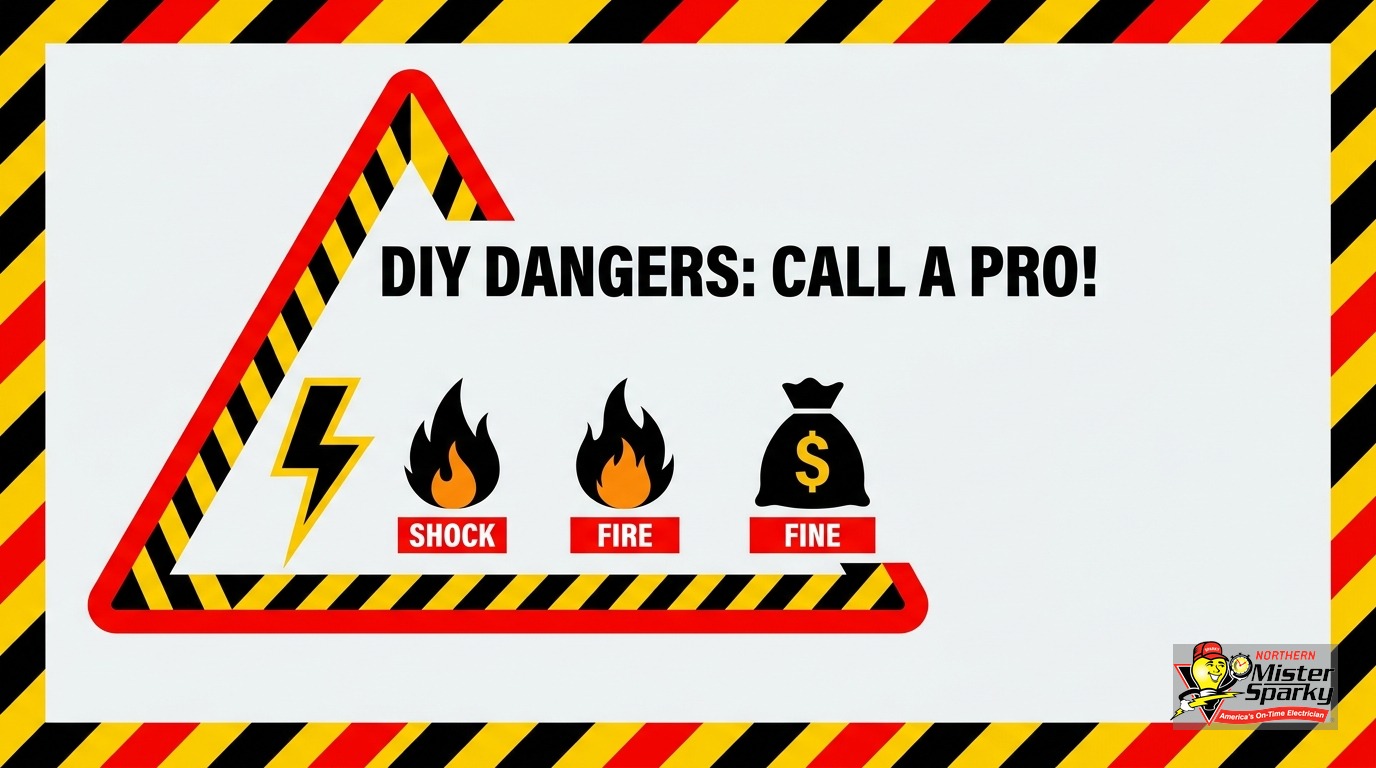
- DIY electrical dangers fall into three layers: physical harm, legal exposure, and financial loss.
- Home electrical fires cause nearly 500 deaths and $1.3 billion in property damage each year.
- In Minnesota, you may only wire a single-family home you own and occupy.
- A permit is cheap. A denied insurance claim or a failed home-sale inspection is not.
- Minnesota winters pile space heaters and holiday lights onto old circuits, raising fire risk.
- When the job touches your panel, wiring, or code, a licensed electrician is the smart call.
Do-it-yourself projects can save real money around the house. But DIY electrical dangers are a different story. A wrong wire or a skipped permit can cost you your home, your insurance claim, or even your life. This guide goes deeper than the usual shock-and-fire checklist. We cover the body, the wallet, and the law, with the Minnesota rules most guides skip.
We are Northern Mister Sparky, your locally owned and operated Twin Cities electrician. Here is what every homeowner should know before picking up a pair of wire strippers.
What are the real DIY electrical dangers homeowners underestimate?
The real DIY electrical dangers go far beyond shock and fire. They include illegal unpermitted work, denied insurance claims, and failed home inspections. Most online guides stop at physical hazards. The bigger risks often arrive later, in a letter from your insurer or a buyer’s inspector.
Think of DIY electrical risk in three layers. The first layer is your body. The second layer is your wallet. The third layer is the law. Skip any one of them, and a small project can turn into a large problem.
Physical danger is real and immediate. It is also the part most people already fear. The legal and financial layers are quieter. They wait months or years, then show up at the worst time. That is why the full picture matters more than another hazard listicle.
Most guides never draw that full picture. They repeat the same shock-and-fire list and call it done. We think Twin Cities homeowners deserve the parts that actually decide the outcome.
How dangerous is DIY electrical work physically?
DIY electrical work is physically dangerous because household current can injure or kill in an instant. The top hazards include shock, electrocution, arc-flash burns, and house fires from bad connections or overloaded circuits. These risks climb fast when an unlicensed person works on live wiring without professional tools.
The physical hazards are well documented. Common ones include electrocution, faulty connections, poor insulation, overloaded circuits, and bad grounding, as standard DIY hazard guides list. Working without professional testers makes each one harder to catch in time.
Tools are a big part of the gap. A pro uses meters and testers to confirm a circuit is dead. A homeowner often guesses. That guess is where shocks and arc-flash burns happen.
Fire is the danger that scales. Home electrical fires cause an estimated 51,000 fires each year, nearly 500 deaths, more than 1,400 injuries, and $1.3 billion in property damage, according to ESFI. Electrical distribution and lighting rank among the leading causes of home structure fires.
Many of those fires start small and hidden. Arc-faults from worn or overburdened wiring start tens of thousands of home fires every year, per NFPA and ESFI data. You cannot see an arc-fault behind a wall until it is too late.
There is good news on prevention. The Consumer Product Safety Commission estimates that more than half of yearly electrical fires could be prevented by arc-fault circuit interrupters, according to ESFI. These are exactly the code-required devices that DIY jobs tend to skip.
Appliances and outlets are another common ignition point. Federal fire data tracks appliances and electrical distribution as major residential fire sources, via the U.S. Fire Administration. A loose outlet or an overloaded circuit is not a minor issue. If your breakers trip often, book help for overloaded circuits instead of guessing.
Want the short list of what fails most? Read our guide to the top five electrical hazards in a typical home.
Can I legally do my own electrical work in Minnesota?
In Minnesota, you may legally do electrical work only on a single-family home you own and occupy, or plan to occupy. It is illegal for unlicensed homeowners to wire two-family dwellings, apartments, condos, townhouses, manufactured homes in parks, RVs, or floating buildings. This rule surprises many owners.
This is the single most important legal fact for Twin Cities homeowners. The state is clear on it. Homeowners may perform electrical work only on an owner-occupied single-family home, per Minnesota DLI. Rental units and shared buildings are off-limits to unlicensed hands.
So the duplex you rent out is not fair game. Neither is your condo, your townhouse, or a manufactured home in a park. If you own one of those, the law wants a licensed electrician. That rule protects tenants and neighbors who share your walls.
Even on your own house, legal DIY still comes with strings. You almost always need a permit and an inspection. Skipping those steps is where owner-occupied projects quietly go wrong.
What does an electrical permit cost in Minnesota?
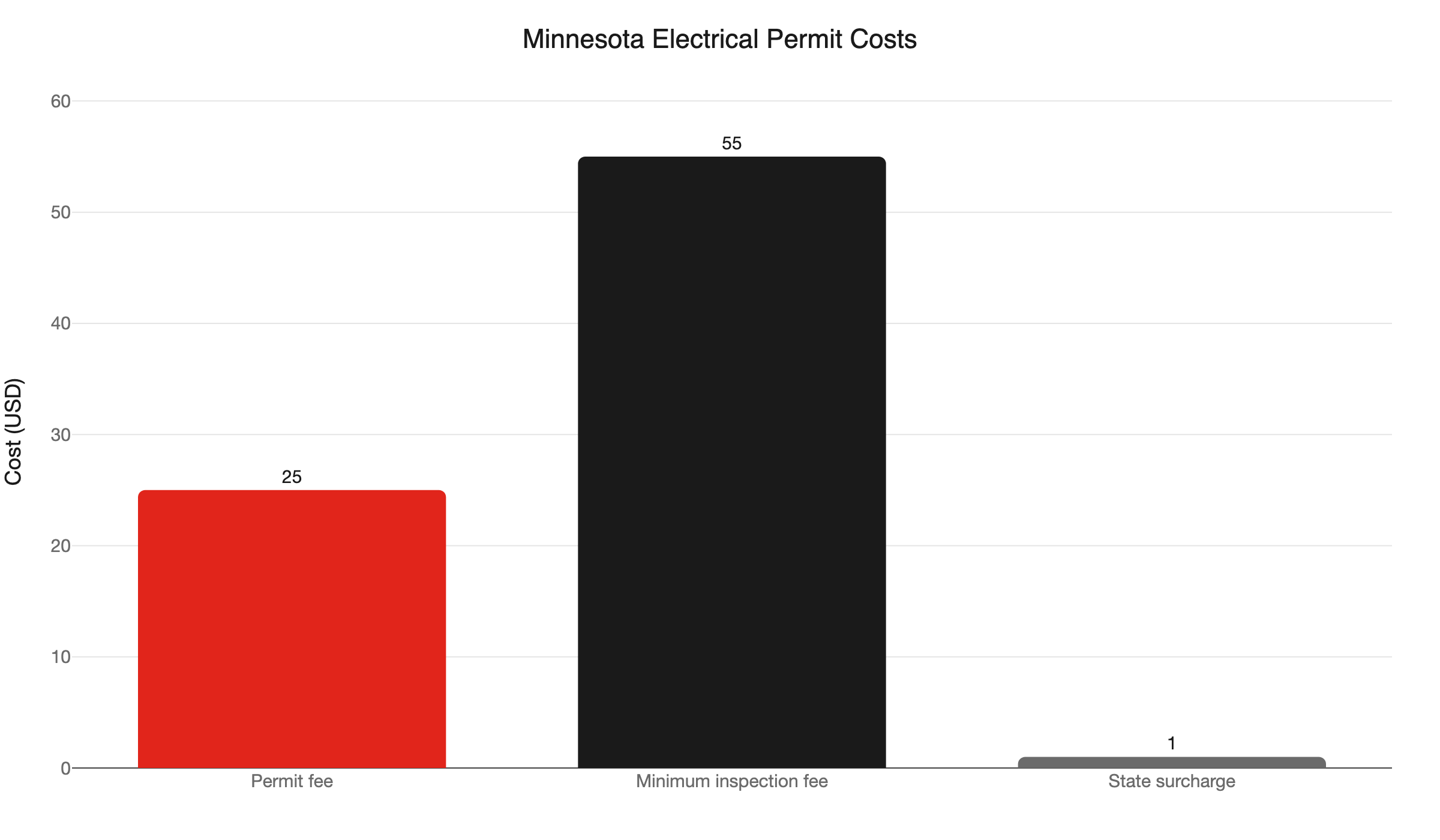
A Minnesota electrical permit is cheap compared to the risk. The state sets a $55 minimum inspection fee per inspector trip, a $25 permit fee per permit, and a $1 surcharge. You must file the permit at or before the start of any new wiring that requires inspection. That is a small price for legal, inspected work.
Look at that fee stack again. It is $55, plus $25, plus $1, per Minnesota DLI. The permit is one of the cheapest parts of any electrical project. The mistake it prevents is one of the most expensive.
The permit is not just paperwork. It triggers an inspection by a qualified authority. That inspection catches the grounding error or the wrong breaker before it starts a fire. In other words, the fee buys you a second set of expert eyes.
Filing is time-sensitive too. A permit must be filed at or before the start of any new wiring requiring inspection, per Minnesota DLI. You cannot finish the job, then paper it over later without risk.
Here is another twist most guides miss. Many Twin Cities cities run their own inspection authority. Roughly 66 Minnesota cities have adopted local electrical inspection authority, per Minnesota DLI. So “just pull a state permit” is wrong for a lot of metro homeowners.
Always verify your Authority Having Jurisdiction first. Minneapolis, St. Paul, and many suburbs may self-inspect. Guess wrong, and your permit goes to the wrong office. A licensed local electrician already knows which door to knock on.
Will DIY electrical work hurt my insurance or home sale?
Yes. Unpermitted or improper DIY electrical work can void an insurance claim and derail a home sale. If a fire traces back to unpermitted wiring, your insurer may deny the claim. At resale, a failed point-of-sale inspection can stall or kill the deal until a licensed electrician makes it right.
This is the layer that most guides ignore. They stop at “you might get hurt.” They never mention the money after the fire. That gap is exactly where Twin Cities homeowners get burned twice.
Picture the worst case. A DIY circuit overheats and starts a fire, one of the 51,000 yearly home electrical fires. The adjuster investigates. If the work was unpermitted and not to code, your claim can be denied. Now you are paying for the damage yourself.
Resale is the second money trap. Many sales include an inspection or a point-of-sale review. Unpermitted electrical work is a common red flag. Buyers ask for repairs, ask for credits, or walk away. Suddenly your “savings” cost you real money at closing.
Documented, permitted, inspected work protects you on both fronts. It gives your insurer no reason to fight. It gives your buyer confidence. That paper trail is an asset, not a hassle.
Why are DIY electrical dangers worse in a Minnesota winter?
Minnesota winters make DIY electrical dangers worse by piling heavy seasonal load onto older circuits. Space heaters, holiday lights, and block heaters draw big current at the same time. Add basement moisture near a panel from snowmelt, and old or DIY-modified wiring faces its hardest test of the year.
Winter load is the local danger no national guide covers. Our homes work hardest in the cold. Space heaters alone pull heavy current. Stack holiday lighting on the same tired circuit, and breakers trip, or worse, wires overheat quietly.
Holiday lights deserve special care. Old strings, cheap splitters, and overloaded outlets are a classic December fire source. Before you decorate, read our holiday lighting safety tips. A few minutes of planning beats a house fire.
Basement moisture is the second seasonal factor. Snowmelt, ice dams, and humidity gather near many Twin Cities panels. Water and electricity never mix well. A DIY panel tweak in a damp basement raises the stakes fast.
Older homes feel all of this most. If your panel is full, fuses blow, or lights dim when the furnace kicks on, your system is overloaded. A professional panel upgrade adds room and safety before the coldest weeks arrive.
Does DIY electrical work meet current Minnesota code?
Usually not. Minnesota electrical permits filed on or after July 1, 2023 must comply with the 2023 National Electrical Code. That update expanded arc-fault and ground-fault protection requirements. DIY work often skips these devices or installs older parts, so it fails current code and fails inspection.
Code is a moving target, and Minnesota just moved it. Permits filed on or after July 1, 2023 must meet the 2023 National Electrical Code, per Minnesota DLI. That code expanded AFCI and GFCI requirements in many living spaces.
Those devices matter for a reason. Remember, the CPSC estimates AFCIs could prevent more than half of yearly electrical fires, per ESFI. Code is not red tape. It is fire prevention written down.
DIY jobs routinely miss these rules. A homeowner buys a standard breaker, not the required arc-fault type. The wiring looks fine and works for a while. Then it fails inspection, or worse, it fails during a winter overload.
A licensed electrician builds to current code by default. That means the right breakers, the right protection, and a clean inspection. You get a system that is legal today and safer for years.
When is a licensed electrician the smart call?
A licensed electrician is the smart call any time the work touches your panel, service, permits, or code. Call a pro for panel upgrades, new circuits, rewiring, EV chargers, and any job in a shared building. If you are unsure whether a task is legal or safe to DIY, that uncertainty is your answer.
Some tasks are low-risk, like changing a lamp or a light bulb. Most wiring work is not. Any project that opens your panel, adds a circuit, or moves service belongs with a professional. The three-layer risk is simply too high otherwise.
Watch for signs you need an electrician that prove you are past DIY territory:
- Your breakers trip often or your fuses blow.
- Outlets feel warm, spark, or look scorched.
- Lights flicker when large appliances run.
- Your panel is full with no open slots.
- The project is in a rental, condo, or shared building.
Any one of these means it is time to call. Our team pulls the right permit, works to 2023 code, and passes inspection. We are locally owned and operated, so we already know your city’s inspection authority. No malarky, just clean and legal work.
We back it up too. As America’s On-Time Electrician(R), we show up when we say we will. Our UWIN(R) 100% satisfaction guarantee stands behind the job. That is the difference between a gamble and a sure thing.
Book Twin Cities electrical work you can trust
DIY electrical dangers are not worth the savings. The physical, legal, and financial risks stack up fast, and Minnesota winters make them sharper. A permitted, inspected, code-current job protects your home, your insurance, and your resale value.
Let your local team handle it right the first time. Call Northern Mister Sparky at 763-200-5956, or book online to schedule fast. We will keep your Twin Cities home safe, legal, and on time.
Frequently Asked Questions
Is it legal to do my own electrical work in Minnesota? +
How much does a Minnesota electrical permit cost? +
Can DIY electrical work void my home insurance? +
Do I need to comply with the 2023 electrical code in Minnesota? +
When should I stop and call a licensed electrician? +
Need an electrician now?