Top 5 Electrical Hazards Every Twin Cities Home Has
Key Takeaways
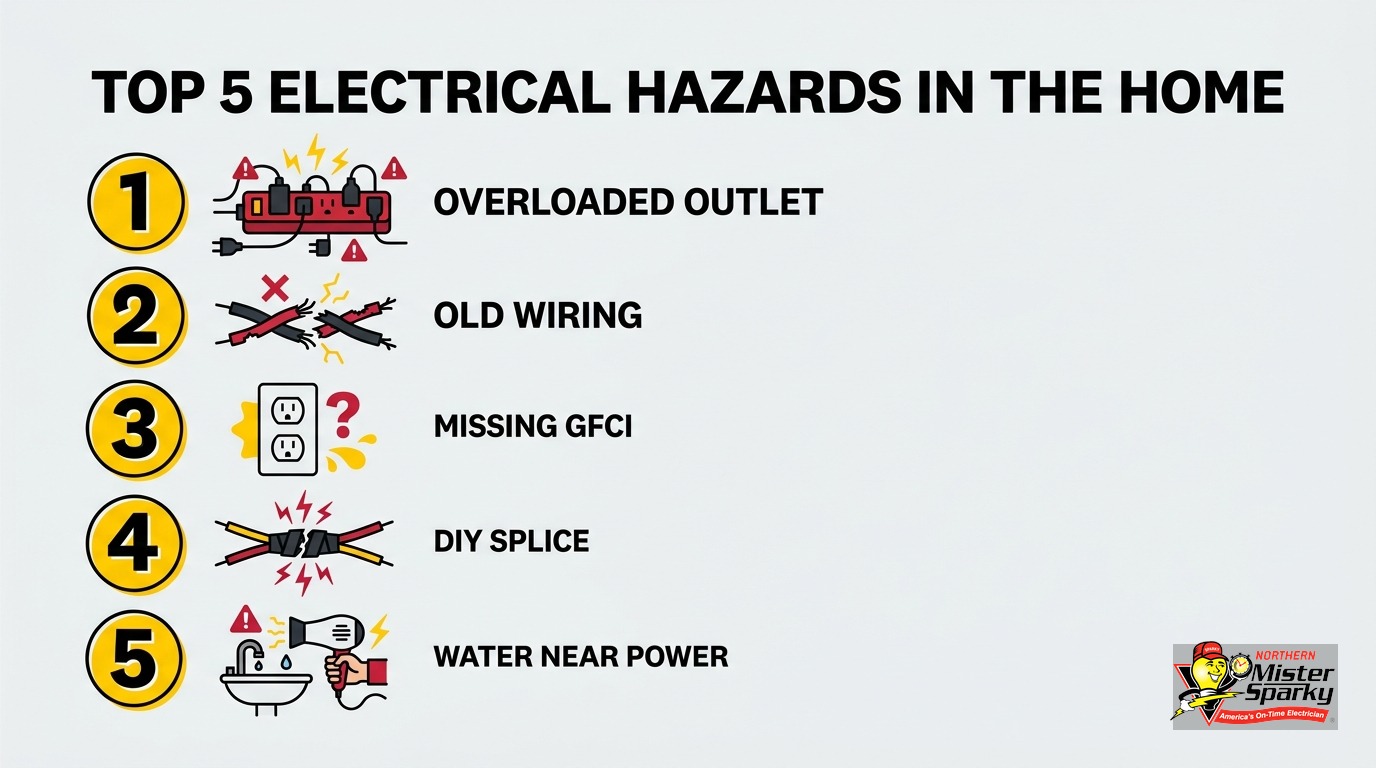
- The five most common electrical hazards in Twin Cities homes are outdated wiring, overloaded circuits, obsolete panels, missing GFCI or AFCI protection, and no whole-home surge protection.
- Federal Pacific and Zinsco panels are documented fire hazards, and many insurers now decline or non-renew homes that still have them.
- Minnesota electrical permits pulled on or after July 1, 2023 must meet the 2023 National Electrical Code.
- Xcel Energy pays a rebate of up to $1,500 for a residential panel amperage upgrade, so the fix can be partly or fully paid for.
- We are locally owned and operated, and we can inspect any of these hazards fast. Call 763-200-5956 or book online.
The Top 5 Electrical Hazards We See in Twin Cities Homes
The top 5 electrical hazards in most Minnesota homes hide in plain sight. They sit behind your walls, inside your panel, and in the outlets you use every day. We are a locally owned and operated electrical team, and we find the same five problems in Minneapolis and St. Paul houses again and again. This guide names each hazard, tells you what the fix costs, and shows you where the utility or the state will help pay for it.
Older housing stock makes this local. A large share of Minneapolis and St. Paul homes went up before 1970. That means knob-and-tube wiring, aluminum branch circuits, and undersized panels are genuinely common here. Add cold winters and summer thunderstorms, and small electrical problems turn into real risks fast.
What Are the Top 5 Electrical Hazards in a Home?
The top 5 electrical hazards are outdated or damaged wiring, overloaded circuits, faulty or obsolete panels, missing GFCI and AFCI protection, and no whole-home surge protection. Each one has a clear fix. Most can be caught in a single inspection before they cause a fire or fry your electronics.
We walk through them in order below. For each hazard, you get the warning signs, the code rule behind it, and the service that solves it. You also get real dollar figures, because you deserve to know what a fix costs before anyone touches your panel.
Hazard 1: Is Your Old Wiring a Fire Risk?
Old wiring can be a serious fire risk. Knob-and-tube and early aluminum branch wiring were common in Twin Cities homes built before 1970. These systems were never designed for today’s electrical load. Worn insulation and loose aluminum connections can overheat and start a fire inside a wall. A rewire or a targeted circuit replacement removes the danger.
Knob-and-tube wiring has no ground wire. The cloth and rubber insulation on it grows brittle after decades and crumbles when disturbed. Aluminum branch wiring brings a different problem. Aluminum expands and contracts more than copper, so connections loosen over time. Loose connections build heat right at the outlet or switch.
Watch for these warning signs:
- Outlets or switch plates that feel warm to the touch
- Scorch marks or a burning smell near outlets
- Lights that flicker or dim when large appliances start
- Cloth-wrapped wiring visible in the basement or attic
If any of these sound familiar, do not wait. Learn more about common do-it-yourself electrical dangers before you open a single junction box. When it is time for the fix, our team handles full and partial home rewiring with permits and inspection built in.
Hazard 2: Why Do Your Circuits Keep Overloading in Winter?
Your circuits overload in winter because cold-season demand stacks up on old wiring. Space heaters, holiday lights, and kitchen appliances all pull hard at once. On a 60 or 70 year old 100-amp panel, that combined load trips breakers or overheats circuits. Dedicated circuits and added panel capacity solve it.
Here is the classic Minnesota failure. A homeowner runs a space heater in the bedroom, plugs in the tree, and starts dinner. The breaker trips. They reset it, and it trips again. That breaker is not broken. It is protecting a circuit that has run out of room. If your breaker trips every time the microwave and toaster run together, your panel is telling you it is out of room.
The fix depends on the home. Heavy appliances like a space heater bank, a window unit, or a workshop tool should each get a dedicated circuit. That keeps one heavy draw from crowding out the rest of the room. When the whole panel is maxed out, the real answer is more capacity. A jump from 100 amps to 200 amps gives your home headroom for winter peaks and future upgrades.
Our team resolves overloaded circuits with dedicated lines or a panel upgrade, based on what your inspection shows. For a deeper look at why cold weather stresses your system, read our guide to winter electrical demand.
Hazard 3: Do You Have a Federal Pacific or Zinsco Panel?
If your home was built or updated between the 1950s and the 1980s, you may have a Federal Pacific or Zinsco panel. These are the single most dangerous thing we find in older homes. Federal Pacific breakers have been shown to fail to trip up to about 60% of the time, and Zinsco breakers can weld to the bus bar so power keeps flowing even when the switch reads off (source).
A breaker has one job: to cut power when a circuit draws too much current. When it fails to trip, the wire behind your wall keeps heating with nothing to stop it. That is how an overload becomes a fire. Both of these panel brands carry that documented flaw, and no repair makes them safe. The only real fix is full replacement.
There is a second reason to act. Insurance companies increasingly decline, non-renew, or require replacement of homes with these panels before they will bind coverage. Replacing a Zinsco panel can be a significant expense, depending on amperage and wiring condition (source). That is a real cost, but it is far cheaper than a fire or a dropped policy.
Not sure what you have? Our guide to the signs you need an electrical panel upgrade helps you read your own panel. When the answer is yes, we handle the full panel upgrade from permit to final inspection.
Hazard 4: Where Do You Need GFCI and AFCI Protection?
You need GFCI protection anywhere water meets electricity, and AFCI protection in most living spaces. The 2023 NEC requires GFCI for all kitchen receptacles, bathrooms, laundry, garages, basements, crawl spaces, outdoors, and within 6 feet of any sink. AFCI protection covers most 20-amp circuits in bedrooms, living rooms, dining rooms, hallways, and laundry (source).
These two devices guard against different dangers. A GFCI, or ground-fault circuit interrupter, watches for current leaking to ground, the kind of leak that happens when a hair dryer hits sink water. It shuts power off in milliseconds, fast enough to prevent a lethal shock. An AFCI, or arc-fault circuit interrupter, listens for the dangerous sparking of a loose or damaged wire and cuts power before that arc can ignite nearby wood or insulation.
Kitchens are the one room that needs both. A dual-function AFCI/GFCI breaker covers the requirement in a single device. If your home still runs ordinary two-prong outlets near sinks or in the garage, that is a code gap and a safety gap at the same time. These are signs you need an electrician to update your system’s protection. Our electrical safety team can add the right protection room by room and bring your home up to the current code.
Hazard 5: What Does Whole-Home Surge Protection Do?
Whole-home surge protection stops voltage spikes before they reach your electronics. A Type 2 surge protective device mounts right at your panel and shields everything downstream: furnace control boards, appliances, computers, and smart devices. The 2023 NEC now requires a surge protective device on all services supplying a home (source).
Minnesota storm season makes this concrete, not a nicety. Summer thunderstorms send surges down the utility line and into your home. A single strike near the grid can push thousands of volts through your wiring in an instant. The power strips behind your TV do nothing against that. They protect one device from a small spike, while the real damage comes through the main service.
A Type 2 device installs on the load side of your main breaker and carries a nominal discharge rating of at least 10kA per code. That means it can absorb repeated surges over years of storms. One device at the panel protects the whole house. Our team installs a code-compliant whole-home surge protector in a single visit, usually alongside a panel service or upgrade.
How Much Does It Cost to Fix These Hazards?
Costs vary by home, but the ranges are predictable. Replacing an obsolete Zinsco or Federal Pacific panel can be a significant expense, depending on amperage and wiring condition (source). Surge devices, GFCI breakers, and dedicated circuits cost far less. A single inspection tells you exactly what your home needs before you spend a dollar.
The panel is usually the biggest line item, and it is also the hazard with the most help attached to it. That is where rebates and grants come in, which we cover next. For smaller fixes like a dedicated circuit or a surge device, financing is available so a safety upgrade does not have to wait for the right month.
Who Pays for a Twin Cities Panel Upgrade?
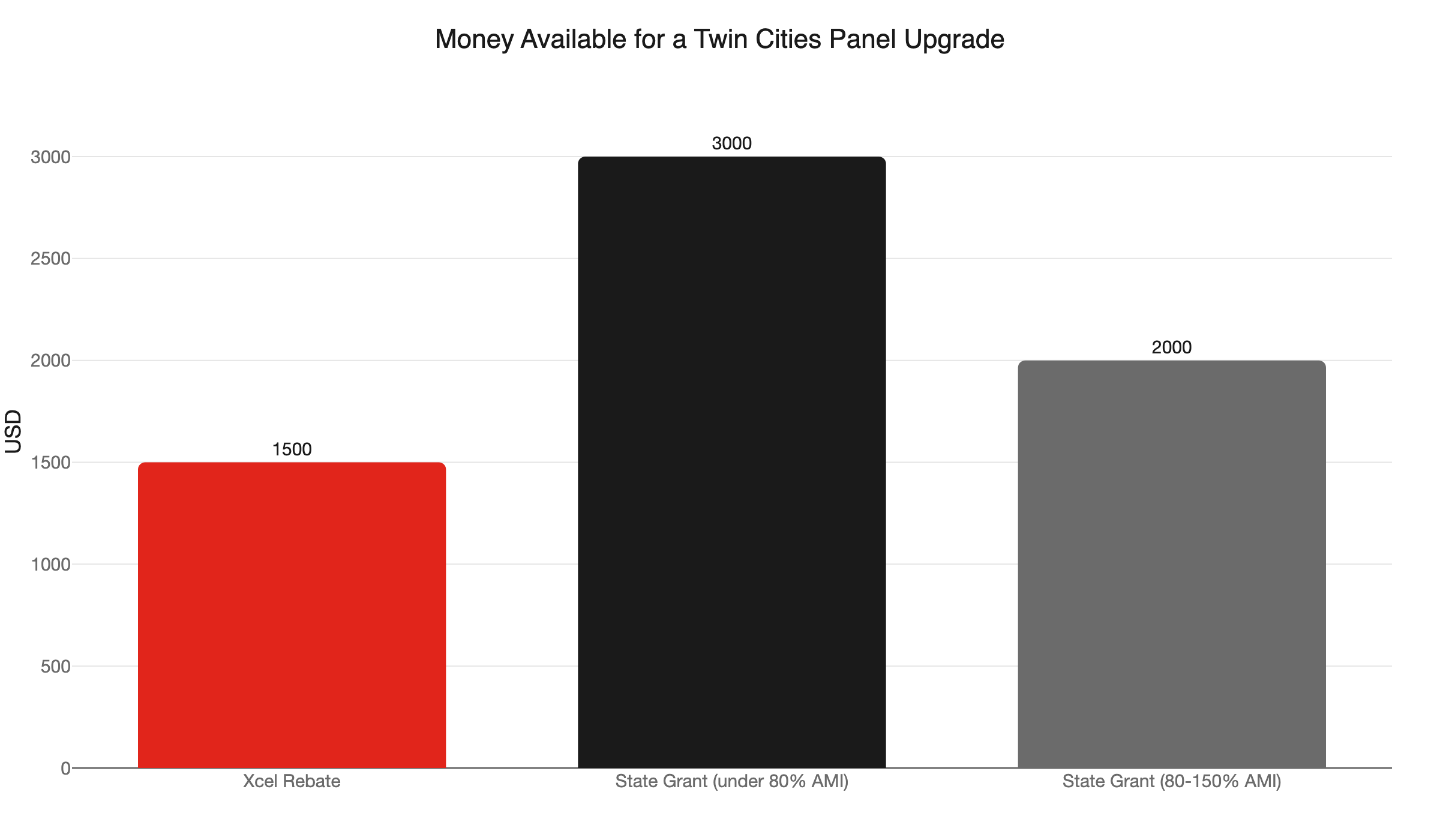
The utility and the state help pay. Xcel Energy pays a rebate covering full project cost up to $1,500 for a residential panel amperage upgrade, done by a Minnesota-licensed electrician and processed in 6 to 8 weeks (source). That rebate is live now.
More help is coming. Minnesota’s Residential Electrical Panel Upgrade Grant Program offers up to $3,000 for households under 80% of Area Median Income, or up to $2,000 for households between 80% and 150% of AMI, for a single-family panel upgrade (source). As of June 2026 the state program is still awaiting federal approval to launch, so treat it as coming soon and check your eligibility rather than counting on it today. The Center for Energy and Environment administers contractor engagement and quality assurance for these rollouts (source).
Stack the numbers and the case gets easy. Between the live Xcel rebate and the pending state grant, a panel upgrade can be partly or fully paid for. We handle the paperwork side so you get the rebate you earned.
Do You Need a Permit for Electrical Work in Minnesota?
Yes, most electrical work in Minnesota needs a permit. Permits filed on or after July 1, 2023 must comply with the 2023 National Electrical Code, which the state adopts directly from the NFPA (source). The permit is not red tape. It is the inspection that confirms the work is safe.
Fees are modest and set by the state. A $25 permit fee applies to each Minnesota electrical permit, plus a minimum inspection fee of $55 per inspector trip. Many cities run their own local inspection authority with their own fee schedules, so the exact cost depends on where you live (source). When we do the work, we pull the permit and schedule the inspection for you, so nothing on your record is left open.
How Northern Mister Sparky Protects Your Home
You now know the top 5 electrical hazards, what each fix costs, and where the money is to help pay for it. The next step is simple. Book an inspection and let a licensed electrician confirm which of these five live in your home.
We are locally owned and operated, and we run to the standard behind America’s On-Time Electrician(R). Every job is backed by the UWIN(R) 100% satisfaction guarantee, so the work is right or we make it right. We do electrical only, with no malarky. For heating, cooling, or plumbing, we point you to our sister Northern brands.
Larger jobs like a panel upgrade, a generator circuit, or an EV charger can be financed, so safety does not have to wait. Call 763-200-5956 or book online today, and we will get your home off this list for good.
Frequently Asked Questions
Are Federal Pacific and Zinsco panels really dangerous? +
Will insurance cover a home with an old electrical panel? +
Does Xcel Energy pay for a panel upgrade in the Twin Cities? +
What does the 2023 NEC require for GFCI protection? +
Need an electrician now?