January Winter Electrical Demand: A Twin Cities Guide
Key Takeaways
- Winter electricity use rises because days are shorter and homes add electric heat, per EIA.
- A space heater can easily max out a standard household circuit, per the U.S. Department of Energy.
- December, January, and February are the peak months for home heating fires, per NFPA.
- Recent Minnesota permits must meet the current NEC, per Minnesota DLI.
- Xcel Energy offers up to $2,000 for a qualifying cold-climate heat pump, per Xcel Energy.
- Call 763-200-5956 or book online for a panel and load evaluation.
Why does January winter electrical demand spike?
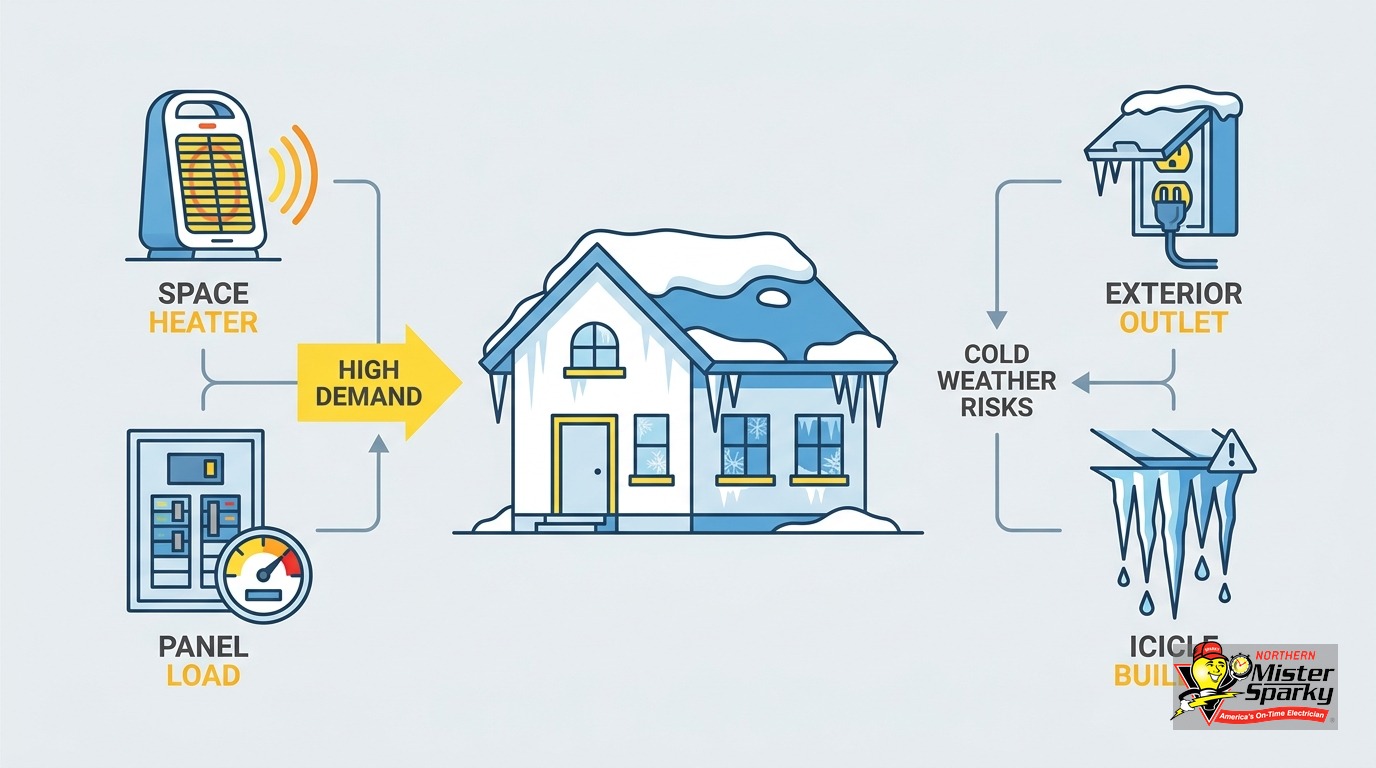
January winter electrical demand spikes because short days and deep cold pile new loads onto your home. You run lights longer, plug in space heaters, and lean on electric heat. Older wiring and small panels feel the strain first. That is when hidden problems show up. EIA data shows winter electricity use climbs as days shorten and homes add electric heat.
We are your locally owned and operated Twin Cities electrician. We see the same pattern every January. Breakers trip. Lights flicker. Outlets feel warm. Your home is not broken. It is telling you the electrical system is working harder than it was built to.
This guide pairs that seasonal story with the parts other guides skip: Minnesota code, permits, rebates, and real load math. By the end, you will know why winter exposes weak spots and what to do about it.
How much more power do Twin Cities homes use in winter?
The average U.S. home uses about 5,100 kWh of electricity across a single winter, from October through March, and that number climbs year over year as electric heating spreads, per EIA. Minnesota winters are long and dark, so local demand runs high.
Two things drive the jump. First, the sun sets early, so lights stay on for more hours each day. Second, many homes add heat that runs on electricity. That can be a primary source like an electric furnace or heat pump. It can also be a secondary source like a space heater or electric blanket, per EIA.
In the Twin Cities, that means your panel carries a heavier and longer load in January than in July. A system that coasted through summer can hit its limit in the cold. The demand does not just cost more on your bill. It also tests every breaker, wire, and connection in the house.
Why does one space heater trip your breaker?
A portable space heater draws about 1,500 watts. A standard household circuit safely carries only a fraction of its rated capacity on a continuous basis, per the U.S. Department of Energy. So one heater alone can push a circuit past its safe limit.
Now add anything else on that same circuit. A TV, a phone charger, a lamp, or a second heater tips it over. The breaker senses the overload and trips to protect the wiring. That is the system doing its job.
The problem starts when you reset the breaker again and again instead of fixing the load. Repeated overloads heat the wiring and connections. Over time, that heat is a real fire risk. If one heater keeps tripping a circuit, that circuit is telling you it is out of room.
We fix this two ways. Sometimes you need a dedicated circuit or added outlets to spread the load. Other times the panel itself is undersized and needs help. If your breakers trip often, our overloaded circuit repair team can find the cause fast.
What warning signs does winter electrical demand expose?
Winter electrical demand exposes three classic overload signs: breakers that trip often, lights that flicker or dim when an appliance kicks on, and outlets or switch plates that feel warm or look discolored. Treat these as a January stress test result, not a quirk. They point to undersized or aging service.
Think of January as a stress test your home takes every year. The extra load reveals weak spots that stay hidden in mild weather. Here is what to watch for.
- Breakers that trip often. One trip is normal. A pattern means a circuit or panel is overloaded.
- Flickering or dimming lights. If lights dip when the furnace or a heater starts, the circuit is straining, per EIA.
- Warm or discolored outlets. Heat and brown marks at an outlet signal loose or overloaded wiring.
- A burning or fishy smell. Overheated plastic has a sharp odor. Stop using that outlet and call us.
None of these fix themselves. They get worse as the cold deepens. If you notice any of them, our electrical outlet repair team can check the circuit before it becomes a hazard. For more red flags, see our guide on the top 5 electrical hazards in the home.
Why are older Minneapolis and St. Paul homes most at risk?
A large share of Minneapolis and St. Paul homes were built before 1960. Many still run on 60-amp or 100-amp service with panels that were never sized for modern electric loads. Winter demand is exactly what pushes that older service past its comfort zone.
These homes have real charm. They also have wiring that predates space heaters, big-screen TVs, and EV chargers. When you stack today’s loads on yesterday’s panel, something has to give. Usually it is the breaker, and that is the safe outcome. The unsafe outcome is heat building up in old connections.
If your home is older and your panel is small, a winter of tripped breakers is a signal. It may be time for a panel upgrade to 200-amp service. A larger panel adds capacity, room for new circuits, and a safer foundation for electric heat or an EV charger. Not sure if you need one? Our guide on the signs you need an electrical panel upgrade walks through it.
How dangerous are winter heating fires?
Winter heating fires are a serious and seasonal danger. December, January, and February are the peak months for U.S. home heating fires, per NFPA. The timing lines up with the demand spike, which is why January is the month to take these signs seriously.
The numbers are sobering. U.S. fire departments respond to a large number of home heating-equipment fires every year, causing deaths, injuries, and significant property damage, per NFPA.
Space heaters carry the most risk by far. They are involved in a minority of home heating fires but cause a disproportionate share of the deaths and injuries, per NFPA. The U.S. Consumer Product Safety Commission estimates portable space heaters alone cause about 1,700 fires, 80 deaths, and 160 injuries each year, per PIRG.
Placement matters as much as wiring. More than half of home heating-fire deaths start when heating equipment sits too close to something that can burn, like furniture, bedding, or clothing, per NFPA. Keep at least 3 feet of clear space around any heater. Plug it straight into a wall outlet, never a power strip. And make sure your smoke detectors work before the coldest weeks hit.
What can you do tonight to lower the risk?
You can lower your risk tonight with a few simple moves. Spread space heaters across different circuits, keep 3 feet of clearance around each one, plug heaters straight into wall outlets, and never chain power strips. Then note which breakers trip so an electrician can target the fix.
Small habits make a real difference during the coldest weeks. Try these steps.
- Split the load. Do not run two heaters, a microwave, and a toaster on one kitchen circuit. Move devices to outlets on different circuits.
- Skip the extension cord. Space heaters draw too much for a light-duty cord or power strip. Plug them into the wall, per the U.S. Department of Energy.
- Give heaters room. Keep 3 feet of space between a heater and anything that can burn, per NFPA.
- Test your alarms. Working smoke and carbon monoxide detectors are your last line of defense.
- Track the trips. Write down which breaker trips and when. That log helps us find the weak circuit fast.
These steps reduce risk, but they do not add capacity. If your home keeps tripping breakers, the real fix is more electrical room.
What Minnesota permit and code rules apply to a panel upgrade?
Most electrical upgrades in Minnesota need a permit, and the code depends on your filing date. Recent permits must meet the current National Electrical Code, per Minnesota DLI. Earlier permits followed the 2020 NEC. A licensed electrician handles this for you.
Here is what Twin Cities homeowners should know. You can pull your own electrical permit online through the Minnesota DLI iMS system if you do the work yourself, per Minnesota DLI. Most homeowners hire a licensed pro instead, both for safety and because panel work is not a beginner job. Our guide on DIY electrical dangers explains why.
Permit fees are modest. The state charges a permit fee plus a surcharge, with a minimum inspection fee per inspector trip, per Minnesota DLI. One important local quirk: about 66 Minnesota cities run their own electrical inspection authority. So confirm whether the state or your city has jurisdiction over your address. We handle that lookup as part of every job, so there is no confusion about who inspects what.
When we upgrade a panel, we pull the right permit, meet current code, and schedule the inspection. You get a system that is legal, safe, and ready for winter load.
What rebates can help cover the cost?
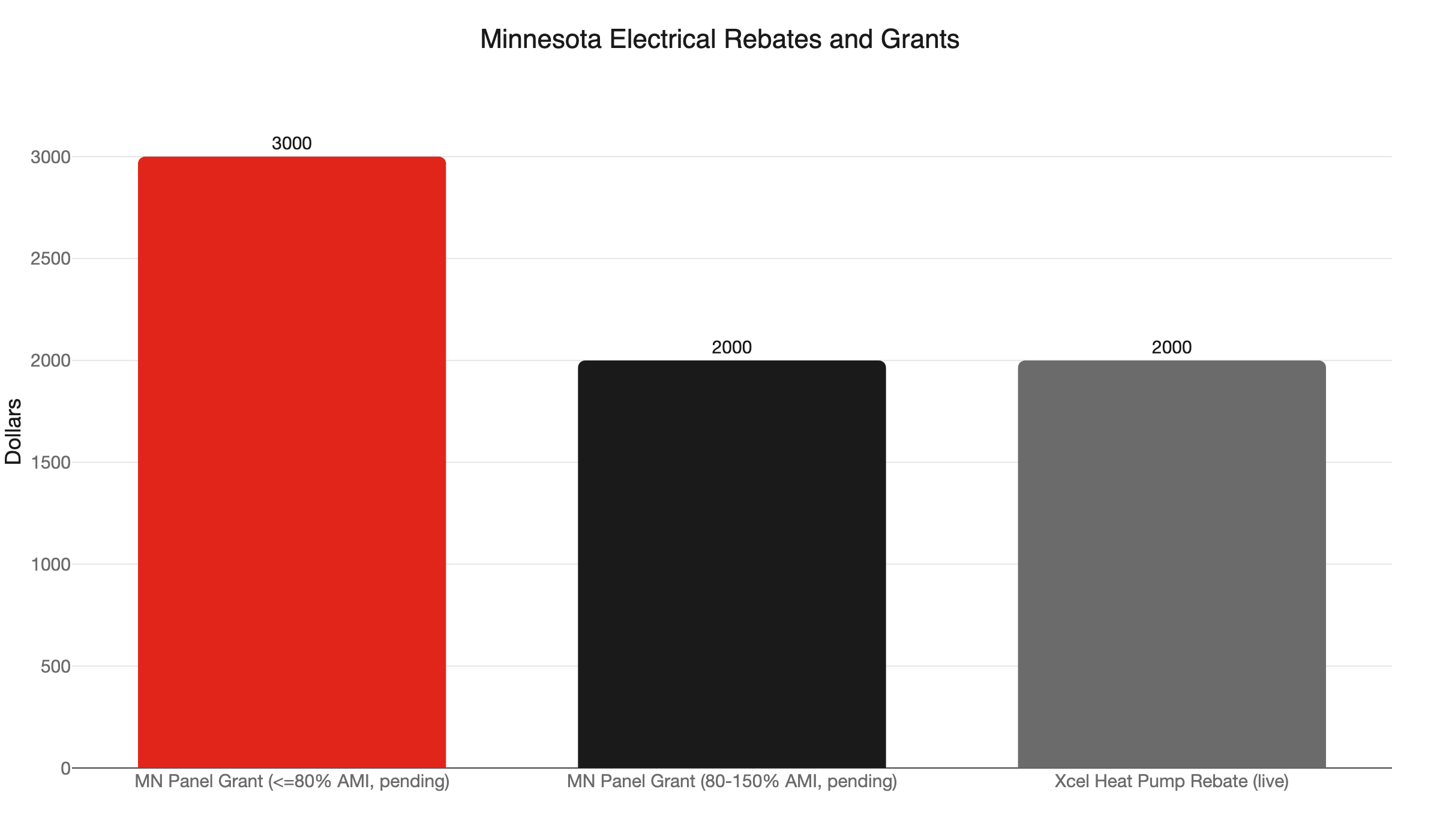
Two programs can soften the cost of a winter-ready electrical system, though one is still pending. Xcel Energy offers up to $2,000 for a qualifying cold-climate heat pump, which is live now, per Xcel Energy. A state panel-upgrade grant is coming but has not launched.
The heat pump rebate matters here because a cold-climate heat pump adds electrical load. Many homes need a panel upgrade to support one. If you are weighing that move, the rebate helps offset the total project.
The state program is worth watching. Minnesota’s Residential Electrical Panel Upgrade Grant Program will offer up to $3,000 for households at or below 80% of area median income, and up to $2,000 for households between 80% and 150% AMI, toward a 200-amp-or-greater panel, per Minnesota Commerce. Roughly $5.8 million is allocated. The catch is that the program has not launched yet, since it awaits federal approval with no set start date. Treat it as coming, not available today.
We keep an eye on these programs so you do not have to. When the panel grant opens, we will help eligible customers apply. Ask us about a panel upgrade plan and financing on larger jobs in the meantime.
Should you upgrade your panel before next winter?
If your home runs on 60-amp or 100-amp service, trips breakers often, or you plan to add electric heat or an EV charger, a panel upgrade is worth serious thought. A 200-amp panel adds capacity and safety. Spring and summer are the easiest times to schedule one.
Winter is when you feel the problem. The warmer months are when you fix it without the cold-weather rush. Planning ahead means no emergency call in January.
A modern 200-amp panel does three things. It gives your home room for today’s loads, including heat pumps and chargers. It replaces aging breakers and connections that run hot under strain. And it sets you up for future projects like indoor lighting upgrades or a garage EV charger.
If you are already planning ahead, our guides on a spring panel upgrade and winter energy efficiency upgrades can help you map the timing and budget.
How Northern Mister Sparky handles your January winter electrical demand check
Here is the simple path. If your breakers trip, your lights flicker, or your outlets feel warm this winter, do not wait for spring. Those are the signs that your electrical system is over its limit right now.
We are America’s On-Time Electrician(R), locally owned and operated right here in the Twin Cities. We show up when we say we will. We back our work with the UWIN(R) 100% satisfaction guarantee. And we only do electrical, so you get a true specialist, not a generalist.
A winter electrical check is straightforward. We test the loads on your circuits, inspect your panel, and look for the warm connections and overloaded circuits that January exposes. Then we give you a clear plan and a clear price. No pressure, no malarky.
For a deeper seasonal walk-through, see our fall and winter safety check guide. When you are ready, call 763-200-5956 or book online. We will make sure your home is ready for the coldest weeks of the year.
Frequently Asked Questions
Why do my breakers keep tripping in winter? +
Is a space heater safe to leave running? +
Do I need a permit to upgrade my electrical panel in Minnesota? +
Are there rebates to help pay for a panel upgrade? +
Need an electrician now?