Energy-Efficient Electrical Upgrades to Lower Winter Bills
Key Takeaways
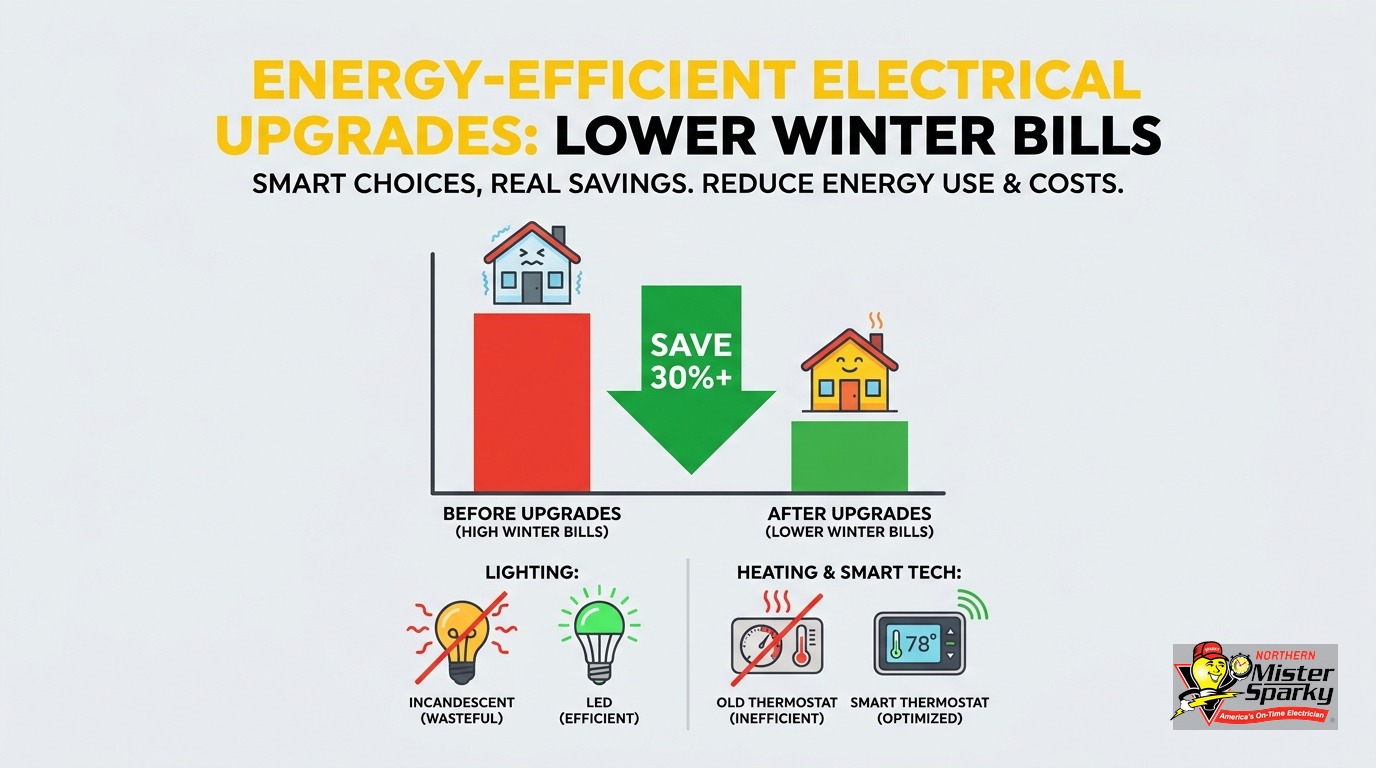
- Winter pushes your electrical system harder: longer lighting hours, heating loads, and more devices running at once. Small upgrades cut the bill without cutting comfort.
- Switch to LED lighting first. LEDs use up to 75 percent less energy than incandescent bulbs and run efficiently even in the cold.
- A smart thermostat and smart switches trim wasted runtime, and Xcel offers about $50 back on an ENERGY STAR thermostat.
- An aging panel causes trips, flickering, and heat loss. A modern panel runs circuits cleanly and supports efficient equipment like a heat pump.
- Minnesota rebates stack: Xcel thermostat and heat-pump rebates, the Home Energy Squad visit, and state Conservation Improvement Program incentives.
When the Twin Cities turn dark and cold, your electrical system does more work than any other time of year. Lights run for most of the day, the furnace blower cycles constantly, and space heaters, holiday lights, and devices all pull at once. That extra work shows up on your bill. The good news is that a handful of energy-efficient electrical upgrades can lower that bill without asking you to shiver through winter.
We help Minneapolis and St. Paul homeowners get more comfort for less power every season. This guide walks through the upgrades that pay off fastest in a Minnesota winter, the Xcel rebates that help fund them, and where a professional makes the difference.
Which Upgrade Should You Start With?
Start with LED lighting. It is the cheapest, fastest change with the highest return, because lighting runs for most of a Minnesota winter day. Then layer in smart controls, an efficient panel, and surge protection, in that order of value.
There is a simple logic to that order. Lighting is on the most hours, so efficient bulbs save the most per dollar spent. Smart controls stop the waste you never notice. The panel is the foundation that lets everything else run cleanly. Surge protection guards the investment. You do not have to do all of it at once. Each step stands on its own and starts saving right away.
Do LEDs Really Save Money in a Cold Climate?
Yes, and they are one of the few upgrades that work better in the cold. LEDs use up to 75 percent less energy than incandescent bulbs, last for years, and run more efficiently at low temperatures. They also produce a warm, bright light that fights the short, gray days.
Lighting is a bigger share of your winter bill than most people realize, simply because the lights are on so long. If you still run incandescent or halogen bulbs, swapping them for LEDs is the single easiest win. The bulbs pay for themselves in energy savings, and you stop replacing them constantly.
The cold-weather angle matters here. Some older fluorescent tubes flicker or refuse to start in a freezing garage or entryway. LEDs are solid-state, so they light instantly and actually gain a little efficiency in the cold. For outdoor fixtures, that means no more changing a bulb on an icy ladder in January. Our indoor lighting service can plan a whole-home LED conversion, including the recessed and fixture work that a simple bulb swap cannot reach.
How Do Smart Controls Cut Waste You Cannot See?
Smart switches, dimmers, and thermostats cut the power you waste without thinking about it. A dimmer lowers draw and extends bulb life. Motion sensors kill lights in empty rooms. A smart thermostat trims heating runtime, and Xcel pays you back for one.
Most household waste is quiet. A light left on in the basement, a thermostat holding 72 degrees in an empty house all day. Smart controls close those gaps automatically. Dimmers and motion sensors handle lighting, and scheduling lets you shut down whole zones at night or when you leave.
The thermostat is the headline. A smart thermostat earns about $50 back from Xcel Energy and trims your heating runtime by learning your schedule and easing off when you are asleep or away. In a Minnesota winter, where heating dominates the bill, even a small reduction in runtime adds up over five cold months. We can wire and place these controls so they read your home correctly instead of fighting it.
Does an Electrical Panel Upgrade Improve Efficiency?
Indirectly, yes. An aging panel does not burn large amounts of power by itself, but failing breakers and loose connections cause flickering, trips, and heat loss. A modern panel runs every circuit cleanly and lets you add efficient equipment, like a heat pump, without straining the service.
Many Twin Cities homes still run panels that are 20 or more years old. Those services were sized for a different era, before heat pumps, EV chargers, and home offices. When a panel is stretched thin, you see the symptoms on cold nights: lights that dim when the furnace blower kicks on, breakers that trip, and connections that heat up under load.
A modern 200-amp service fixes the strain and opens the door to the efficient upgrades that actually move your bill, like a cold-climate heat pump. If your lights flicker or your breakers trip this winter, read the signs you need an electrical panel upgrade, then have the panel evaluated. It is the foundation the rest of your efficiency plan sits on. For more on how deep winter loads test your service, see our post on winter electrical demand.
Should You Add Whole-Home Surge Protection Before Winter?
Yes. Winter storms, utility grid switching, and heavy heating loads all send surges through your wiring. Whole-home surge protection is an inexpensive layer that guards your furnace controls, smart thermostat, and everything else plugged in, and it pays for itself the first time it stops a hit.
Efficiency upgrades add sensitive electronics to your home: smart thermostats, LED drivers, heat-pump controls. A single surge can damage them in an instant, erasing your savings. A whole-home surge protector installed at the panel catches those spikes before they reach your devices.
Minnesota’s winter grid is exactly when surges cluster, as heating demand peaks and storms roll through. Our surge protection service installs a panel-level protector that covers the whole house, not just the one power strip behind the TV. It is one of the least expensive ways to protect the efficient equipment you just invested in.
What Minnesota Rebates Help Pay for These Upgrades?
Xcel Energy rebates cover several of these upgrades. Expect about $50 for an ENERGY STAR smart thermostat, up to $2,000 for a qualifying cold-climate heat pump, and eligible LED and equipment measures. The low-cost Home Energy Squad visit installs energy-saving materials on the spot.
Minnesota is a strong rebate state, and the programs stack. The Xcel Energy rebate programs list the current amounts, and Xcel rebates can combine with the state’s Conservation Improvement Program incentives for more savings. The Home Energy Squad program sends energy experts to your home, installs materials during the visit, and costs a small fee for a lot of value.
Because these programs change and depend on your address and utility, confirm the current offers before you buy. We can point you to the right application and make sure the work qualifies. A rebate you claim is money back on a project that was already lowering your bill.
How Much Can These Upgrades Save This Winter?
The savings add up across the whole system rather than from any single change. Lighting is the quickest visible cut, smart controls trim heating runtime month after month, and a sound panel prevents the waste and hazards that come from a service running near its limit. Together they lower a Minnesota winter bill meaningfully.
Think of it in layers. LEDs cut lighting energy by up to 75 percent, and lighting runs for most of a dark winter day, so that reduction repeats every evening for five cold months. A smart thermostat shaves heating runtime, which matters most in the season when heating is your single biggest load. Neither change asks you to give up comfort. You get the same bright home and the same warm rooms for less power.
The panel and surge protection work differently. They do not show up as a line-item saving so much as they protect the savings you just built and keep everything running cleanly. A stretched panel that trips and heats up is quietly inefficient and genuinely risky. A modern service runs each circuit the way it should and gives you room to add a cold-climate heat pump, which is the upgrade that can reshape a winter heating bill entirely.
The smart move is to sequence it. Do the LEDs this month, add a rebated smart thermostat next, and have the panel evaluated before you invest in bigger efficient equipment. Each step pays back on its own, and the Minnesota rebates shorten the payback further. You are not gambling on one big project. You are stacking small, certain wins.
A Warm Home and a Lower Bill
Winter does not have to mean a painful electric bill. The path is simple: LEDs first, then smart controls, a sound panel, and surge protection to guard it all. Each step saves on its own, and the Minnesota rebates make now a smart time to start.
Call Northern Mister Sparky at 763-200-5956 or book online. We will look at your lighting, panel, and loads, recommend the upgrades that pay off fastest for your home, and help you claim the rebates. Locally owned, on time, no malarky.
Rebate amounts and program availability change over time and vary by address and utility. Figures here are estimates for planning. Confirm current incentives with your utility, and contact us for a recommendation specific to your home.
Frequently Asked Questions
What energy-efficient electrical upgrades save the most in winter? +
Does an electrical panel upgrade lower my energy bill? +
Are there Minnesota rebates for energy-efficient upgrades? +
Do LED bulbs really work in cold Minnesota winters? +
Is whole-home surge protection worth it in winter? +
Need an electrician now?