Fall Winter Safety Check for Twin Cities Homeowners
Key Takeaways
- Run your fall winter safety check before the first hard freeze, not after.
- Keep anything that can burn at least 3 feet from any space heater (NFPA).
- Minnesota adopted the current National Electrical Code (MN DLI).
- MN law requires working smoke and carbon monoxide alarms near every sleeping area (MN Revisor).
- Xcel offers rebates for a cold-climate heat pump and $50 for a smart thermostat (Xcel Energy).
- Call Northern Mister Sparky at 763-200-5956 or book online for a professional inspection.
Why Does a Fall Winter Safety Check Matter More in Minnesota?
A fall winter safety check matters more here because Twin Cities winters push your wiring harder than almost anywhere. Short days keep lights on longer. Space heaters, block heaters, and holiday lights all pull power at once. Small faults you ignored in July become real fire risks by January.
We are Northern Mister Sparky, your locally owned and operated Twin Cities electrician. We see the same seasonal failures every year across Minneapolis, St. Paul, Bloomington, and the suburbs. This guide walks you through a complete fall winter safety check. Then it adds the Minnesota code, cold-weather, and rebate details that national checklists skip.
Home heating fires are not rare. Home heating equipment fires cause deaths, injuries, and significant property damage across the U.S. each year (NFPA). Those fires peak in December, January, and February (NFPA). That is exactly when your Twin Cities home works hardest.
What Should Be on Your Fall Winter Safety Check List?
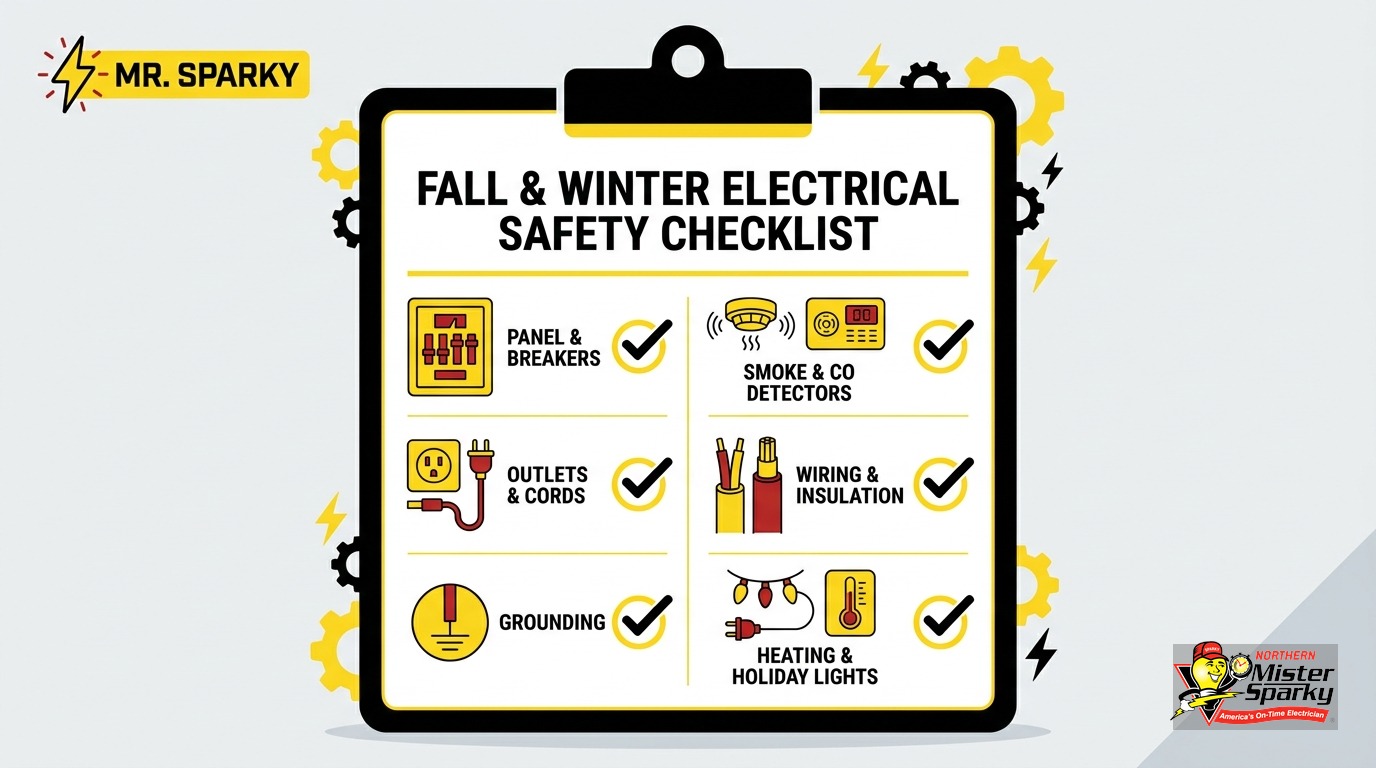
Your fall winter safety check should cover outlets, cords, your panel, alarms, and outdoor circuits. Test every GFCI outlet. Look for warm outlets, scorch marks, or loose plugs. Confirm your breaker panel is not tripping often. Check that smoke and carbon monoxide alarms work on every level.
Start inside. Walk each room and press the “test” button on GFCI outlets in kitchens, baths, and the garage. A GFCI that will not reset is telling you something. Replace cracked wall plates and cover any open junction boxes. These small fixes close easy paths to shock and arcing.
Next, check your extension cords and power strips. Frayed cords, cracked insulation, and warm plugs are warning signs. Never run cords under rugs or through doorways. If you rely on power strips year-round, you likely need more outlets. Our outlet installation team can add safe, code-compliant circuits.
Then look at your electrical panel. A panel that trips when the microwave and space heater run together is out of room. That is common in older Twin Cities homes. Take a minute to label each breaker so you can act fast in an outage. If you see repeated trips, read our guide on the top electrical hazards and consider a panel upgrade before winter demand peaks.
Are Your Space Heaters and Cords Actually Safe?
Space heaters cause a disproportionate share of home heating fire deaths and injuries relative to the number of fires they start (NFPA). Plug them directly into a wall outlet, never a power strip. Keep anything that can burn at least 3 feet away. Turn portable heaters off when you leave the room or go to sleep.
Space heaters draw heavy current. A single 1,500-watt unit can push a circuit near its limit. Add a toaster or hair dryer on the same circuit and the breaker trips. Worse, the wiring can overheat inside the wall where you cannot see it. If your breakers trip when heaters run, you have an overloaded circuit, not a nuisance.
Choose heaters with automatic tip-over and overheat shutoff. Inspect the cord before each use. If the plug feels hot or the outlet looks discolored, stop and have it checked. A hot outlet means a loose connection, and loose connections start fires. Do not try to fix a scorched outlet yourself in a cold snap. Have it repaired right.
How Do Smoke and Carbon Monoxide Alarms Fit Into Your Fall Winter Safety Check?
Working alarms are the core of any fall winter safety check. Minnesota law requires smoke alarms in each sleeping room, outside each sleeping area, and on every story including basements (MN Revisor). A working smoke alarm significantly cuts your risk of dying in a home fire (NFPA).
Carbon monoxide is the silent winter danger. Furnaces, water heaters, and attached garages all produce it. Minnesota Statute 299F.51 requires a working carbon monoxide alarm within 10 feet of every sleeping room, on each level with sleeping areas (MN DPS). Cold months mean sealed windows and running furnaces, so this matters most now.
Test every alarm today. Replace batteries in battery units. Most smoke alarms expire after 10 years, and CO alarms sooner. Check the manufacture date printed on the back. If you are unsure, our team handles smoke detector installation and carbon monoxide detector placement to code.
For the best protection, choose interconnected alarms. When one sounds, they all sound. New construction in Minnesota already requires hardwired, interconnected, battery-backed smoke alarms (MN Revisor). Older homes can add interconnected models too, and we can wire them for you.
What Extreme-Cold Electrical Gear Needs Attention Before Winter?
Twin Cities winters add electrical loads most guides ignore. Engine block-heater outlets, heated garages, and roof heat cables all draw power in deep cold. Each one needs a fall inspection. Cracked heat tape and iced-over exterior outlets are common failure points once temperatures drop below zero.
Start with your outdoor outlets. Every exterior receptacle should be GFCI-protected and have a weatherproof “in-use” cover. Snow, ice, and meltwater find any gap. If your outdoor outlets are not GFCI-protected, add that before winter. It is a small job that prevents a dangerous one.
Inspect roof and gutter heat cables now. Heat tape and de-icing cables fight ice dams, but cracked or aging cable is a fire risk. Plug these into a GFCI outlet and check the full run for damage each fall. Never staple over the cable or pinch it under shingles.
Block-heater and heated-garage circuits matter too. A block-heater cord that lives outside all winter takes abuse. Inspect the plug and cord for cracks before the first plug-in. If your heated garage or workshop trips breakers when equipment runs, you may need a dedicated circuit. Our home wiring team can size it correctly.
Ice dams and frozen pipes tie back to your electrical system. Heat cables help, but they treat the symptom. The real fix is attic insulation and air sealing that stops the heat loss feeding the ice. That crossover is why we cover it in our winter energy efficiency upgrades guide.
What Outdoor Lighting and Holiday Circuits Should You Check?
Shorter days mean your outdoor and holiday lighting runs for hours. Before you hang a single strand, inspect it. Check every extension cord and light string for cracked insulation and broken bulbs. Use only cords and lights rated for outdoor use. Plug everything into a GFCI-protected outlet.
Overloaded holiday circuits are a classic Twin Cities January problem. Do not string more light sets together than the packaging allows. Do not run heavy inflatables and a full roofline off one outlet. If you trip a breaker every December, you need more outdoor capacity. Our outdoor lighting team can add a dedicated exterior circuit.
Use a timer or smart plug so lights are not on all night. That cuts your bill and reduces heat buildup in connectors. For a full seasonal rundown, see our holiday lights safety guide.
Do You Need a Permit for DIY Electrical Work in Minnesota?
Often, yes. In Minnesota, a homeowner may pull an electrical permit only for a home they own and occupy. You must personally perform and lay out all the work. You cannot permit electrical work in condos, apartments, or rented portions (MN DLI).
Minnesota adopted the 2023 National Electrical Code, effective July 1, 2023. Permits filed before that date follow the prior code (MN DLI). Codes change for safety reasons, so the current edition matters for any new work.
There is one rule that trips up many do-it-yourselfers. A rough-in inspection must happen before insulation, sheetrock, or paneling covers any wiring (MN DLI). Cover the work first and you may have to tear it back open. Homeowners are exempt from holding a personal electrical license on their own homesteaded home, but the inspection still applies.
Permit portals differ by city. St. Paul and Minneapolis run their own systems. Many suburbs handle permits through a shared inspection service. Check your city before you start. When the job involves your panel, service mast, or anything you are unsure about, the safer path is a licensed pro. Our guide on DIY electrical dangers explains where the line sits.
Can Your Fall Winter Safety Check Actually Lower Energy Bills?
Yes. The same check that keeps you safe can cut winter costs. Turning your thermostat back 7 or more degrees for 8 hours a day can save on your annual heating and cooling costs (Energy.gov). A smart thermostat does this automatically while you work or sleep.
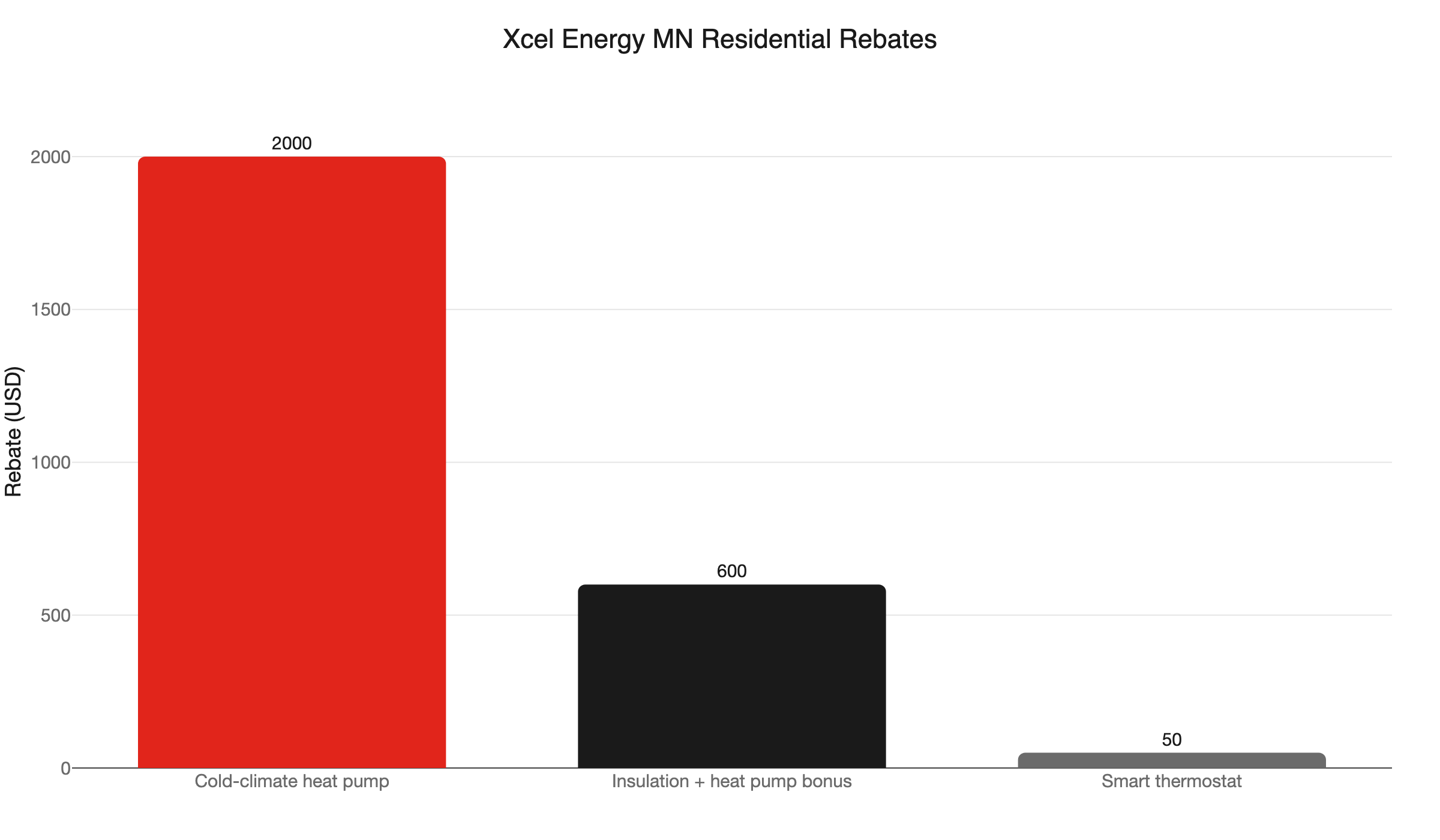
Minnesota rebates make upgrades cheaper. Xcel Energy offers rebates for a cold-climate air-source heat pump, $50 for an ENERGY STAR smart thermostat, and a bonus when you pair qualifying insulation and air sealing with a qualifying heat pump (Xcel Energy).
If your home heats mainly with electric baseboard or an air-source heat pump, ask about Xcel’s reduced electric space-heating rate. It runs 6.537 cents per kWh from October through May, which is 4.82 cents less per kWh than the standard 11.364 cents (CUB Minnesota). Over a long Twin Cities winter, that gap adds up.
Many of these upgrades need electrical work first. A heat pump or EV charger may require a panel upgrade or a dedicated circuit. We handle that side so your rebate project stays on schedule and passes inspection.
How Should You Prepare for Winter Power Outages?
Prepare before the storm, not during it. Winter outages hit the Twin Cities every year. A portable generator or a permanently installed standby unit keeps your heat, sump pump, and refrigerator running. The safe connection is a transfer switch installed by a licensed electrician.
Never backfeed a generator into a wall outlet. It is deadly. Backfeeding pushes power onto utility lines and can electrocute a lineman working to restore your service. It also risks carbon monoxide and fire inside your home. A proper transfer switch isolates your home from the grid.
Run portable generators outside only, far from doors and windows. Carbon monoxide from a generator can kill in minutes. Keep the unit dry and on a stable surface. If you want whole-home backup without the hassle, ask us about a standby generator and transfer switch sized for your panel.
Before winter, test your setup. Start the generator. Confirm your transfer switch works. Replace old fuel. A generator that will not start at 20 below is no help at all when you need it most.
When Should You Call a Licensed Electrician?
Call a pro when you see warning signs or plan a bigger project. Flickering lights, warm outlets, burning smells, frequent tripped breakers, and a panel that runs out of room all need expert eyes. So do panel upgrades, generator hookups, EV chargers, and any work near your service mast.
Some fixes are simple. Testing an alarm or resetting a GFCI is homeowner work. But hidden problems, aluminum wiring, and overloaded panels are not worth the risk in a Minnesota winter. If a repair touches your panel or service entrance, let a licensed electrician handle it.
As your locally owned and operated Twin Cities team, we know the homes, the code, and the winters here. We show up on time, explain the fix in plain language, and stand behind the work. No malarky.
Book Your Fall Winter Safety Check Today
Do not wait for the first cold snap to find a problem. A professional fall winter safety check gives you peace of mind before demand peaks. We inspect your panel, outlets, alarms, and outdoor circuits, then give you a clear, honest report.
Northern Mister Sparky is America’s On-Time Electrician(R), backed by the UWIN(R) 100% satisfaction guarantee. Call 763-200-5956 or book online today. Ask about financing on larger jobs like a panel upgrade, generator, or EV charger.
Frequently Asked Questions
When should I do my fall winter safety check? +
Do I need a permit for electrical work in Minnesota? +
How far should a space heater be from furniture? +
Can I get a rebate for a heat pump in Minnesota? +
Need an electrician now?