
Circuit Breaker Keeps Tripping? Twin Cities Fix Guide
Key Takeaways
- A breaker that trips is protecting you, so treat every repeat trip as a real warning.
- Timing is the fastest clue. Instant means a short circuit. Slow means an overload. Wet means a ground fault. Hot or buzzing means the breaker itself.
- Reset a breaker only once after a known one-off overload. A second trip on the same circuit means stop and diagnose.
- Never reset a breaker that feels hot, buzzes, or smells like burning plastic.
- AFCI and GFCI trips in Minnesota homes usually flag a real wiring fault, not a nuisance.
- A panel upgrade may earn an Xcel Energy rebate of up to $1,500 when a licensed electrician does the work.
Why Does My Circuit Breaker Keep Tripping?
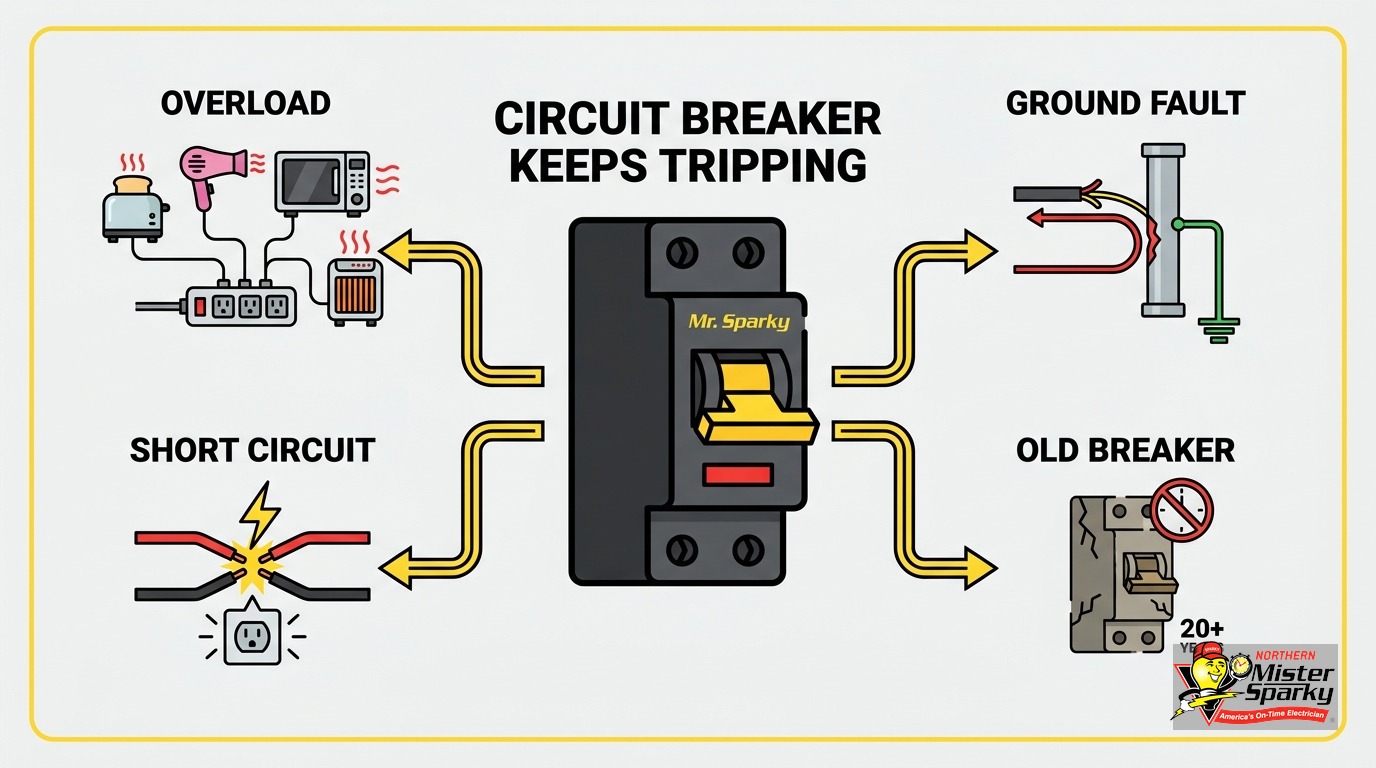
If your circuit breaker keeps tripping, it is not failing at its job. It is doing it. A breaker cuts power the second it senses too much current or a dangerous fault. Four things cause most trips: an overload, a short circuit, a ground fault, or a worn-out breaker. The timing tells you which one.
That is actually good news for you. A tripping breaker works like a smoke alarm for your wiring. Ignore it and you invite an electrical fire. Read it correctly and you can fix the real problem fast.
We are Northern Mister Sparky, your locally owned and operated Twin Cities electrician. Below, we show you how to tell the four causes apart. You will learn the timing test the pros use, the hard rule on resets, and exactly when to call for help.
The Timing Test: Your Fastest Diagnosis
The timing of a trip is the single fastest way to diagnose it. A short circuit trips almost instantly, in under a second, an overload trips only after the circuit runs for seconds or minutes, and a ground fault often trips more in wet or humid conditions.
So turn the trip into a three-question test. Did the breaker cut out the moment you flipped a switch or plugged something in? That points to a short. Did it trip only after several appliances ran together for a while? That points to an overload. Does it trip mostly in a damp basement, bathroom, or outdoor outlet? That points to a ground fault.
There is a fourth pattern too. If the breaker trips below its normal load, feels hot, or buzzes, the breaker itself may be failing. Keep all four patterns in mind as we walk through each cause.
What Is an Overload, and How Do I Know I Have One?
An overload means too much current runs on one circuit for too long. It is the most common cause of a tripping breaker. You will see it when the breaker trips after several minutes of running big appliances together, such as a space heater, a hair dryer, and a microwave on one circuit.
Overloads follow your habits. A single circuit can only carry so many watts at once. Pile on heat-producing devices and the wire warms up. The breaker trips before that heat can damage the wiring or start a fire.
Watch for these overload signs:
- The breaker trips a few minutes after you start several appliances.
- It happens in the same room, often a kitchen, office, or bathroom.
- Lights dim when a big appliance kicks on.
- The trip stops when you unplug one or two devices.
The quick fix is to spread the load. Move devices to another circuit or unplug what you do not need. But if the same circuit keeps tripping, the wiring may be undersized for how you live today. That is when we install dedicated circuits for overloaded areas.
What Is a Short Circuit?
A short circuit is a direct, dangerous meeting of two wires. A hot wire touches a neutral, or a hot touches another hot. Current then spikes thousands of times above normal in an instant, and the breaker trips right away to prevent a fire.
A short almost never resets and stays on. Flip the breaker back and it trips again at once, even with nothing running. You may also spot a scorch mark, smell burnt plastic, or find a chewed cord or a cracked outlet.
Do not keep resetting a breaker that trips instantly. That is a genuine fault, not a fluke. Unplug everything on the circuit and try one reset. If it still trips with nothing plugged in, the fault lives in the wiring or a device box. At that point you need a licensed electrician, not another reset.
What Is a Ground Fault?
A ground fault happens when current strays out of its normal path. Instead of returning on the neutral wire, it leaks to earth or a grounded surface, often through water. That is why ground faults show up most in wet spots like bathrooms, kitchens, basements, garages, and outdoor outlets.
This is where a special device matters. A standard breaker trips on overcurrent. A GFCI trips on just a few milliamps of imbalance between the hot and neutral leaking to ground. That tiny leak is enough to stop a shock before it can hurt someone in a damp room.
If a bathroom or outdoor outlet keeps cutting out after rain or heavy use, a ground fault is the likely culprit. Damaged insulation, water intrusion, or a worn appliance can all cause it. Our team can trace the leak and repair it so the circuit holds.
Could the Breaker Itself Be Failing?
Yes, and most guides skip this one. A breaker is a mechanical part, and it wears out. A failing breaker trips below its rated load, feels hot to the touch, buzzes, or will not reset even with little on the circuit. We see this often in older Twin Cities panels that have run for decades.
Watch for these tells:
- The breaker feels warm or hot while nearby breakers stay cool.
- You hear a faint buzz or crackle at the panel.
- The handle feels loose or mushy instead of firm and snapping.
- The circuit trips even after you remove most of the load.
Never ignore a hot or buzzing breaker. Those are signs of loose connections or internal damage that can start a fire behind the panel cover. A worn breaker is a fast, affordable swap for a pro. Learn when a circuit breaker replacement is the right call.
What Should You Do the Moment a Breaker Trips?
Stay calm and work in order. First, turn off and unplug the devices on the dead circuit. Then find the tripped breaker, which sits between on and off. Push it fully to off, then back to on. If it holds, add devices back one at a time. If it trips again on the same circuit, stop.
Follow this simple sequence:
- Unplug or switch off everything on the affected circuit.
- Push the breaker firmly to off, then back to on.
- Reintroduce devices one at a time to find the cause.
- If it trips again on the same circuit, leave it off and call a pro.
- Never touch a breaker that is hot, buzzing, or smells of burning.
This method protects you and helps us diagnose faster. When you call, tell us what tripped, when, and what was running. Those details often point straight to the fault.
Why Does My AFCI or GFCI Breaker Trip So Often?
An AFCI or GFCI trip is usually catching a real problem, not acting fussy. An arc fault can burn inside a wall without tripping a standard breaker, which is the whole reason AFCIs exist. So a breaker that trips only now and then is often flagging a genuine fault a plain breaker would miss.
These trips carry real weight. The Consumer Product Safety Commission estimates AFCIs could prevent more than half of home electrical fires, and arcing faults start more than 28,000 home fires each year.
Modern code requires this protection for good reason. National Electrical Code section 210.12 calls for AFCI protection on most 120-volt, 15- and 20-amp circuits in living spaces, including bedrooms, kitchens, living rooms, hallways, and laundry rooms. In Minnesota homes, a repeat AFCI trip often points to a shared neutral, a loose termination, or a bootleg ground. Those are real faults worth finding, not silencing.
So do not solve a nuisance AFCI or GFCI trip by dropping in a standard breaker. That strips out the safety layer and can violate code. Let a Twin Cities electrician find the true cause instead.
How Many Times Can I Safely Reset a Tripped Breaker?
Once. Reset a breaker a single time after a known, one-off overload, such as running too many appliances at once. If it trips a second time on the same circuit, stop. Repeated tripping points to a short circuit or a ground fault, so call for repair rather than reset again.
Here is the rule we give our Twin Cities customers. One reset after an obvious overload is fine. A second trip means diagnose, not reset. And never reset a breaker that is hot, buzzing, or smells like burning plastic, no matter the reason.
Every needless reset on a real fault forces dangerous current through damaged wiring again. That is how a small problem grows into a house fire. When in doubt, leave the breaker off and call us. A quick visit beats a burned circuit every time.
Minnesota Winters and Overloaded Circuits
Our long winters put extra strain on home wiring. Space heaters, electric blankets, and block heaters all pull heavy current for hours. Run two or three on older circuits and a trip is almost certain. Damp basements add a second risk. A dehumidifier or sump pump near moisture is a classic ground-fault trigger.
Many older Minneapolis and St. Paul homes still run 100-amp service built for a simpler era. Add a modern kitchen, a home office, and winter heating, and the panel runs at its limit. Frequent winter trips are often the first sign you have outgrown the panel.
If your breaker keeps tripping every cold snap, do not just live with it. Seasonal overloads are a warning that your electrical system needs more room. We can add circuits or plan an upgrade before the coldest weeks hit.
When Should You Call a Twin Cities Electrician?
Call a pro when the cause is not an obvious one-time overload. That includes any breaker that trips instantly, trips with nothing plugged in, feels hot, buzzes, or trips again right after a reset. Also call if an AFCI or GFCI keeps tripping, since that usually signals a real wiring fault.
You do not have to guess your way through it. As America’s On-Time Electrician(R), we arrive when we say we will and find the fault fast. Every visit is backed by the UWIN(R) 100% satisfaction guarantee, so you know the repair is done right the first time.
If you have found scorch marks, a burning smell, or an old fuse box in the basement, do not wait. Those are signs you need an electrician in your home today. Call 763-200-5956 or book online, and let our team make it safe.
Do I Need a Permit to Replace a Breaker or Panel in Minnesota?
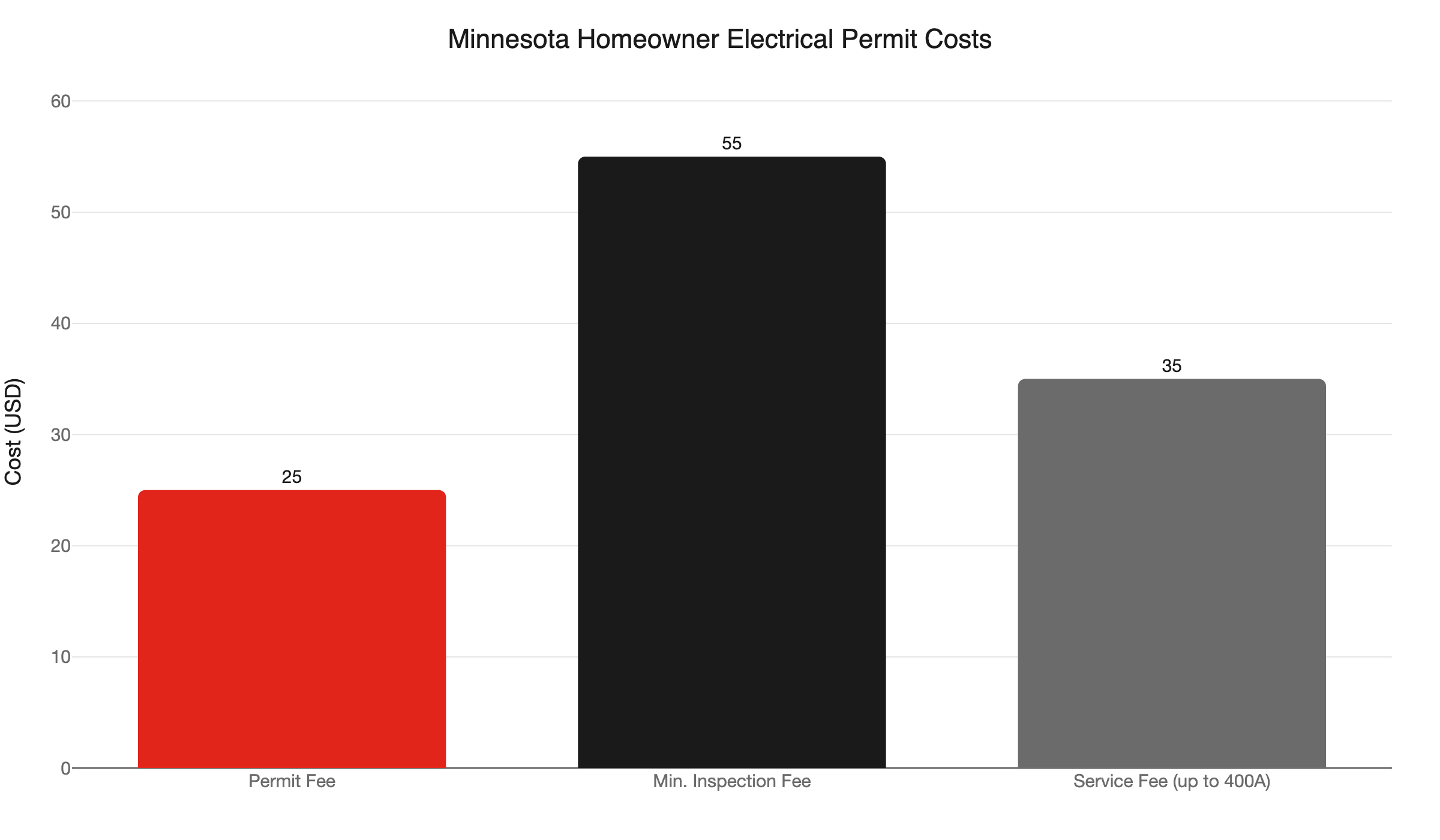
Usually a licensed electrician handles it. Minnesota lets a homeowner pull their own electrical permit only if they own and occupy the home and personally do all the work. A $25 permit fee applies, plus a $55 minimum inspection fee per inspector trip. The service or main-breaker fee is $35 up to 400 amps.
That homeowner path is legal but narrow. You cannot hire a friend or split the labor and still self-permit. For most breaker and panel work, a licensed Twin Cities electrician is the safer and simpler route. It also keeps your project eligible for utility rebates, which we cover next.
Doing it right protects more than your wiring. Bad panel work is a common home-inspection finding, and it can complicate insurance after a fire. When the stakes are this high, professional work pays for itself.
Can I Get a Rebate for a Panel Upgrade?
Yes, often. Xcel Energy offers a Twin Cities rebate that covers up to $1,500 of an electrical panel upgrade to higher amperage, such as moving from 100 to 200 amps. A certified electrician from the Minnesota licensed list must do the work. Simply replacing a broken panel at the same amperage does not qualify.
Many older metro homes still run 100-amp service. If your breaker keeps tripping and the panel is full, you have likely outgrown it. An upgrade adds capacity for EV chargers, heat pumps, and a modern kitchen, and the rebate softens the cost of the work.
Not sure whether you need one? Read our guide to the signs you need an electrical panel upgrade, then let us take a look. We handle the full panel upgrade, pull the permit, and file the rebate paperwork for you.
Book Your Twin Cities Electrical Service Today
A circuit breaker that keeps tripping is your home asking for help. Now you can read the signs. Instant means a short. Slow means an overload. Wet means a ground fault. Hot or buzzing means the breaker itself. And one reset is your limit before you call.
We are Northern Mister Sparky, locally owned and operated and proud to serve homeowners across Minneapolis, St. Paul, Bloomington, Maple Grove, and the whole metro. Honest, on-time work, backed by a real guarantee and no malarky.
Do not let a repeat trip turn into a real hazard. Call 763-200-5956 or book online today. We will find the fault, fix it right, and keep your home safe.
Frequently Asked Questions
Why does my circuit breaker keep tripping? +
How many times can I reset a tripped breaker? +
Is an AFCI breaker that keeps tripping just a nuisance? +
Can I get a rebate for an electrical panel upgrade in Minnesota? +
Need an electrician now?