
Converting Gas Stove to Electric: Electrical Requirements
Key Takeaways
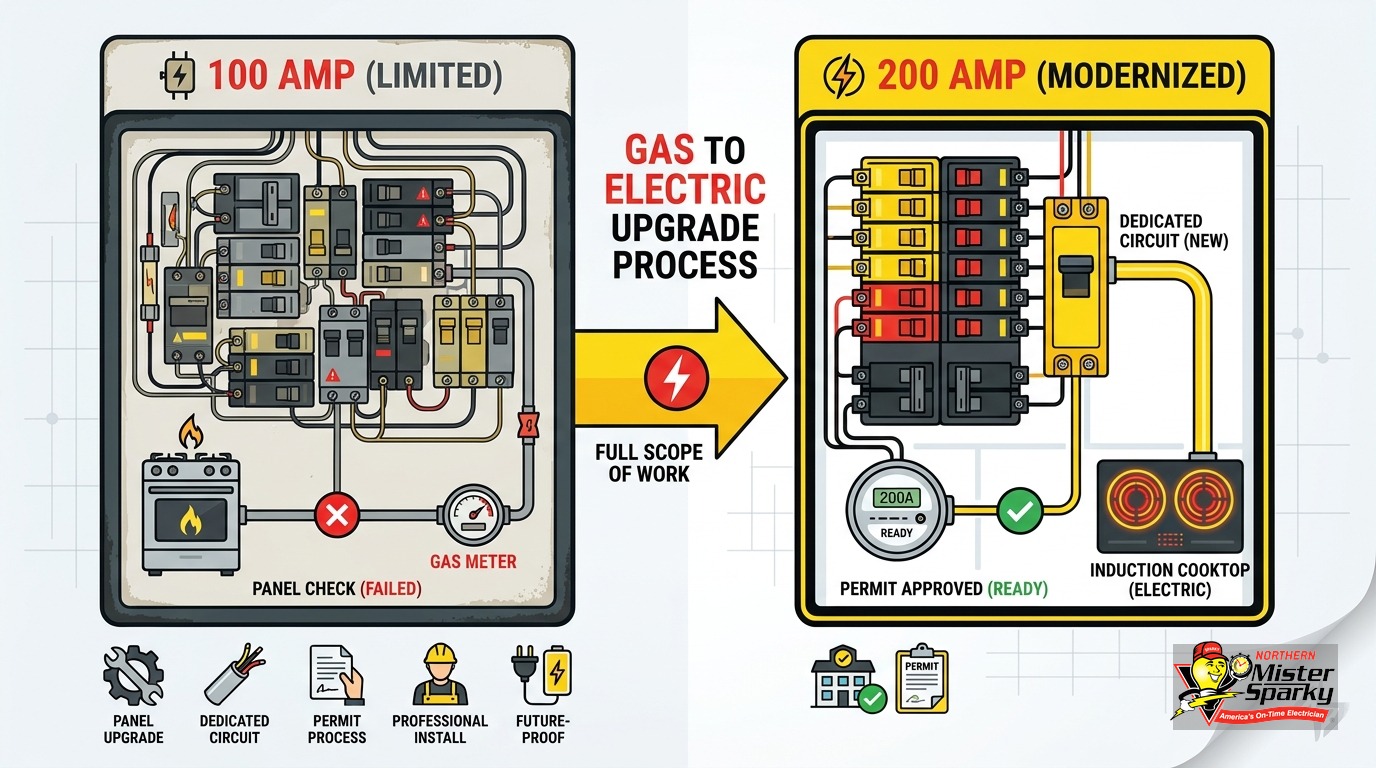
- An electric range requires a dedicated 240V, 40-50A circuit. Your existing kitchen wiring cannot be reused.
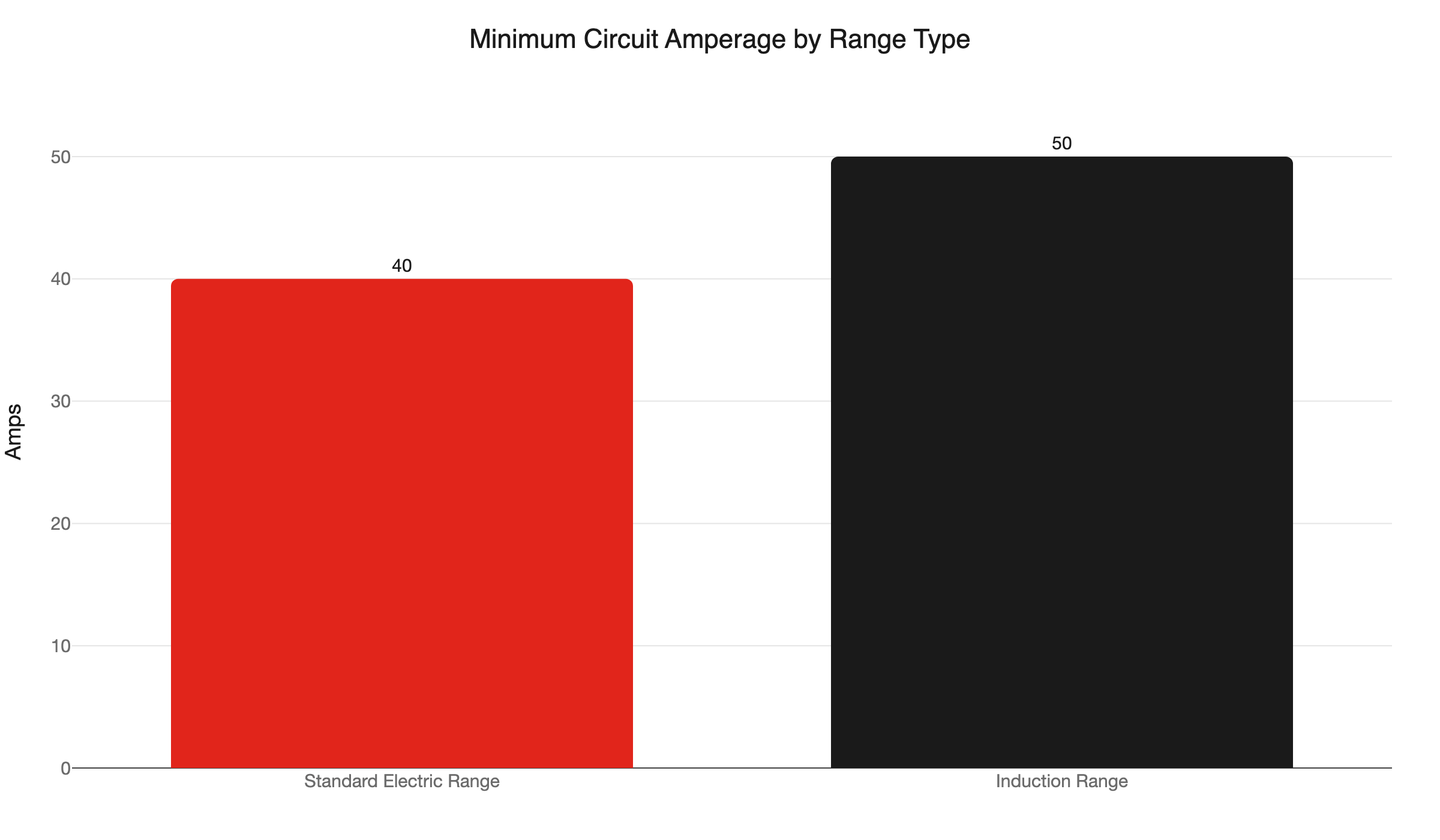
- Induction ranges typically require 50A. Some standard electric ranges can run on 40A. Verify the appliance nameplate before sizing anything.
- A separate electrical permit is required in Minnesota. The general building permit does not cover this work.
- Many Twin Cities homes built before 1960 have 100A service. Adding a 50A range circuit on a loaded panel may require a panel upgrade to 200A, a separate job costing $2,000 to $4,000.
- Capping the gas line is a separate job for a licensed plumber, under a separate plumbing permit. Two trades, two permits, two inspections.
- Xcel Energy offers no rebate for electric or induction ranges in 2026. The MN HEAR point-of-sale rebate has not launched as of September 2026.
- Any permit pulled today falls under the 2026 NEC, effective August 17, 2026.
Converting Gas Stove to Electric: The Full Electrical Picture
Understanding the converting gas stove to electric electrical requirements starts with one fact. A gas range uses a standard 120V outlet for the clock and igniter. An electric range needs a dedicated 240V circuit rated at 40 to 50 amps. That difference drives everything: new wire, a new breaker, a possible panel upgrade, and at least one permit. Here is what the job actually looks like from an electrician’s chair, not an appliance retailer’s.
What Are the Electrical Requirements for Converting a Gas Stove to Electric?
Short answer: Converting a gas stove to electric requires a dedicated 240V branch circuit rated at 40 to 50 amps. The circuit needs new heavy-gauge wire from the panel to the range location. You also need a correctly sized double-pole breaker and a NEMA 14-50 outlet or hardwire connection. No other appliance shares this circuit.
Gas ranges draw very little electricity. A 120V outlet powers the igniter, clock, and any electronic display. That outlet stays when the range comes out. It can serve the range hood or a countertop appliance afterward.
The electric range is a different situation entirely. NEC Article 422 governs fixed cooking appliances. It requires a dedicated branch circuit sized to the appliance’s minimum circuit ampacity rating, as listed on the nameplate. That means no sharing with the dishwasher, the disposal, or any other kitchen circuit.
The wire run is the main labor. An electrician routes new cable from the main panel to the range location. The path typically goes through the attic or through a wall cavity. A nearby utility room panel means a shorter run and lower cost. A panel on the opposite end of the home adds time and materials.
Once the wire lands, the electrician installs the outlet or hardwires the range. Then the circuit terminates at the panel with a new double-pole breaker. An inspector visits to verify the work before the circuit is energized.
What Wire and Breaker Size Does an Electric Range Require?
Short answer: A 50A circuit uses 6/3 copper cable and a 50A double-pole breaker. A 40A circuit uses 8/3 copper and a 40A double-pole breaker. Your existing kitchen wiring is 12 or 14 AWG, rated for 15 to 20 amps. It cannot be reused for a range circuit.
Wire sizing is a code requirement, not a judgment call. NEC Article 310 sets ampacity tables that define the minimum wire gauge for a given current load. Using 8/3 copper on a 50A breaker is undersized and a code violation. An inspector will flag it, and the run has to be redone.
Most ranges connect to a NEMA 14-50 receptacle: a four-slot, 240V outlet. It is the same type used for Level 2 EV chargers. Some ranges are hardwired directly, meaning the cable connects inside a junction box behind the appliance with no outlet at all. Either method is code-compliant. Confirm the connection method with the appliance manufacturer before the electrician finalizes anything.
One common mistake: assuming the dryer outlet can be extended to the kitchen. Range and dryer circuits are separate runs from the panel. They may use the same outlet type and breaker size, but each appliance needs its own dedicated circuit. Our guide on 240V outlet installation for dryers and ranges covers how those circuits are built and why they stay separate.
Induction vs. Standard Electric: Does the Circuit Size Change?
Short answer: Yes. Induction ranges most commonly require a 50A circuit. Some standard electric smooth-top ranges can run on 40A. The practical difference is one wire gauge and one breaker size. Always verify the nameplate before your electrician orders materials or pulls the permit.
Induction cooking uses a magnetic field to heat the cookware directly, not the surface. It is faster and more efficient than a resistive coil or glass-top element. But peak induction draw is high. Most manufacturers specify a 50A dedicated circuit for their induction models.
A 40A-capable standard electric range is common at the mid-range price point. If you are weighing induction versus standard electric partly on installation cost, the circuit difference is often minor. The material cost difference between 8/3 and 6/3 cable on a standard Twin Cities wire run is usually less than $100.
The bigger cost variable is whether your panel needs to be upgraded. That question is the same regardless of range type. Our post on induction range electrical requirements covers the induction-specific technical details in full.
Does Converting Gas to Electric Require a Permit in Minnesota?
Short answer: Yes. A new 240V circuit requires a separate electrical permit in Minnesota. The general building permit does not cover this work. Your licensed electrician pulls the permit before work begins and schedules the required inspection. An unpermitted circuit creates problems at resale and can affect homeowner’s insurance claims.
Minnesota’s electrical code is Chapter 1315 of the State Building Code. It adopts the NEC as published by the NFPA. The Minnesota Board of Electricity adopted the 2026 NEC on August 17, 2026. Any permit pulled today is governed by that edition. The electrician you hire needs to be current on 2026 NEC requirements.
To find your permitting authority, enter your address at dli.mn.gov. A “Local” result means contact your city building department. A “State” result means file through the state’s IMS portal at ims.dli.mn.gov.
Saint Paul homeowners: the city switched to the PAULIE platform for all permits as of September 9, 2026. Permits expire if work is not started within 180 days of issuance. Your electrician handles the application and schedules the inspection. You do not need to navigate the portal yourself.
The inspection covers wire gauge, breaker sizing, AFCI and GFCI protection requirements, and the correct connection method at the range location. A failed inspection means a re-inspection fee and a delay. Getting it right the first time starts with pulling the permit before work begins.
For a full walkthrough of the Minnesota permit process, see our post on electrical permits in Minnesota.
What Happens When Your Panel Is Already Full?
Short answer: If your panel has no open breaker slots or cannot handle the added load, you need a panel upgrade before the range circuit can be added. A load calculation determines which situation applies. A 200A service upgrade in the Twin Cities typically runs $2,000 to $4,000, depending on scope.
Appliance retailers tell you to “make sure you have 240V available.” That is incomplete advice. The question is not only whether a breaker slot is open. The question is whether your panel can carry the additional load without exceeding its rated capacity.
Much of Minneapolis and Saint Paul was built before 1960. Many of those homes still have 100A electrical service, which was the standard at the time. A 100A panel that already feeds central air conditioning, a water heater, and multiple kitchen circuits may have very little room for a 40 to 50A range circuit. Adding it without checking is guesswork.
A home electrical load calculation totals demand across every circuit and compares it to the panel’s rated capacity. If headroom exists, the electrician adds a double-pole breaker and runs the range circuit. If not, the path forward is a service upgrade to 200A, or in some cases a subpanel.
A 200A upgrade in the Twin Cities typically runs $2,000 to $4,000. The final number depends on the condition of the meter base and service entrance cable. It also depends on whether utility coordination with Xcel Energy or CenterPoint is needed. Utility scheduling can add several business days to the project timeline.
After a panel upgrade, a separate inspection is required before power is restored. Minnesota inspectors use the 2026 NEC Residential Inspection Checklist for that review.
If your panel has open slots and enough capacity, you skip the upgrade entirely. The electrician adds the breaker, runs the circuit, and schedules the range circuit inspection. That is the simpler and less expensive path.
Don’t Forget the Gas Line: Two Permits, Two Trades
Most homeowners searching for converting gas stove to electric electrical requirements are thinking only about the electrical side. The gas line is an equal part of the project, and it is handled by a different licensed trade under a different permit.
When you pull the gas range, the supply line behind it does not disappear. It must be properly capped by a licensed plumber under a separate plumbing permit. Leaving a gas line open inside a wall cavity is unsafe and a code violation. The same applies to an open line under a cabinet or behind the appliance space.
The plumber shuts off the gas supply at the nearest shutoff and caps the line at the connection point. Then they pressure-test to confirm no leaks remain and schedule the plumbing inspection. That inspection is entirely separate from the electrical inspection.
A practical sequence for most projects:
- Electrician pulls the electrical permit and begins the circuit rough-in.
- Plumber caps the gas line and schedules the plumbing inspection.
- Both inspections pass.
- Appliance is delivered and set in place.
- Electrician completes the final connection, either outlet or hardwire.
- Final electrical inspection if required by the permit scope.
Schedule appliance delivery after both permits are inspected and approved. Delivery crews set and slide the range into position, but they do not perform electrical work. The outlet or hardwire connection needs to be complete and the circuit energized when they arrive.
If your gas range and dryer share a supply line, raise that with the plumber before the cap goes on. They will verify the dryer feed is not affected. This is usually straightforward, but skipping that check creates a problem after the plumber has left the job.
One more item: Minnesota code requires bonding of metal gas piping to the electrical system. When the gas connection near the range is modified, verify that the bonding is intact and compliant. This is part of what the plumbing inspection covers, but it is worth confirming with both trades before the wall is closed.
What About Rebates and Tax Credits in 2026?
Short answer: Xcel Energy has no rebate for electric or induction ranges in 2026. The federal MN HEAR rebate of up to $840 for induction has not launched yet. The IRS Section 25C credit covers panel upgrades only when the upgrade supports qualifying energy equipment, not a stove alone.
Here is the honest 2026 picture:
Xcel Energy: The 2024-2026 Xcel residential rebate program includes rebates for heat pumps and heat pump water heaters. It does not include any rebate for electric or induction cooking appliances. Xcel’s 2027-2029 ECO plan is expected to add induction stove rebates, but that plan is not yet approved and is not in effect.
MN HEAR (Save Energy Minnesota): This federal program would provide up to $840 for an induction stove for qualifying households. As of September 2026, Minnesota has not launched the HEAR program. The state is awaiting formal DOE approval with no announced date. A 2027 launch is possible; nothing is guaranteed.
IRS Section 25C: The Energy Efficient Home Improvement Credit covers 30% of panel upgrade costs up to a $600 credit. But it applies only when the panel upgrade is needed to support qualifying residential energy property, such as a heat pump or heat pump water heater. A panel upgrade done solely to accommodate a new electric range does not qualify on its own. If you are adding a heat pump alongside the range conversion, the panel work can be stacked against that qualifying equipment and the credit applies.
Build your project budget with zero rebate dollars. If HEAR launches or if Xcel adds a cooking rebate in the next program cycle, treat that money as a bonus, not a plan.
What Should I Expect on Installation Day?
Short answer: A straightforward range circuit on a panel with open capacity typically takes one to four hours. A panel upgrade adds permitting, utility coordination, and inspection steps, often stretching the full project to one to two weeks from permit to energized circuit.
For a panel with open slots and a short wire run, the sequence is direct. The electrician opens the panel, routes the new cable, installs the breaker, and connects the outlet or hardwires the range. An inspector visits within a few business days, depending on the jurisdiction. One electrician, one visit, one inspection.
For a long wire run through a finished house, plan for a half-day to a full day. Older Twin Cities homes with plaster walls or complex framing add time to the fish. The circuit work itself is not complicated; the access work is.
For a panel upgrade, the scope expands. The electrician pulls permits for the panel and the range circuit, coordinates a utility disconnect with Xcel or CenterPoint, installs the new panel, reconnects the utility, and schedules the panel inspection. Power is off during the upgrade. Plan for utility scheduling to take several business days. Once the panel passes inspection, the range circuit is added and inspected as part of the same permit scope or separately, depending on how the permit was structured.
After all inspections pass, the appliance can be set and connected. That is the point at which delivery can be scheduled.
Converting Gas Stove to Electric: Hire a Licensed Twin Cities Electrician
The converting gas stove to electric electrical requirements are predictable once they are laid out. The variables are the wire run distance, the panel’s available capacity, and whether a panel upgrade is in scope. None of those are surprises if an electrician looks at your panel before you order the appliance.
Northern Mister Sparky is locally owned and operated in the Twin Cities. Our electricians run a full load calculation before sizing anything, pull the correct permit, and work around your delivery window. We serve Minneapolis, Saint Paul, Bloomington, Maple Grove, Plymouth, Woodbury, Blaine, Brooklyn Park, and surrounding communities. As America’s On-Time Electrician(R), we are there when we say we will be. If the work ever falls short, the UWIN(R) 100% satisfaction guarantee covers it.
For larger scope jobs that include a panel upgrade, ask about financing options when you book.
Call 763-200-5956 or book online. No malarky, just the work done right.
Frequently Asked Questions
Do I need a permit to add an electric range circuit in Minnesota? +
Will I need a panel upgrade to switch from gas to electric cooking? +
Are there rebates for switching from gas to electric or induction in Minnesota? +
Need an electrician now?