
LED Retrofit Kit for Recessed Can Lights: A Minnesota Guide
Key Takeaways
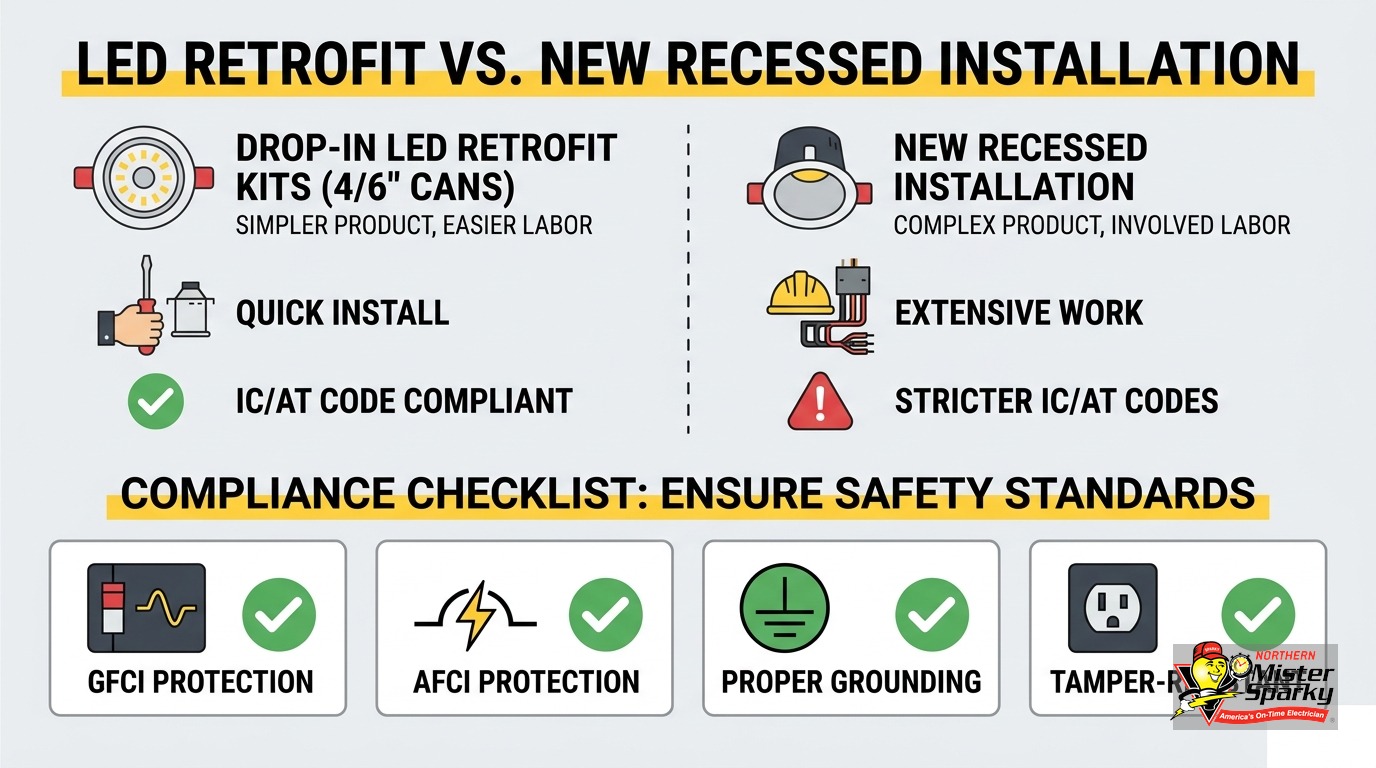
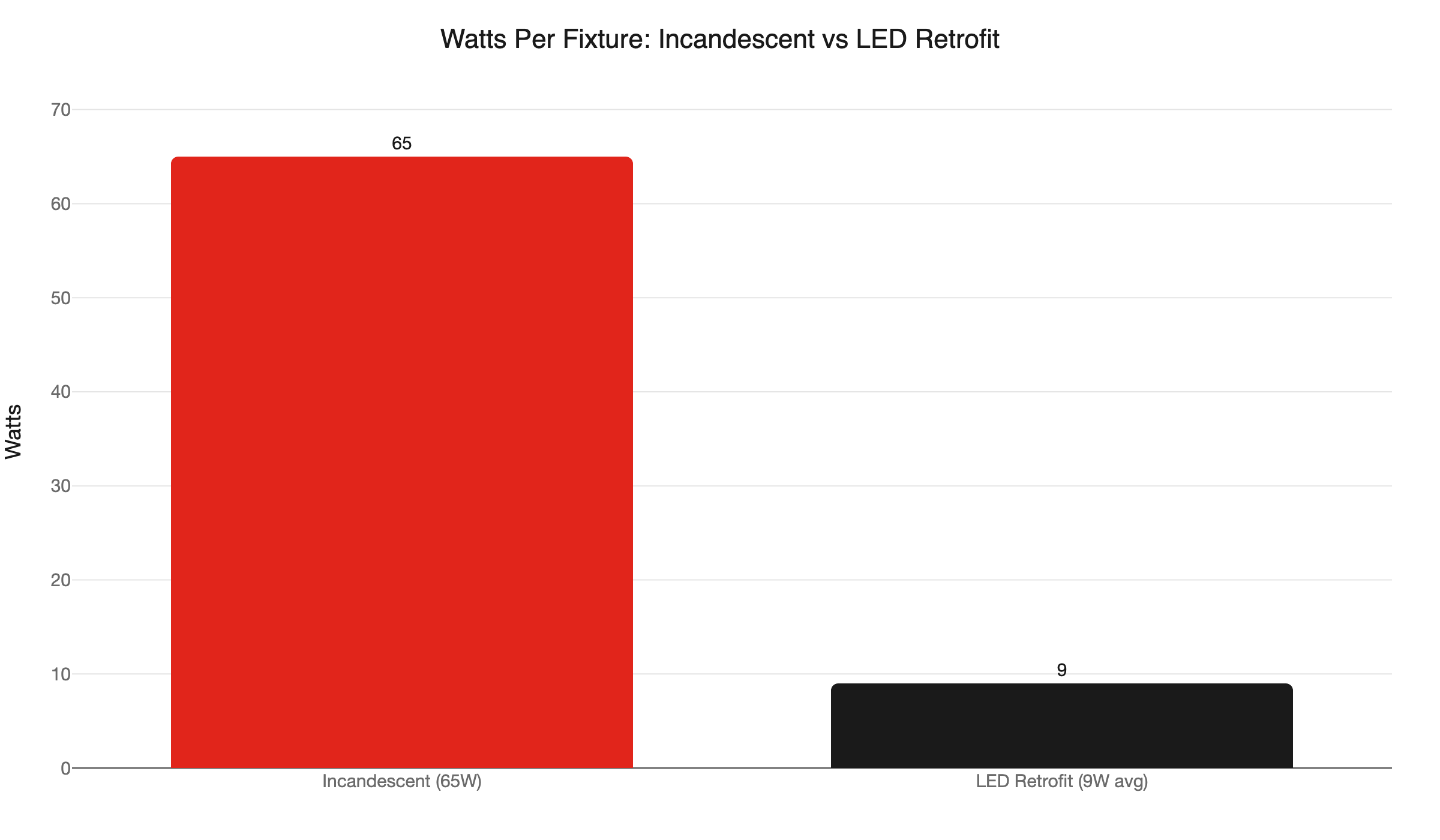
- LEDs use at least 75% less energy than incandescent bulbs and last 25 times longer. A standard 65W incandescent can is replaced by an 8-11W LED retrofit kit.
- IC and AT are two separate ratings. IC means the fixture can touch insulation without fire risk. AT means the fixture limits air leakage. Minnesota homes with blown attic insulation need both.
- Pre-2000 Twin Cities homes frequently have non-IC-rated cans buried under blown insulation. That is a code deficiency and a fire hazard. An IC-AT rated retrofit kit corrects both at once.
- A plug-in retrofit kit with no new wiring generally requires no DLI permit in Minnesota. Any circuit modification does.
- LED retrofit kits do not qualify for the federal 25C tax credit. Xcel Energy rebates are available for most Twin Cities homeowners.
- Retrofit installation is 15-20 minutes per fixture. New recessed installation in a finished ceiling is 1-2 hours per opening.
What Is an LED Retrofit Kit for a Recessed Can?
Short answer: LED retrofit kit recessed can light installation means dropping a self-contained LED module and trim ring into an existing housing through the existing socket. It takes 15-20 minutes per can. But the IC and AT ratings on the kit have to match what is in the ceiling cavity above it.
Most homeowners treat this as a light bulb swap. The hardware part is close to that simple. A retrofit kit combines the LED module, the driver, and a trim ring in one unit. It plugs into the existing socket through an E26 adapter. Spring clips hold the trim ring against the ceiling. No drywall work, no new wiring, no attic access required.
That simplicity is the appeal. But “quick to install” and “code-compliant in a Minnesota home” are not the same thing. What is in the ceiling cavity above your cans determines which kit you can legally install. In a Twin Cities home, that question matters for fire safety. It also matters for the state energy code. In a way that no national product review article will explain to you.
This is the electrician’s version of that article.
What Is the Difference Between IC and AT Ratings?
Short answer: IC (Insulation Contact) is a fire safety rating. AT (Airtight) is an energy code rating. They address different risks and carry different certifications. A quality LED retrofit kit for a Minnesota home should carry both.
Most product review articles either skip AT entirely or treat it as an extension of IC. They are not the same.
IC stands for Insulation Contact. An IC-rated housing can touch insulation without creating a fire hazard. NEC 410.116(A)(1) requires non-IC-rated recessed fixtures to maintain at least three inches of clearance from insulation on all sides. NEC 410.116(A)(2) permits IC-rated fixtures to be in direct contact with insulation. If your attic insulation is touching a non-IC-rated can, that is a code violation and a fire risk.
AT stands for Airtight. An AT-rated fixture limits conditioned air leakage to 2.0 CFM or less at 75 Pascals. This is tested per UL 2801 / ASTM E283. Minnesota’s building code, based on the 2020 MSBC and aligned to IECC 2018, requires airtight recessed luminaires in insulated ceilings. Non-airtight fixtures bleed warm conditioned air into the attic year-round. In Climate Zone 6, that adds up fast.
Most quality LED retrofit kits carry an “IC-AT rated” label. Look for that designation on the spec sheet before you buy. The original can housing in your home almost certainly carries neither rating. An IC-AT rated retrofit kit restores code compliance at the fixture level, not just at the light source.
Does Blown Attic Insulation Create a Code Problem for My Recessed Cans?
Short answer: Yes, if those cans are not IC-rated. Pre-2000 homes in the Twin Cities frequently have non-IC cans buried under blown insulation added after original construction. That violates NEC 410.116 and creates a fire hazard. An IC-AT rated retrofit kit corrects both issues in one swap.
Minnesota is Climate Zone 6. The 2020 MSBC requires minimum R-49 attic insulation for new construction. Many Twin Cities homes built between 1970 and 2000 had blown insulation added to their attics long after original construction. That happened as part of post-construction energy upgrades, not during the original build.
The recessed cans in those homes were installed into open, uninsulated attic space. They met code at the time. Non-IC-rated cans were fine when the nearest insulation was feet away. When the blown insulation went in later, those cans got buried. Now they sit in direct contact with R-38 to R-50 of blown cellulose or fiberglass. That violates NEC 410.116.
In Minnesota, this is not a fringe issue. The combination of aggressive energy efficiency programs in the 1980s and 1990s and the state’s Climate Zone 6 requirements created a situation where a large percentage of pre-2000 homes have this exact profile: original cans, later insulation, no one who checked the ratings in between.
This comes up on electrical inspections and energy audits across the metro regularly. An electrician can identify the housing type quickly by checking the label inside the can.
The fix is straightforward: an IC-AT rated LED retrofit kit replaces the non-compliant housing component with one that is legal to have in contact with insulation. It also seals the air bypass, which addresses the energy code requirement in the same step.
If you have a pre-2000 home and are not sure what is up there, have someone check before you install. Our team can assess this during a lighting visit. Call 763-200-5956 or book online to get on the schedule. No malarky, it is a quick look that can save you from a home inspection finding or worse.
How the Retrofit Installation Process Works
The physical installation for most 4-inch and 6-inch recessed cans follows a straightforward sequence.
- Turn off the circuit at the breaker panel. Do not rely on the wall switch alone.
- Remove the existing trim ring and bulb. Pull the trim ring straight down. The spring clips inside the can will release.
- Plug in the adapter. Most retrofit kits include an E26 (medium-base) adapter that threads or plugs into the existing socket.
- Connect the LED module. The LED driver and module attach to the adapter via a quick-connect plug. No wire splicing is required on a standard plug-in kit.
- Seat the trim ring. Squeeze the torsion springs on the retrofit trim. Insert them into the can opening and release. The trim ring draws flush against the ceiling.
- Restore power and test.
The whole process runs 15-20 minutes per fixture on a standard can with intact wiring. Confirm the kit size matches your existing housing before ordering. Most residential cans are 4-inch or 6-inch, measured by the housing diameter, not the trim ring. The retrofit trim ring needs to be at least as wide as the existing trim to cover the ceiling opening cleanly.
Beyond can diameter, check the brand of your existing housing if you can. Retrofit kits from the same manufacturer as the original can often fit cleanest, though most quality third-party kits are designed to work across housing brands. The spec sheet will list which housings the kit is certified for. If your can is very old or unusual, verify compatibility before you buy.
While the trim ring is removed, check the existing wiring. If the wire insulation looks brittle, discolored, or cracked, stop the project. That is a separate issue that needs an electrician before any new fixture goes in.
Does LED Retrofit Kit Installation Require a Permit in Minnesota?
Short answer: A plug-in retrofit kit that uses the existing socket with no new wiring is generally minor repair under Minnesota Statute 326B.36 and requires no DLI permit. Any work that modifies or extends the circuit does require a permit.
Minnesota Statute 326B.36 requires inspection for “every new electrical installation in any construction, remodeling, replacement, or repair, except minor repair work as the same is defined by rule.” DLI rules define minor repair as work that does not extend or add to an existing installation.
A retrofit kit that plugs into an existing socket with existing wiring qualifies as minor repair. You are replacing a fixture component, not adding to the electrical system.
These situations cross outside minor repair and require a permit:
- Adding a new circuit or junction box
- Running new wire to any location
- Installing recessed cans not previously wired
- Any modification to the breaker panel
Our electrical permit guide for Minnesota homeowners covers the full permit landscape in more detail. When in doubt, confirm with your electrician before work starts. A permit pulled correctly is cheaper than correcting unpermitted work after a home inspection flags it.
How Does Retrofit Labor Compare to New Recessed Installation?
Short answer: Retrofit is 15-20 minutes per can. New recessed installation in a finished ceiling is 1-2 hours per opening. The difference is that new work requires cutting, fishing wire, patching, and sometimes attic access. None of that applies to a retrofit.
LED retrofit kit installation is fast because the infrastructure already exists: a can housing, a wired connection, and an opening in the ceiling. The retrofit kit uses all three. No new cuts, no wire runs, no patching.
New recessed installation in a finished room requires cutting a new hole in the drywall, fishing wire to the location, connecting to an existing circuit, and patching the ceiling afterward. In a room with attic access directly above, the process is more manageable. In a finished upper floor or a room with living space above it, the labor time climbs fast.
The comparison matters when you are scoping a lighting project. Retrofitting 10 existing cans to LED is a different scope from adding 10 new can locations where none existed. If your project includes both, budget for two different labor rates and two different timelines.
For a full picture of what new installation involves, our recessed lighting installation guide explains the process from start to finish.
Do LED Retrofit Kits Qualify for the 25C Tax Credit?
Short answer: No. The federal 25C Energy Efficient Home Improvement Credit does not include LED lighting. Qualified products are HVAC systems, heat pumps, water heaters, windows, doors, insulation, panel upgrades, and home energy audits. LEDs are not on the list.
This assumption trips up a lot of homeowners. The logic makes sense: an LED retrofit saves energy, so it should qualify for the energy efficiency credit. But the statute defines qualifying categories specifically, and LED lighting products are not among them.
IRS guidance on the 25C credit is clear on this point. The Inflation Reduction Act defined the qualifying product categories. LED lighting was not included. The credit was scheduled to expire December 31, 2025.
If your lighting project runs alongside a panel upgrade, that panel work may qualify under 25C separately. Our IRA electrical upgrade tax credits guide covers which electrical improvements qualify under current law and which do not.
Are There Rebates for LED Retrofits in the Twin Cities?
Short answer: Yes. Xcel Energy offers LED lighting rebates for most Twin Cities homeowners. Use the ENERGY STAR rebate finder and enter your zip code to see current rebate amounts and eligible products in your area.
Xcel Energy serves most of the Twin Cities metro and runs residential LED rebate programs. Rebate amounts vary by product type and are updated periodically. Check the rebate finder at the time of purchase. Older search results may not reflect current program terms.
Xcel’s Home Energy Squad program is also worth knowing about. It performs in-home energy assessments and typically installs LED bulbs and fixtures as part of the visit. This can reduce your upfront cost on the day of the assessment.
Keep in mind: utility rebates and federal tax credits are separate programs. The 25C credit does not cover LED lighting. But a Xcel rebate may still be available for the same fixtures. On a larger project that also includes a qualifying panel upgrade, you can potentially combine a utility rebate on the LED portion with a federal credit on the panel.
When to Call an Electrician
Most LED retrofit kit recessed can light installations are within reach of a capable homeowner. The plug-in swap is genuinely simple on a single-socket can with good existing wiring. Here is when to call our team instead.
You have a pre-2000 home with original recessed cans. Have an electrician confirm whether those cans are IC-rated before you install. See our recessed lighting in insulated ceiling guide for more on what the ratings mean and how to spot them.
You want to add new can locations. Fixtures where no wiring currently exists require new installation, not a retrofit. That work requires a permit and a licensed electrician.
You find damaged wiring. If the wire insulation inside the can looks brittle, discolored, or cracked, stop. Do not install the retrofit kit until a licensed electrician has assessed the wiring condition.
You have more than 8-10 cans to swap. At some scale, a licensed electrician is simply more efficient. Our team works faster, can inspect IC/AT compliance at the housing level, and will catch anything on the circuit that needs attention before you button up the ceiling.
We are locally owned and operated, serving Minneapolis, St. Paul, Bloomington, Brooklyn Park, Woodbury, Blaine, Maple Grove, Plymouth, and the surrounding Twin Cities metro. As America’s On-Time Electrician(R), we show up when we say we will. Call 763-200-5956 or book online to get scheduled.
Frequently Asked Questions
Do LED retrofit kits require a permit in Minnesota? +
What is the difference between IC and AT ratings on a retrofit kit? +
Do LED retrofit kits qualify for the federal 25C tax credit? +
My recessed cans are buried under attic insulation. Is that a problem? +
Need an electrician now?