
Why Are My Lights Flickering? Twin Cities Safety Guide
Key Takeaways
- The single best first question: is it one fixture or the whole house? One light points to a local fix. Whole-house flicker points to your panel or the utility.
- A loose or wrong-wattage bulb is the most common and most harmless cause. Tighten or swap it first.
- LED bulbs on an old dimmer flicker often. A matched, LED-rated dimmer or bulb usually solves it.
- Stop and call now if you smell burning, hear buzzing at a switch, see sparks, or feel heat at a faceplate.
- In Minnesota, repairing a loose connection or wiring needs a permit and inspection under the 2023 code. Hire a licensed pro.
- Whole-house flicker can start on the utility side. Check with neighbors and report voltage issues to Xcel Energy.
Why Are My Lights Flickering?
Your lights flicker when the voltage feeding a bulb briefly drops or wavers. Sometimes the cause is harmless, like a loose bulb. Sometimes it signals a loose wire that can start a fire. So if you are asking “why are my lights flickering,” start by ranking the cause, then decide to fix it or call a pro.
We are Northern Mister Sparky, your locally owned and operated Twin Cities electricians. We get this question from Minneapolis, St. Paul, and suburban homeowners every week. This guide ranks the real causes from benign to serious. It shows the checks you can safely do yourself. And it draws a clear line for when to call a licensed electrician.
Is It One Light or the Whole House?
This is the one question that splits the whole diagnosis. If a single fixture flickers, the problem is local: the bulb, the fixture, or its switch. If multiple rooms or the whole house flicker, the trouble points to your main service or panel, and that warrants a professional inspection.
Walk the house before you do anything else. Turn on lights room by room. Note which fixtures flicker and which stay steady. One bad bulb is a five-minute fix. Whole-house flicker is a safety signal, not a nuisance. Write down what you see. That short list saves your electrician time and saves you money.
What Causes Flickering Lights, Ranked From Benign to Serious?
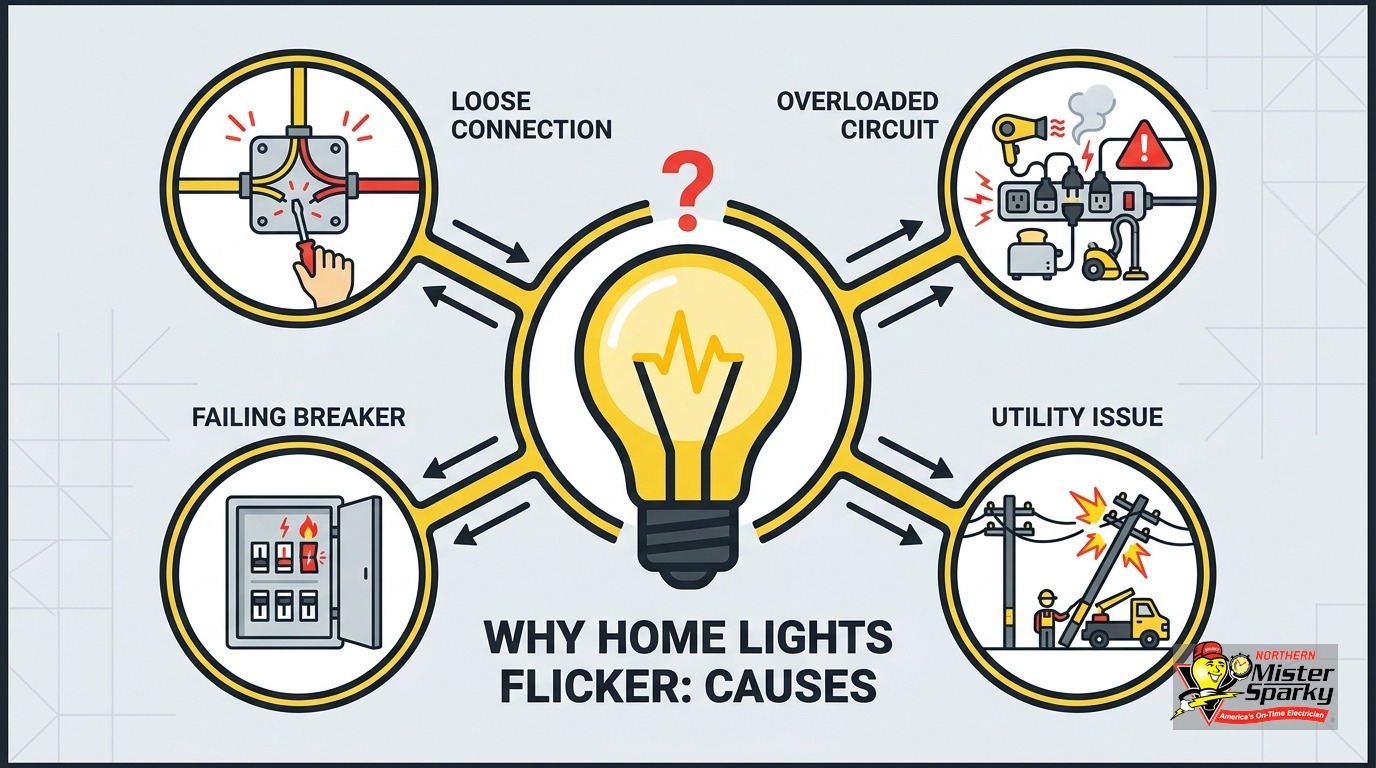
Most flicker falls into five buckets. We rank them from harmless to dangerous so you know how fast to act. The first two are usually do-it-yourself. The last two need a licensed electrician.
1. A loose or wrong bulb (benign)
A loose bulb or a bulb that is the wrong wattage or type is the single most common cause of flicker. The fix is simple. Turn off the light, let it cool, then hand-tighten the bulb. If it still flickers, swap in a fresh bulb rated for that fixture. Do this first every time.
2. An LED on an old dimmer (common)
LED bulbs flicker on older dimmers more than any other modern cause. LEDs have almost no afterglow, so a mismatched dimmer makes them flash from fully on to fully off. Older incandescent bulbs hid this with their slow fade. The fix is to use an LED-rated bulb, or install a dimmer marked LED-compatible. Check the packaging for that match.
3. Dimming when a big appliance starts (moderate)
Do your lights dip when the microwave, dryer, furnace blower, or an EV charger kicks on? That dip is an inrush voltage drop as a large motor or heater pulls its startup load. An occasional dip on a shared circuit is normal. Frequent, deep dimming is a red flag. It can mean an overloaded or undersized circuit that needs attention.
4. A loose connection in the wiring (serious)
This one is not a nuisance. A loose connection anywhere from the panel to a switch to a socket can cause flicker. It is a documented fire and shock risk. Heat builds at the loose point. You cannot see it behind the drywall. Diagnosing and repairing a loose connection is a job for a licensed electrician, not a weekend project.
5. A main service or panel fault (serious)
If several rooms flicker together, or the flicker comes with dimming that will not settle, suspect the main service or the panel. Aging panels, corroded lugs, and failing breakers all show up as whole-house flicker. This is a top-of-system problem. It needs professional testing, and sometimes a panel upgrade, to fix safely.
Which Flickering Problems Can I Fix Myself?
You can safely handle the low-voltage, no-tools-inside-the-wall fixes: tightening or replacing a bulb, swapping to an LED-rated bulb, matching an LED-compatible dimmer, and unplugging one heavy appliance to test a circuit. Anything behind the wall, at the panel, or involving a switch that feels warm is a licensed-electrician job.
Here is a simple split. Try these yourself first:
- Tighten the flickering bulb after it cools.
- Replace the bulb with the correct wattage and type.
- For an LED that flickers on a dimmer, use an LED-rated bulb or dimmer.
- If one circuit dims when an appliance runs, move that appliance to another outlet on a different circuit and watch the lights.
Call a licensed electrician for these:
- Flicker in more than one room or across the whole house.
- Any warm switch plate, buzzing outlet, or scorched faceplate.
- Repeated breaker trips tied to the flicker.
- Older Minneapolis or St. Paul homes with original or aluminum-era wiring, where loose-connection flicker is far more likely.
There is no malarky in that line. If the fix lives inside the wall or at the panel, it is ours, not yours.
When Should I Stop and Call an Electrician Now?
Stop using the affected area and call right away if you notice a burning smell, buzzing at a switch or outlet, sparks, crackling, heat at a faceplate, or partial power loss with the flicker. These are immediate danger signs, not slow-burn problems. Do not wait for business hours.
Those signals mean current is arcing or a connection is overheating. Both can start a fire fast. Shut off the breaker to that area if you can reach it safely. Then call us. As America’s On-Time Electrician(R), we show up when we say we will, so a scary flicker does not sit overnight.
Do not keep resetting a breaker to make the problem go away. At the panel, reset the affected breaker fully off, then on, one time. If it trips again, or several breakers act up, stop. Repeated tripping signals an underlying fault. For the full picture on that, read our guide on why your circuit breaker keeps tripping.
Why Do My Lights Dim Every Time the Furnace Kicks On?
Winter heating loads spike the current your home pulls. Space heaters, block heaters, furnace blowers, and holiday lighting all draw a hard startup surge. That surge causes a brief inrush voltage drop, so your lights dim for a second when the furnace fires. An occasional dip is normal. A deep or frequent dip is worth a look.
This is a classic Twin Cities pattern from November through March. Old wiring and added winter loads meet on the same circuits. If the dimming grows worse across the season, your circuit may be undersized for the load. That is common in older homes that never planned for modern electronics. We cover the seasonal demand curve in our winter electrical demand guide.
Electric vehicle charging adds a new winter load to the mix. A Level 2 charger draws steady, heavy current for hours. On a stretched panel, that can show up as flicker elsewhere in the house. If you charge at home, a dedicated EV charger circuit keeps that load off your general lighting circuits.
Do I Need a Permit to Fix Flickering Lights in Minnesota?
For a bulb or a plug-in fix, no. For any noncosmetic wiring work, like repairing a loose connection or replacing a switch or wiring, yes. Minnesota requires an electrical permit and an inspection under the 2023 code for that kind of repair, and the work must pass inspection.
Here is the legal line, stated plainly. Electrical permits filed on or after July 1, 2023, in Minnesota must meet the 2023 National Electrical Code. A homeowner can pull an electrical permit online through the Department of Labor and Industry. But the work still must meet code and pass inspection by the local Authority Having Jurisdiction.
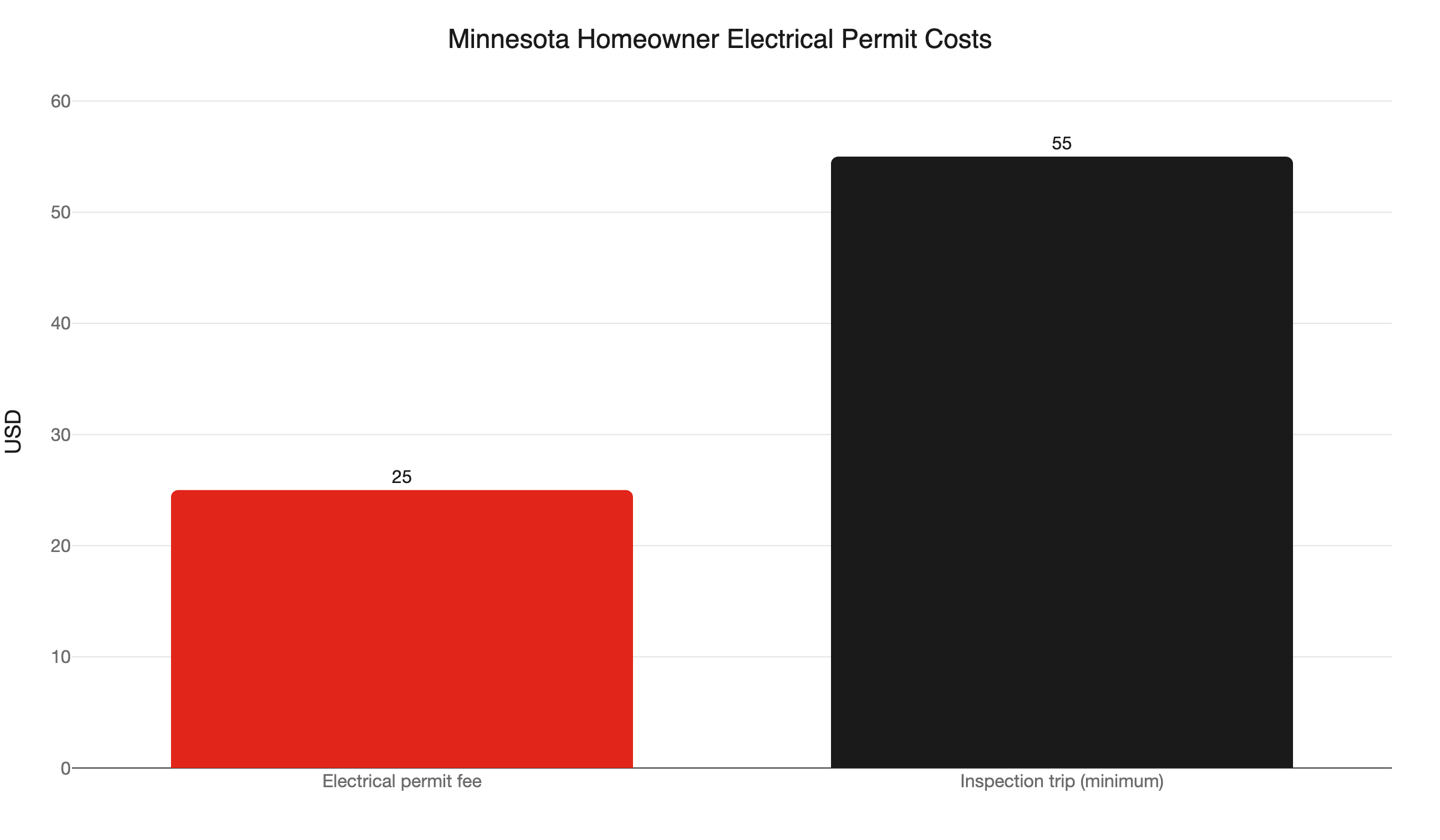
The costs are modest but real. A permit fee applies per permit, and each inspection trip has a minimum charge. The chart below shows those base figures. For most homeowners, the smarter path is to hire a licensed electrician who handles the permit, the repair, and the inspection as one job. Chasing a hidden wiring fault yourself is slow, and it is exactly the scenario the permit rules exist to catch.
Could the Flicker Be Coming From Xcel’s Side?
Yes. Whole-house flicker sometimes starts on the utility line, not inside your home. Wind, a downed tree limb, a neighbor’s heavy draw, or a failing service drop can all cause voltage swings that reach your lights. If neighbors see it too, the source is likely external.
Do a quick check before you assume it is your wiring. Ask a neighbor or two if their lights flicker at the same time. Look outside for storm damage near the service drop. If the flicker is on the utility side, report the suspected voltage problem to your utility. In the Twin Cities, that is Xcel Energy. They can test the line feeding your street.
If the flicker is inside your home, we handle it. A home wiring repair from a licensed team finds the loose or failing connection, fixes it to code, and pulls the required permit. That is the difference between guessing and a documented, inspected repair.
DIY Checks vs Pro Diagnosis: A Quick Comparison
Use this as your field guide. It maps each symptom to the right next step, so you never over-fix a bulb or under-react to a fire risk.
- One bulb flickers: tighten or replace it. DIY.
- LED flickers on a dimmer: match an LED-rated bulb or dimmer. DIY.
- Lights dip when one appliance starts: test another circuit. DIY first, pro if frequent.
- Whole house or several rooms flicker: pro diagnosis of the panel or service.
- Warm plate, buzzing, sparks, or burning smell: stop and call now. Pro, urgent.
- Breaker trips repeatedly with flicker: pro diagnosis, do not keep resetting.
When you cannot clear a flicker with a bulb or a dimmer, the cause is almost always inside the wall or at the panel. That is not a place to guess. It is a place for meters, code knowledge, and a permit.
A Note on Flicker and Your Health
Flicker is not only annoying. The Department of Energy notes that flicker can cause medical problems, including headaches and general malaise, though the exact exposure thresholds are still not well defined. Older fixtures tend to be the worst offenders. If a room’s lighting gives you headaches, matched LEDs on the right dimmer often fix both the flicker and the discomfort.
There is a bonus here for Minnesota homeowners. Xcel Energy runs lighting rebate programs in Minnesota. A flicker-driven upgrade to compatible LED fixtures can qualify for a utility rebate. So fixing an annoying flicker can also trim your energy bill. Ask us which upgrades qualify.
Ready to Stop the Flicker for Good?
Flickering lights run the full range from a loose bulb to a hidden fire risk. The ranking in this guide tells you how fast to move. When the fix is a bulb or a dimmer, you have got it. When it lives in the wall, at the panel, or comes with heat and buzzing, that is our job.
Northern Mister Sparky is locally owned and operated, serving Minneapolis, St. Paul, and the Twin Cities suburbs. We back every visit with the UWIN(R) 100% satisfaction guarantee and the on-time reliability of America’s On-Time Electrician(R). No guesswork. No shortcuts around the permit. Just a safe, inspected repair.
Call 763-200-5956 or book online today. We will find the real cause of your flicker, fix it to Minnesota code, and leave your home safe and steady.
Frequently Asked Questions
Why are my lights flickering all of a sudden? +
Are flickering lights an emergency? +
Can I fix flickering lights myself in Minnesota? +
Why do my lights dim when the furnace turns on? +
Need an electrician now?