
Chest Freezer Dedicated Circuit in an Unheated MN Garage
Key Takeaways
- A chest freezer dedicated circuit is the first requirement in a Minnesota garage. It is not the only one.
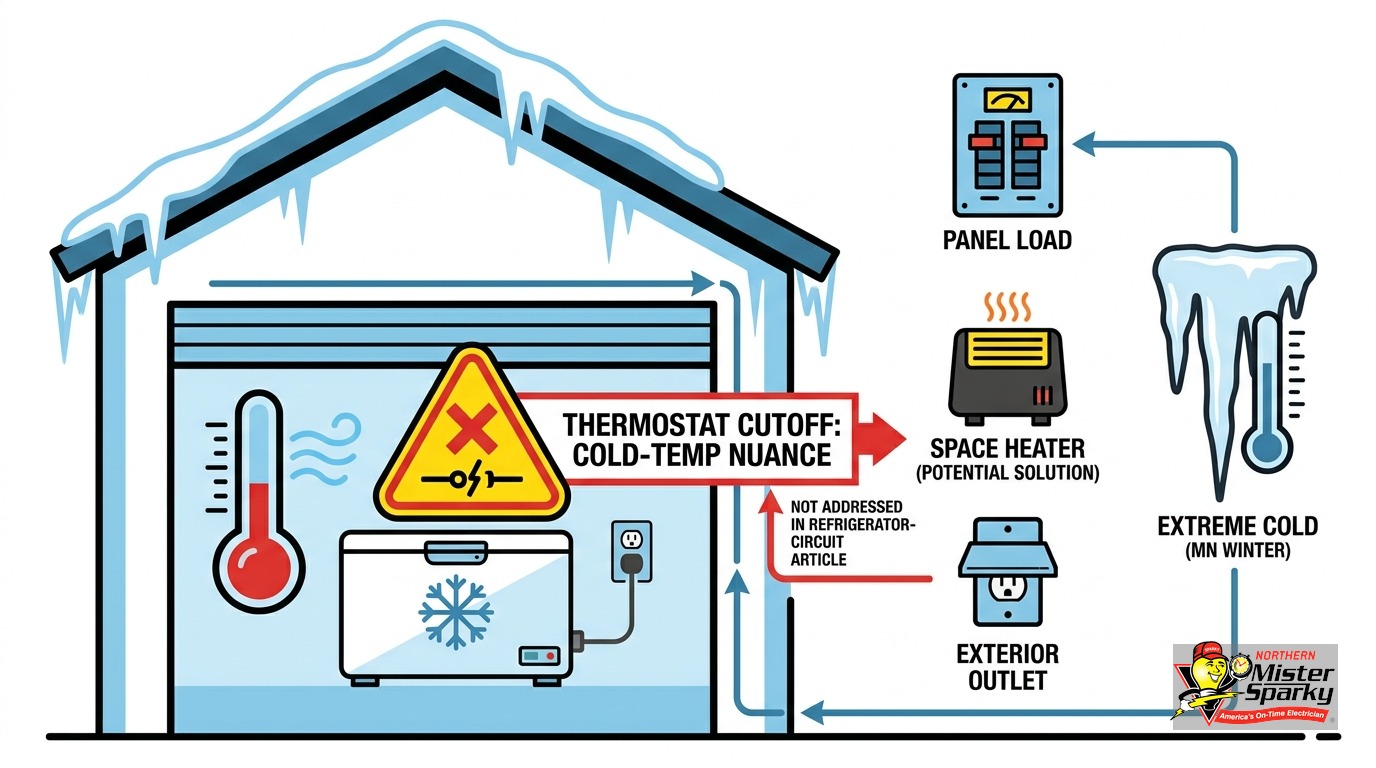
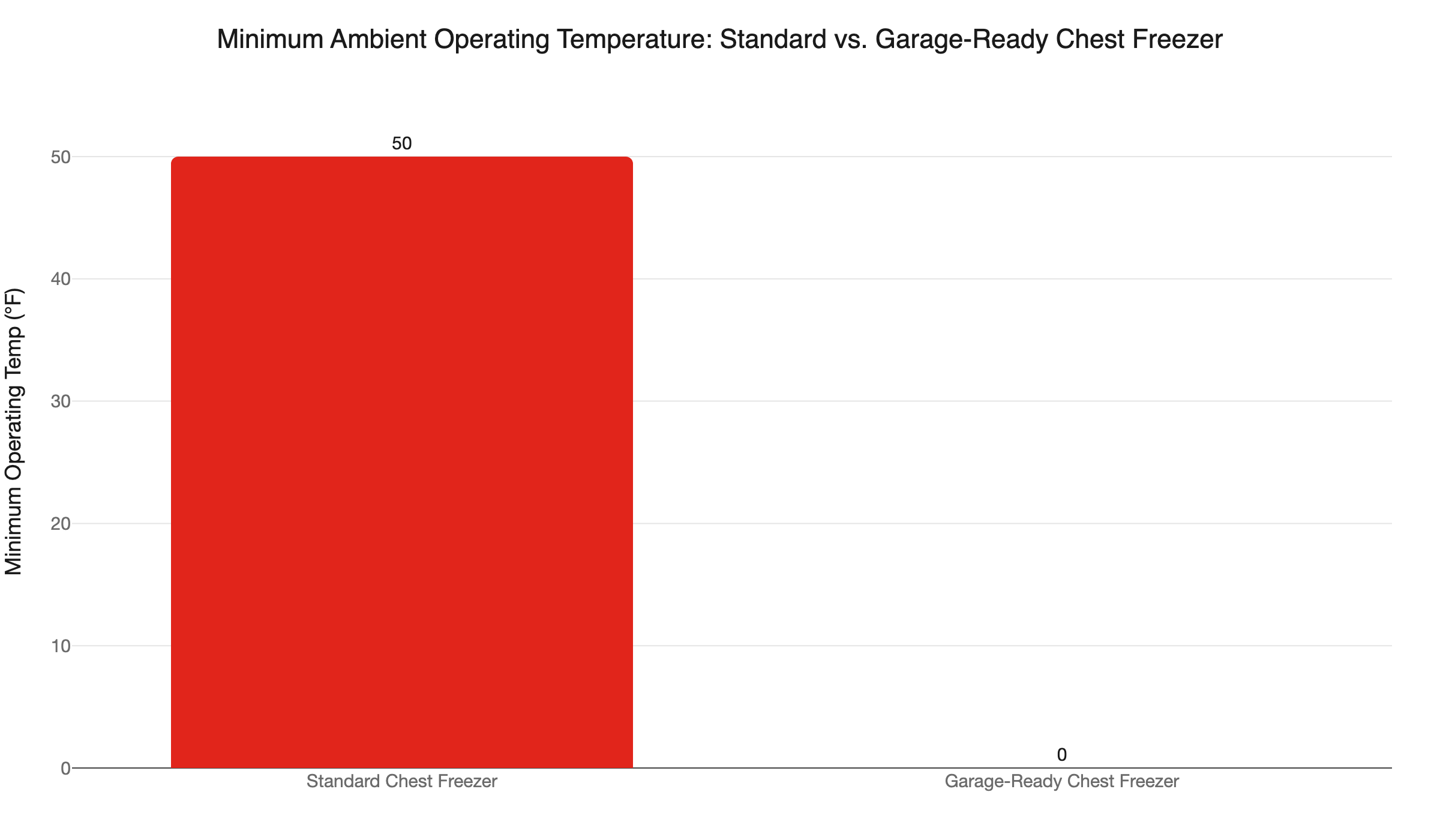
- Standard chest freezers are rated for 50-110°F ambient. Below 50°F, the compressor stops cycling. Food thaws silently on the next warm day.
- Garage-ready chest freezers are rated for 0-110°F ambient. That is the correct type for an unheated Twin Cities detached garage.
- Minnesota adopted the 2026 NEC on August 17, 2026. All garage receptacles now require GFCI protection under NEC 210.8(A), including dedicated freezer circuits.
- Use a GFCI breaker at the panel, not a GFCI outlet behind the freezer. A hidden outlet trip means undiscovered food loss.
- Cold-start inrush can spike above 15A after weeks of compressor dormancy. A 20A dedicated circuit absorbs it. A shared 15A circuit may not.
- Xcel Energy pays $50 to pick up and recycle old working freezers between 10 and 30 cubic feet.
Why is a chest freezer circuit in a garage different from a kitchen circuit?
The difference is temperature. A kitchen chest freezer runs in a stable 65-70°F environment year-round. A chest freezer in an unheated Twin Cities garage faces sub-zero ambient temperatures, compressor dormancy for weeks at a time, and hard cold-starts when the weather swings. The electrical decisions connect to all of that.
When you run a dedicated circuit for a kitchen chest freezer, the electrical work is the whole story. Wire it, install the outlet, done. The appliance operates in a consistent environment.
A chest freezer in an unheated Twin Cities detached garage is a different problem. The appliance may spend months in sub-zero conditions. The compressor may stop cycling entirely. Then a warm spell arrives and the motor tries to restart cold, pulling a heavy inrush surge.
The dedicated circuit is still the first step. But in a Minnesota garage, the decisions behind that circuit - wire size, breaker rating, GFCI type, outlet placement - connect to physical realities most circuit guides never address.
This post covers all of them.
Does a chest freezer need a dedicated circuit?
Yes. Every chest freezer needs its own dedicated 20A, 120V circuit. Sharing with garage tools, a door opener, or a shop vacuum creates voltage sag and trip risk. A tripped breaker on a shared circuit in a detached garage can mean days of undiscovered food loss.
Here is the practical reality. Freezer compressors are sensitive motors. They do not like voltage drops. Every time a garage door opener or air compressor kicks on, the shared circuit sags. That repeated stress shortens the compressor’s life.
The larger risk is a tripped breaker. A shop vac trips the circuit at midnight. The freezer goes dark. You are not in the garage to notice. By morning, the temperature inside is climbing. By next weekend, the food loss is done.
Our dedicated circuits for appliances guide covers the full list of appliances that belong on their own circuits. A chest freezer belongs on that list whether it lives in the kitchen, the basement, or the garage.
The dedicated circuit is the baseline. A Minnesota unheated garage adds layers on top.
What size dedicated circuit does a chest freezer need?
120V, 20A, wired with 12 AWG copper and protected by a 20A GFCI breaker at the panel. That is the correct spec for a garage chest freezer dedicated circuit in Minnesota.
Most chest freezers draw 1-2 amps running. A 15A circuit looks like more than enough headroom. The problem is startup inrush. When a compressor kicks on, it briefly spikes to 15A or higher before settling back to its normal draw. That leaves almost no margin on a 15A circuit.
After prolonged cold exposure, inrush is worse. The compressor has been sitting dormant for weeks. Oil is thicker. The motor works harder to start. That surge needs room to absorb without tripping the breaker.
Wire gauge matters here. Always pair 12 AWG with a 20A breaker. Running 14 AWG on a 20A breaker is a code violation. Do not daisy-chain additional outlets on this circuit - run it to a single 20A receptacle at the freezer location.
What does “garage-ready” mean, and why does it matter in Minnesota?
“Garage-ready” means the chest freezer is designed and tested to operate down to 0°F ambient temperature. A standard chest freezer is rated for 50-110°F ambient. Below 50°F, the thermostat stops calling for the compressor. The food inside then relies on passive cold air instead of active refrigeration.
According to Maytag, a garage-ready freezer includes specific engineering for low-ambient environments. That typically means a more robust thermostat and compressor modifications for cold-oil startup. GE sells explicitly tested garage-ready chest freezer models rated to 0°F ambient.
In the Twin Cities, this distinction is not optional. Minnesota winters average up to 45 days at or below 0°F. An uninsulated metal detached garage can run 5-10°F colder than outdoor ambient. An insulated detached garage stays roughly 15-20°F above outdoor ambient. On a -10°F January night, that is still 25°F below the 50°F minimum for a standard freezer.
Most big-box chest freezers are not labeled “garage-ready.” They default to indoor specs. Check the model number against the manufacturer’s minimum ambient temperature before you buy. If the spec sheet says 50°F minimum, that freezer belongs indoors.
What happens when a garage gets too cold for a standard chest freezer?
The compressor stops running. Food stays frozen passively by the ambient cold - until a warm day arrives. Then the compressor must restart hard after weeks of dormancy, with the food inside already warming. There is no alarm. There is no warning light.
Here is the mechanism. The freezer’s thermostat monitors interior temperature. When the ambient garage air drops to or below the freezer’s set point, the interior never rises past the threshold. The thermostat stops calling for the compressor. The unit draws almost no power.
For a stretch of continuous cold, this works. The freezer acts like a well-insulated cooler. The food stays frozen because the garage itself is cold.
The problem is the warm spell. Minneapolis sees January thaw events regularly. Temperatures can climb from -10°F to 40°F over two or three days. The garage warms past the thermostat’s threshold. The compressor tries to restart.
Research on cold-weather garage freezer behavior identifies a consistent failure mode. The compressor runs fine in November, goes dormant through December, and struggles to restart in January. Cold soak is the culprit. The food warms in the recovery window.
A dedicated 20A circuit does not solve the thermostat cutoff problem. It ensures the compressor has full ampacity when it finally tries to restart. The actual fix is a garage-ready freezer. The electrical solution is the correct dedicated circuit for the appliance you have.
What is a garage kit, and does it solve the cold-weather problem?
A garage kit is a small heater coil placed near the thermostat sensor. It tricks the thermostat into reading a warmer temperature than the actual garage ambient, so the compressor keeps cycling in cold weather. It extends useful life for a standard freezer in a cold garage but does not replace a garage-ready design.
The kit installs near the thermostat sensor inside the appliance. The element warms the local air around the sensor. The thermostat reads 60°F when the garage is actually at 15°F. The compressor cycles normally. Food stays frozen.
Practical testing of garage kits confirms the approach works. Frigidaire and several other manufacturers make appliance-specific versions. The drawback is energy: the heater element runs continuously in cold months. Disconnect it in summer or it fights the compressor unnecessarily.
The kit also adds a constant electrical load beyond the compressor’s own draw. That extra draw belongs on a dedicated circuit. Do not add a garage kit to a freezer on a shared 15A circuit and expect no problems.
If you are buying new, buy garage-ready. If you already own a standard freezer and want to use it in an unheated garage, add a garage kit - and run the dedicated 20A circuit first.
Cold-start inrush current and the case for a 20A dedicated circuit
Every electric motor draws more current at startup than it does running. Freezer compressors are motors. On a normal startup, inrush can spike above 15A before settling back to the normal 1-2A running draw.
After weeks of cold soak, that surge is worse. Compressor oil thickens at low temperatures. Refrigerant density changes. The motor works harder to get the compressor moving from a cold stop. Inrush runs higher and lasts longer.
A dedicated 20A circuit absorbs the spike. A 15A shared circuit with anything else on it may trip at exactly the wrong moment: when the compressor needs to restart after a prolonged dormancy.
If your detached garage does not yet have a subpanel, a chest freezer circuit is a good reason to assess whether one makes sense. A detached garage subpanel gives you the capacity for a dedicated freezer circuit, workbench circuits, and lighting - without running a new service feed for each addition.
Does the 2026 NEC require GFCI for a garage chest freezer circuit?
Yes. Minnesota adopted the 2026 NEC effective August 17, 2026. NEC 210.8(A) requires GFCI protection on all garage receptacles with no exception for dedicated appliance circuits. Any permit pulled today or after this date must meet the 2026 NEC standard.
The Minnesota Department of Labor and Industry administers the state’s electrical code. The 2026 NEC FAQ published by MN DLI confirms that the garage GFCI requirement under NEC 210.8(A) applies broadly. There is no dedicated-appliance exemption for garage circuits under 2026 NEC.
This applies to attached garages, detached garages, and any permit-required circuit pulled on or after August 17, 2026. If you pull a permit for this work today, the circuit must meet the 2026 standard.
GFCI protection in garages is appropriate. Garages are damp. They see wide temperature swings. Ground faults in a wet environment are a real hazard. The code recognizes that.
For a full overview of where GFCI protection is required throughout the home, our GFCI outlet requirements explained guide covers all the NEC 210.8 locations and the underlying logic behind each one.
GFCI breaker or GFCI outlet: which one should you use?
Use a GFCI breaker at the panel. For a chest freezer, a GFCI outlet installed behind the appliance is a problem waiting to happen. When the outlet trips, the indicator is hidden. You discover the loss of power when you open the lid.
Here is the specific risk. A GFCI outlet at the receptacle behind your chest freezer provides ground fault protection. But when it trips, the TEST and RESET buttons are behind a large appliance. You cannot see the trip indicator from across the garage. The freezer looks plugged in. The power is off.
You find out when you open the lid and find warm food. At that point, the question is not whether you lost the food. It is how much.
A GFCI breaker at the panel protects the entire circuit. The trip indicator is on the breaker face, visible every time you walk past the panel. Many GFCI breakers have a distinct visual position when tripped. A tripped breaker is hard to miss.
The cost difference between a GFCI outlet and a GFCI breaker is roughly $20-40. For a freezer holding several hundred dollars of venison, bulk beef, or Costco groceries, that is an easy call.
Install the GFCI breaker at the panel. Wire the receptacle at the freezer location as a standard 20A outlet. The protection happens where you can see it.
The deer season timing problem in the Twin Cities
November is when most Twin Cities homeowners put a chest freezer in the garage. Deer season, duck season, and the Thanksgiving bulk buy all arrive at once. That timing is understandable. The risk is real and often overlooked.
A freezer installed in November goes straight into conditions where cold-weather cutoff is an immediate threat. If the unit is not garage-ready, it may run fine through a warm November week. Then the first sustained cold hits, and the compressor stops cycling. The food stays frozen by ambient cold until a warmer day arrives.
A dedicated 20A circuit does not prevent this. It does two things. First, it ensures the compressor has full ampacity when it tries to restart cold. Second, a GFCI breaker at the panel means any electrical fault shows up where you can see it - not hidden behind the appliance.
If you are bringing a chest freezer home before deer season, schedule the circuit first. Our team typically books within a day or two of your call. Call 763-200-5956 and we will get you on the schedule before the first hard freeze.
What about the old freezer you are replacing?
If you are upgrading to a garage-ready model, Xcel Energy pays $50 to pick up and recycle your old working chest freezer. The program covers units between 10 and 30 cubic feet. Pickup is scheduled from your home at no cost to you.
Schedule it through Xcel Energy’s programs and rebates page. The program covers the old kitchen freezer you are moving out to make room, or the standard unit that finally failed on a Minnesota January night.
It is a small offset against the total project cost. But leaving a working appliance at the curb or hauling it to a transfer station is unnecessary when Xcel handles it and pays you $50 for the privilege.
Get your chest freezer dedicated circuit installed correctly
The electrical work for a garage chest freezer is not complicated. The decisions behind it matter. 20A over 15A. 12 AWG from the first connection. GFCI breaker at the panel over a hidden outlet. Subpanel capacity checked before the circuit is pulled.
We are locally owned and operated in the Twin Cities. We pull the permit, schedule the inspection, and wire every circuit to 2026 NEC from the start. If your panel or garage subpanel does not have room, we will tell you before we start. We carry financing for panel work when a capacity upgrade is the right path.
As America’s On-Time Electrician(R), we show up when we say. Every job is backed by the UWIN(R) 100% satisfaction guarantee: no malarky.
Call 763-200-5956 or book online to get your chest freezer dedicated circuit on the schedule.
Frequently Asked Questions
Does a chest freezer need a dedicated circuit? +
What happens to a chest freezer in a cold unheated garage? +
Does the 2026 NEC require GFCI for a garage chest freezer circuit in Minnesota? +
Should I use a GFCI outlet or GFCI breaker for my garage chest freezer? +
Need an electrician now?