
How to Replace Outlet Cover Plates Safely in Older Homes
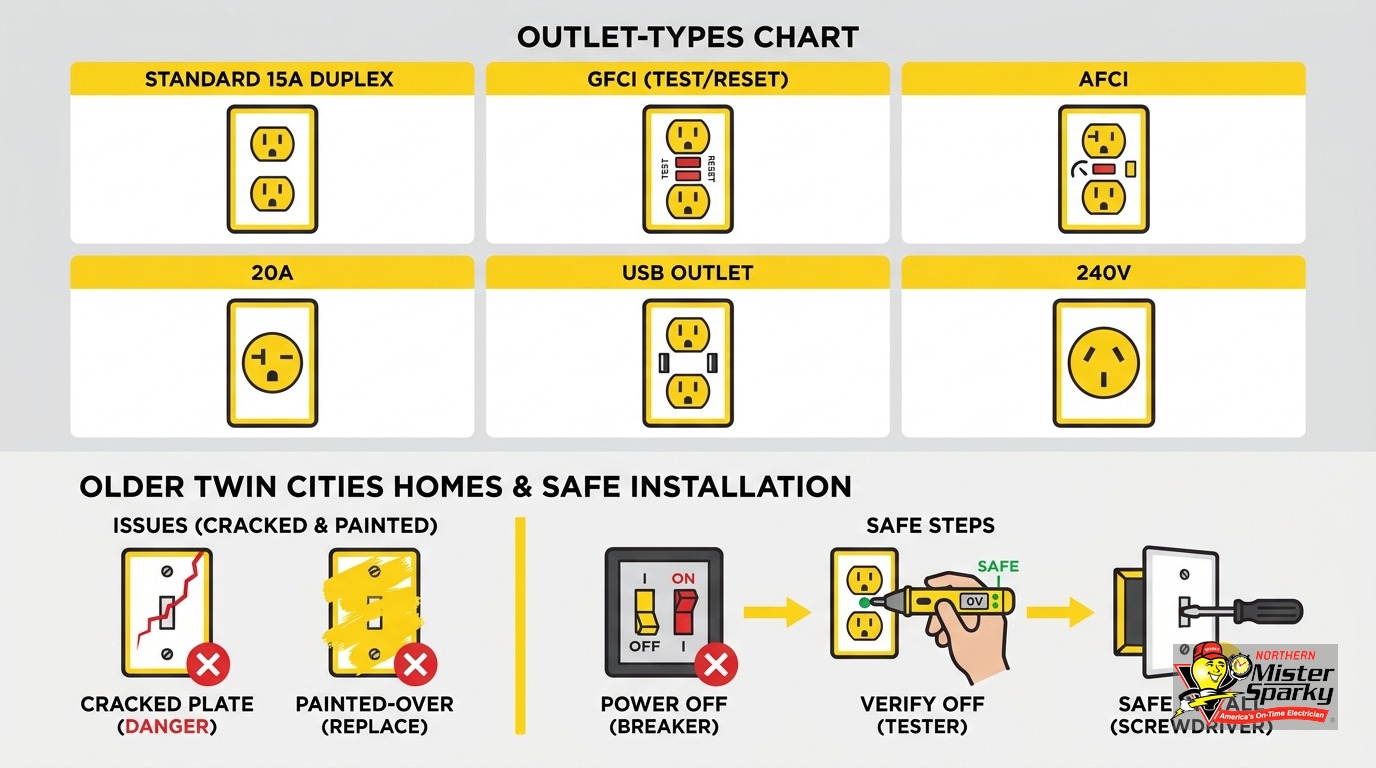
Key Takeaways
- A cover plate is a safety part. It keeps fingers and debris away from live parts.
- Always shut off the breaker and test with a voltage tester before you remove a plate.
- Replace cracked plastic plates right away. Cracks can expose wiring.
- Do not scrape or chip paint in a home built before 1978. It may contain lead.
- Tamper-resistant outlets still need a standard cover plate.
- A plate swap is minor work. Anything that touches the wiring behind the plate needs a licensed electrician.
- If you see scorching, a loose outlet, or a hot plate, stop and call a pro.
How do you replace an outlet cover plate safely?
Turn off the breaker and confirm the power is off with a non-contact voltage tester. Then remove the center screw and fit a new plate that fully covers the opening. Do not overtighten it. If the plate is cracked, painted shut, or the home is old, read the sections below first.
The swap itself is simple. One popular repair guide rates it easy and about one minute of work. It also tells readers to turn off household power, but it skips the how. Here is the full routine we follow in Twin Cities homes.
What you need:
- A replacement plate that matches your outlet or switch type
- The matching screw, usually included with the plate
- A screwdriver that fits the screw head
- A non-contact voltage tester
- A flashlight
Steps:
- Find the breaker for the outlet. Flip it off. Tell everyone in the house so no one turns it back on.
- Test your voltage tester on an outlet you know is live. This proves the tester works.
- Hold the tester near each slot of the outlet you are working on. It should stay silent.
- Check both halves of a duplex outlet. Some are wired so each half sits on a different circuit.
- Remove the center screw. Lift the old plate straight off the wall.
- Look at the outlet. Check for scorch marks, cracks, loose wires, or a wobbly device.
- Set the new plate over the outlet. Drive the screw until the plate sits flat and snug.
- Turn the breaker back on. Plug in a lamp to confirm the outlet works.
Step 6 matters most. A plate swap gives you a free look at what is behind it. If you see brown marks, melted plastic, or bare copper, stop. Put the plate back, leave the breaker off, and call us.
How do you choose the right cover plate?
Match the plate to the opening in the wall, not just the color. A duplex outlet, a single outlet, a toggle switch, and a decorator rocker switch each need a different cutout. The plate must completely cover the opening and sit flat.
Look at the device first. Then pick the plate.
Common plate types:
- Duplex plate: Fits the standard two-socket outlet. This is the most common type in homes.
- Single outlet plate: Fits a round-hole single receptacle. Often used for dryer or range outlets.
- Toggle plate: Has a narrow slot for a classic flip switch.
- Decorator plate: Has a large rectangular opening. It fits rocker switches, GFCI outlets, and many dimmers.
- Combination plate: Holds a switch and an outlet together, or two switches.
- Multi-gang plate: Covers two, three, or more devices in a wide box.
- Jumbo or oversize plate: Covers a larger area. It helps hide rough drywall or plaster edges.
A GFCI outlet usually needs a decorator plate. If you are not sure what you have, our guide to types of electrical outlets shows what each one looks like.
Plastic, metal, or something else?
Plastic plates are cheap and need no grounding. Metal plates look sharp, but they come with a rule. The code says metal faceplates must be connected to the grounded circuit equipment. A metal plate on an ungrounded or damaged outlet is a bad idea. If your home has older wiring, plastic is usually the safer choice.
Check the fit.
The same article notes that plates must completely cover the outlet openings. It also notes that receptacles must sit flush with or project from the faceplate. If a plate leaves a gap, or the outlet sits behind the plate surface, do not force it. Try a different size. If that fails, the box may be set wrong.
We do not quote section numbers here. Code sections shift between editions, and the principle is what matters. Cover the opening. Ground the metal. Keep the device flush.
Do tamper-resistant outlets need special cover plates?
No. Tamper-resistant outlets use standard cover plates. The safety shutters sit inside the outlet face, behind the slots. Any plate that fits the outlet type and covers the opening works. You do not need a special “child-safe” plate for these outlets.
Many homeowners see the word “tamper-resistant” and assume the plate matters. It does not. The protection lives in the receptacle.
Still, the plate does real work. It hides the box, blocks dust, and keeps small hands from reaching the screw terminals and wires around the outlet. A missing or cracked plate undoes part of the safety you paid for.
To check your outlets, look for the letters “TR” on the face of the receptacle. Newer outlets carry it. Older ones do not. If you have young kids and your outlets are decades old, an upgrade is worth a look. Our post on tamper-resistant outlets and child safety walks through why and how.
One tip when you swap a plate on a tamper-resistant outlet: do not test it by jamming a screwdriver into a slot. The shutters are meant to resist that. Use a lamp or a plug-in outlet tester instead.
What should you do about a cracked cover plate?
Replace it right away. A cracked plastic plate can break apart and leave wiring or screw terminals exposed. Small hairline cracks may look harmless, but they spread. A new plate costs a few dollars. Swap it now and check the outlet behind it.
Cracks come from a few common causes:
- Overtightened screws. Plastic bends under pressure and then splits.
- Age. Old plastic turns brittle. Sunlight, heat, and decades of use take a toll.
- Impact. A vacuum, a chair, or a door can chip a corner.
- Chemicals. Some household products can attack plastic.
That last cause has a federal record behind it. In 1991, the Consumer Product Safety Commission announced a recall of plastic switchplate and outlet covers. The agency said covers installed too tightly may crack and break when exposed to some household oil-based products. It added that severe cracking could expose wires and create a shock risk.
Keep that recall in perspective. It covered one product line, and it is decades old. It does not mean all plates fail. But two lessons still hold. Do not overtighten. And do not leave a cracked plastic plate on the wall.
What to check when you swap a cracked plate:
- Is the outlet itself cracked or chipped?
- Is there any burn mark, soot, or discolored plastic?
- Does the outlet wobble in the wall?
- Do you see bare wire outside the terminals?
If you answer yes to any of these, the plate was not the only problem. See our guide on a loose outlet that won’t hold a plug for the next steps, or call us.
Can plastic outlet covers catch fire?
A plastic cover plate is rarely the source of a fire. Heat usually starts behind it, at a loose connection, a worn outlet, or an overloaded circuit. The plate can then melt or discolor. A warm, brown, or melted plate is a warning sign. Stop using that outlet.
The plate is where the problem shows up. It rarely starts it.
Signs the heat is real:
- The plate feels warm or hot to the touch
- The plate has brown or yellow staining
- The plastic looks warped or melted
- You smell something like burning plastic or fishy chemicals
- The outlet buzzes, crackles, or sparks
If you notice any of these, unplug everything from that outlet. Turn off the breaker. Do not turn it back on until a licensed electrician has looked at it.
Common causes include a loose wire at the terminal, a worn outlet that no longer grips plugs, and a space heater or other high-draw device on a standard circuit. Our post on causes of a warm outlet or switch plate covers each one in plain language.
Swapping the plate will not fix a heat problem. A new plate over a failing outlet just hides the evidence. Never do that.
How do you remove a painted-over cover plate?
Cut the paint seam gently with a utility knife, then back the screw out slowly. In a home built before 1978, treat the paint as possible lead paint. Do not scrape or chip it. If you are unsure of the home’s age, call a pro instead.
Painted-over plates are common in older Twin Cities houses. Past owners painted the walls and the plates in one go. Now the plate is glued to the wall, and the screw slot is full of paint.
The EPA says that if your home was built before 1978, it may have lead-based paint. The agency adds that if you cannot tell the age, it is safest to assume the area has lead paint. Scraping, drilling, and cutting create dust that may contain lead.
That puts a real limit on the quick fix. Many how-to videos tell you to scrape and pry. In an older home, we would not.
A safer approach for older homes:
- Turn off the breaker and test for power.
- Do not sand or scrape the paint.
- Clear paint from the screw slot with a small pick. Work gently and keep the area damp.
- Back the screw out slowly.
- Try to lift the plate. If the paint seam holds, make one light pass with a sharp blade along the edge.
- Stop if paint flakes or powders. Wipe up debris with a damp paper towel and bag it.
The EPA page lists extra DIY precautions for dusty work. It says to mist the area before scraping or drilling and to use a disposable N-100 certified respirator. Those steps help, but they are a lot of effort for a plate that costs a few dollars.
Our honest advice: if the plate is stuck and the home is old, let us handle it. We carry the right gear, and we work cleanly. And we keep your family out of the dust.
Better yet, prevent the problem. When you repaint, remove plates first. Or tape them with painter’s tape. Then put the new plates on after the paint dries.
What if the screw is stripped or the wall is uneven?
For a stripped screw, press firmly and turn slowly, or grip the head with small pliers. For an uneven or plaster wall, use a larger plate that spans the gap. If the outlet sits too deep or too far out, the box needs adjustment, and that is an electrician’s job.
Older homes throw a few curveballs. Here are the most common ones.
Stripped or rusted screws.
- Use the right size screwdriver, and push hard as you turn.
- Lay a wide rubber band between the bit and the screw for extra grip.
- Grip a raised screw head with needle-nose pliers.
- Do not drill near the outlet. Drill bits can hit wires.
If the screw will not move, leave it. Call us instead of forcing it.
Brittle old plastic.
Plates from the mid-1900s can snap when you touch them. Work slowly. Keep a replacement on hand before you start.
Plaster and lath walls.
Plaster walls are common in older Minneapolis and St. Paul homes. They are thicker and less flat than drywall. The wall edge around a box can crumble, which leaves a ragged gap. A standard plate may not cover it. A jumbo plate often does the job. Do not caulk or patch with any filler that could reach the device. See our guide to wiring in plaster and lath walls if you plan further work.
A recessed or protruding outlet.
If the outlet sits too far back, the plate may not seat. If it sticks out too far, the plate may bow. Do not use thick spacers or shims to cheat the fit. The code expects the receptacle to sit flush with or project from the plate. A licensed electrician should correct a box that is set wrong.
Ungrounded outlets.
Many older homes have two-prong outlets. A cover plate swap does not change the wiring. If you want three-prong protection, read our guide to replacing two-prong outlets with three-prong. The right fix depends on what runs behind the wall.
Do you need a licensed electrician to replace an outlet?
Swapping a cover plate does not need a license. Replacing the outlet itself, or changing any wiring, is a different story. In Minnesota, electrical work generally falls to licensed contractors, with limited exceptions. Check the rules for your city before you do any wiring yourself.
Here is how the two jobs differ.
Cover plate swap. This is a cosmetic and safety-minded task. You are not touching the wiring. Most homeowners can do it with the breaker off.
Outlet replacement or wiring work. This means working with live conductors, terminals, grounding, and sometimes aluminum or cloth-covered wire. It also may need a permit and an inspection.
We could not confirm every detail of the state and city permit rules for this post, and they change. Some Twin Cities suburbs and St. Paul run their own permit programs. So our advice stays simple. A plate swap is minor. Any work behind the plate belongs to a licensed electrician.
Want to understand the exceptions? Our posts on the homeowner electrical permit exemption in Minnesota and how to verify a licensed electrician lay out the basics. Always confirm with your city before you start.
There is also a practical reason to call a pro. Once you open a wall box, you own what you find. A pro knows what is a quick fix and what is a hazard.
What does Minnesota code say about cover plates?
Minnesota follows the National Electrical Code. The state Board of Electricity adopted the 2026 NEC with an effective date of Aug. 17, 2026. Under that code, plates must fully cover the opening, and metal plates must be grounded. Receptacles must sit flush with or project from the plate.
The Minnesota Department of Labor and Industry says the Board of Electricity adopted the 2026 National Electrical Code with an effective date of Aug. 17, 2026. The page lists no state amendments. It says the state code consists of the National Electrical Code published by NFPA.
That date has passed. Today, new and altered electrical work in Minnesota falls under the 2026 edition.
Two cautions apply.
First, a plate swap on an existing outlet is routine maintenance. The code does not treat it like a rewire. The new plate should still meet the basic rules above.
Second, we do not quote section numbers or exact measurements we have not checked against the current edition. Your inspector, your city, and the code book itself have the final word. If you need an answer for a permit or a home sale, ask us. We work from the current code every day.
When should you stop and call an electrician?
Stop when the problem is bigger than the plate. Scorch marks, a hot plate, a loose outlet, bare wire, or a wall that crumbles around the box all call for a pro. So does any painted-over plate in a pre-1978 home that you cannot free without scraping.
Use this checklist. If any item fits, put the plate back, leave the breaker off, and call.
Stop and call if you see:
- Brown or black scorch marks on the plate, wall, or outlet
- Melted or warped plastic
- A plate that feels warm without anything plugged in
- An outlet that moves, wobbles, or falls out of the box
- Bare copper or cloth-covered wire showing
- Aluminum-colored wire at the outlet
- Power that flickers or cuts out when you touch the outlet
- A box that is cracked, loose, or too deep in the wall
- Water stains or rust in or around the box
- A stuck plate in a home built before 1978, where freeing it would mean scraping paint
- A tester that beeps when you thought the power was off
That last item is serious. If the tester shows voltage with the breaker off, you may have a mislabeled breaker or a shared neutral. Do not touch anything. Call us.
Not sure what is behind your walls? A short visit from a pro can sort it out. You can also read our warning signs you need an electrician for the bigger picture.
How can Northern Mister Sparky help?
We are locally owned and operated in the Twin Cities, and we treat your home like a neighbor’s. A cover plate looks small, but it is often the first clue about what is going on inside a wall.
When you call, here is what you get:
- A licensed electrician who shows up on time, as America’s On-Time Electrician(R)
- A clear look at the outlet, the box, and the wiring behind your plate
- Plain talk about what is cosmetic and what is a hazard, with no malarky
- Upfront pricing before we start any work
- Our UWIN(R) 100% satisfaction guarantee
- Financing options when a larger fix comes up
If you found something worrying behind a plate, our team can handle electrical outlet repair quickly. We serve Minneapolis, St. Paul, Bloomington, Brooklyn Park, Woodbury, Blaine, Maple Grove, Plymouth, and nearby communities.
Do the simple swap yourself when it is simple. Call us when it is not.
Ready to get it checked? Call 763-200-5956 or book online today. We will get an electrician to your door fast.
Frequently Asked Questions
Do you need outlet covers for tamper-resistant outlets? +
Can I paint over a cover plate instead of replacing it? +
How tight should I make the cover plate screw? +
What if the new cover plate leaves a gap around the outlet? +
Need an electrician now?